
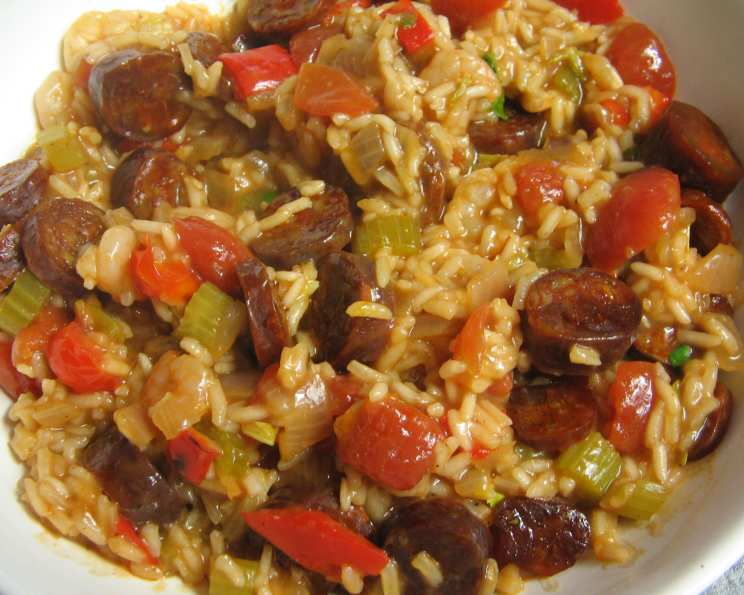
Shrimp and Sausage Jambalaya: A Taste of Louisiana in Your Kitchen
The first time I tasted jambalaya, I was a wide-eyed culinary student volunteering at a food festival in New Orleans. The aroma alone – a heady mix of smoky sausage, briny seafood, and earthy spices – drew me in like a moth to a flame. A kind-faced woman ladling steaming portions from a massive cast-iron pot offered me a taste, and from that moment, I was hooked. The explosion of flavors, the satisfying chew of the rice, and the comforting warmth of the dish transported me to a place of pure culinary joy. I knew then and there I had to learn to recreate this magic myself. This recipe is my take on that experience, perfected over years of tweaking and tasting, and I can’t wait to share it with you.
Recipe Overview
- Prep Time: 20 minutes
- Cook Time: 50 minutes
- Total Time: 1 hour 10 minutes
- Servings: 6
- Yield: 6 servings
- Dietary Type: Gluten-Free (check sausage ingredients)
Ingredients
- 1 tablespoon olive oil
- 1 1/2 cups chopped onions
- 1/2 cup chopped green bell pepper
- 1/2 cup chopped celery
- 1/2 lb medium shrimp, peeled and deveined
- 4 bay leaves
- 1/2 lb smoked sausage, sliced
- 1 (14 1/2 ounce) can chopped tomatoes
- 1 tablespoon chopped garlic
- 1 teaspoon salt
- 1/2 teaspoon cayenne
- 1/4 teaspoon black pepper
- 1/4 teaspoon dried thyme
- 1 cup long-grain white rice
- 1/4 cup barbecue sauce
- 1/4 cup chopped green onion
Equipment Needed
- Large skillet or Dutch oven with lid
- Cutting board
- Knife
- Measuring cups and spoons
Instructions
- Heat the olive oil in a large skillet or Dutch oven over medium heat. Make sure your pan is large enough to hold all the ingredients comfortably, as the rice will expand during cooking.
- Add the chopped onions, green bell pepper, and celery to the skillet. Sauté for 7 to 8 minutes, or until the vegetables are softened and slightly translucent. This step, known as the “holy trinity” in Cajun and Creole cooking, forms the flavor base of your jambalaya. Stir occasionally to prevent sticking.
- Add the shrimp and bay leaves to the skillet. Cook until the shrimp turn pink and opaque, about 2 minutes. Be careful not to overcook the shrimp at this stage, as they will continue to cook later on.
- Add the sliced smoked sausage to the skillet and cook for 2 to 3 minutes, allowing it to brown slightly and release its flavorful oils. If your sausage is particularly fatty, you may want to drain off some of the excess grease at this point.
- Pour in the can of chopped tomatoes (with their juice). Add the chopped garlic, salt, cayenne, black pepper, and dried thyme. Stir well to combine.
- Bring the mixture to a simmer, then reduce the heat to medium-low. Cook for 10 minutes, stirring often, allowing the flavors to meld together. This slow simmering is key to developing the rich, complex taste of jambalaya.
- Add the long-grain white rice to the skillet and stir thoroughly to mix. Ensure all the rice is coated with the tomato and spice mixture.
- Cover the skillet tightly with a lid. Reduce the heat to medium-low and cook for 30 minutes, or until the rice is tender and has absorbed most of the liquid. Avoid lifting the lid during cooking, as this will release steam and prolong the cooking time. If the rice seems to be drying out too quickly, add a small amount of water (about 1/4 cup) to the skillet.
- Once the rice is cooked, stir in the barbecue sauce. This adds a touch of sweetness and tanginess to the jambalaya.
- Remove the skillet from the heat and let it stand, covered, for 5 minutes. This allows the rice to finish absorbing any remaining liquid and helps the flavors to further develop.
- Remove the bay leaves before serving.
- Stir in the chopped green onions just before serving to add a fresh, vibrant finish.
Expert Tips & Tricks
- For an even deeper flavor, use a smoked paprika in place of the regular paprika.
- If you like a spicier jambalaya, add a pinch of red pepper flakes along with the cayenne pepper.
- To prevent the rice from sticking to the bottom of the skillet, use a non-stick pan or add a little extra olive oil.
- You can easily adapt this recipe to use other types of seafood, such as crawfish or mussels.
- Make-ahead tip: The jambalaya can be made up to 2 days in advance and stored in the refrigerator. Reheat gently over low heat, adding a little water if needed.
Serving & Storage Suggestions
Serve the shrimp and sausage jambalaya hot, garnished with extra green onions or a sprinkle of fresh parsley. It’s delicious on its own or served alongside a simple green salad or some crusty bread for soaking up all those flavorful juices.
Leftovers can be stored in an airtight container in the refrigerator for up to 3 days. Reheat gently in a skillet or microwave, adding a splash of water or broth if needed to prevent drying out. Jambalaya can also be frozen for longer storage. Thaw overnight in the refrigerator before reheating.
Nutritional Information
| Nutrient | Amount per Serving | % Daily Value |
|---|---|---|
| Calories | 365 kcal | N/A |
| Calories from Fat | N/A | 38% |
| Total Fat | 15.6 g | 23% |
| Saturated Fat | 4.9 g | 24% |
| Cholesterol | 83.4 mg | 27% |
| Sodium | 1111.7 mg | 46% |
| Total Carbohydrate | 35.7 g | 11% |
| Dietary Fiber | 2.5 g | 9% |
| Sugars | 4.5 g | N/A |
| Protein | 19.8 g | 39% |
Note: Nutritional information is an estimate and may vary based on specific ingredients and cooking methods.
Variations & Substitutions
- Chicken and Sausage Jambalaya: Substitute the shrimp with an equal amount of diced chicken thighs.
- Vegetarian Jambalaya: Omit the shrimp and sausage and add extra vegetables such as mushrooms, zucchini, or eggplant. Use vegetable broth instead of water for a richer flavor.
- Spicy Jambalaya: Increase the amount of cayenne pepper or add a dash of hot sauce to the mixture.
- Seafood Jambalaya: Use a combination of shrimp, crawfish, and mussels for a truly decadent seafood feast.
FAQs (Frequently Asked Questions)
Q: Can I use brown rice instead of white rice?
A: Yes, you can use brown rice, but you’ll need to adjust the cooking time and liquid amount. Brown rice typically requires more liquid and a longer cooking time than white rice.
Q: Can I use a different type of sausage?
A: Absolutely! Andouille sausage is a classic choice for jambalaya, but you can also use other types of smoked sausage, such as kielbasa or chorizo.
Q: How do I know when the rice is cooked?
A: The rice is done when it is tender and has absorbed most of the liquid. You can test it by tasting a few grains of rice.
Q: Can I make this in a slow cooker?
A: Yes, you can adapt this recipe for a slow cooker. Sauté the vegetables and sausage on the stovetop before transferring them to the slow cooker with the remaining ingredients. Cook on low for 4-6 hours, or until the rice is tender.
Q: What if I don’t have barbecue sauce?
A: If you don’t have barbecue sauce, you can substitute it with a tablespoon of tomato paste and a teaspoon of brown sugar.
Final Thoughts
I hope this recipe inspires you to bring a little bit of Louisiana magic into your own kitchen. Jambalaya is a dish that’s meant to be shared, so gather your friends and family, put on some lively music, and enjoy the flavors of the South. Don’t be afraid to experiment with different ingredients and spices to create your own unique version. And most importantly, have fun! I’d love to hear about your experiences and any creative twists you add to the recipe. Bon appétit!