
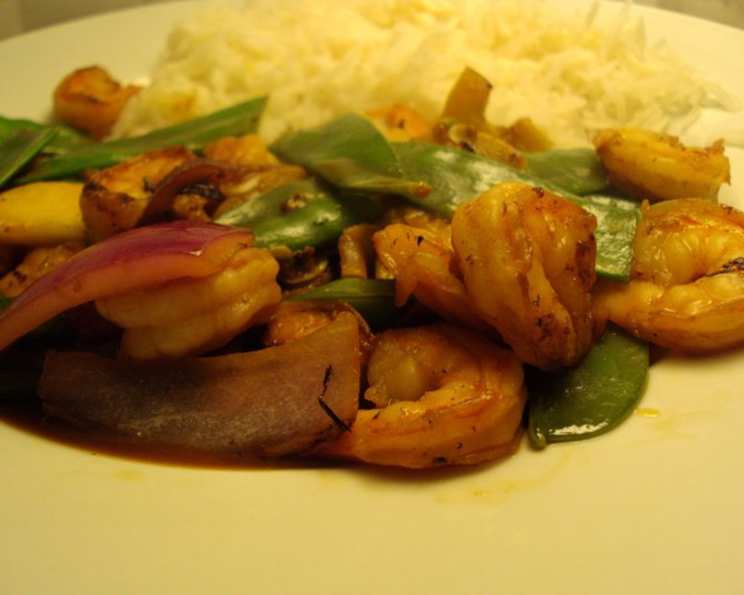
Shrimp and Snow Pea Stir Fry: A Flash of Flavor on Your Plate
I can still picture my grandmother meticulously prepping vegetables at her kitchen table, the late afternoon sun casting long shadows across the room. She had a knack for turning simple ingredients into vibrant, memorable meals, and her shrimp and snow pea stir-fry was a particular favorite. The bright crunch of the snow peas, the sweet tenderness of the shrimp, all bathed in a savory, slightly sweet sauce – it was pure comfort on a plate, and a dish that always brought the family together. Now, I’m thrilled to share my version of this classic dish with you.
Recipe Overview
- Prep Time: 15 minutes
- Cook Time: 6 minutes
- Total Time: 21 minutes
- Servings: 4-6
- Dietary Type: Pescatarian
Ingredients
- 1 teaspoon dark sesame oil
- 2 tablespoons minced fresh ginger
- 3 tablespoons low sodium soy sauce
- 2 tablespoons seasoned rice vinegar
- 2 teaspoons sugar
- 1 teaspoon bottled minced garlic
- 1 small red bell pepper, cut into 1 1/2-inch pieces
- 1 small red onion, cut into 8 wedges
- 1 cup snow peas, trimmed
- 1 1⁄2 lbs peeled and deveined large shrimp
- 3 tablespoons sesame seeds, toasted
Equipment Needed
- Large nonstick skillet
- Whisk
- Measuring spoons and cups
Instructions
-
Heat the dark sesame oil in a large nonstick skillet over medium-high heat. Be sure the skillet is hot before adding the ingredients to achieve the best stir-fry results.
-
In a small bowl, combine the minced fresh ginger, low sodium soy sauce, seasoned rice vinegar, sugar, and bottled minced garlic. Whisk thoroughly until the sugar is dissolved and the mixture is well combined. This sauce will be the heart of your stir-fry, so make sure it tastes balanced and flavorful.
-
Add the red bell pepper pieces and red onion wedges to the preheated skillet. Stir-fry for 2 minutes, or until they are crisp-tender. You want the vegetables to retain some of their crunch, so don’t overcook them at this stage.
-
Add the snow peas and shrimp to the skillet. Stir-fry for 3 minutes, or until the shrimp are cooked through and have turned pink and opaque. Be careful not to overcrowd the pan, as this can lower the temperature and cause the shrimp to steam instead of stir-fry. If necessary, cook the shrimp in batches.
-
Pour the soy sauce mixture over the shrimp and vegetables in the skillet. Cook for 1 minute, stirring constantly, until the sauce has thickened slightly and is evenly coating all of the ingredients. This final minute is crucial for melding the flavors together and creating a glossy finish.
-
Remove the skillet from the heat and sprinkle the toasted sesame seeds over the stir-fry. This adds a wonderful nutty flavor and visual appeal to the dish.
Expert Tips & Tricks
- Ginger and Garlic Prep: Freshly minced ginger and garlic offer the best flavor. However, if you’re short on time, using pre-minced versions is perfectly acceptable. Just be sure to use good quality brands.
- Shrimp Doneness: Overcooked shrimp can become rubbery. Cook them just until they turn pink and opaque. They should still be slightly tender to the touch.
- Vegetable Consistency: To maintain a good texture, cut the vegetables into uniform sizes. This ensures they cook evenly.
- Toasting Sesame Seeds: Toasting sesame seeds enhances their flavor. You can toast them in a dry skillet over medium heat, stirring constantly, until they are golden brown and fragrant. Watch them carefully, as they can burn easily. Alternatively, you can toast them in the oven at 350°F (175°C) for 5-7 minutes.
- Make-Ahead Tip: You can prep the vegetables and sauce ahead of time. Store them separately in the refrigerator until you’re ready to cook. This will save you time during the week.
Serving & Storage Suggestions
Serve your delicious Shrimp and Snow Pea Stir Fry immediately over a bed of fluffy white rice or brown rice. Garnish with extra toasted sesame seeds and a sprinkle of chopped green onions for a pop of color.
Leftovers can be stored in an airtight container in the refrigerator for up to 2 days. Reheat gently in a skillet over medium heat, adding a splash of water or broth if needed to prevent drying out. While freezing is not recommended due to the potential for the shrimp to become rubbery, you can freeze the sauce and cooked vegetables separately for up to 1 month.
Nutritional Information
| Nutrient | Amount per Serving | % Daily Value |
|---|---|---|
| Calories | 210.7 kcal | N/A |
| Calories from Fat | 57 g | 27% |
| Total Fat | 6.4 g | 9% |
| Saturated Fat | 0.9 g | 4% |
| Cholesterol | 214.9 mg | 71% |
| Sodium | 1368.9 mg | 57% |
| Total Carbohydrate | 11.6 g | 3% |
| Dietary Fiber | 2.3 g | 9% |
| Sugars | 4.9 g | 19% |
| Protein | 26.2 g | 52% |
Variations & Substitutions
- Vegetarian Option: Replace the shrimp with firm tofu, cut into cubes, or with tempeh.
- Gluten-Free: Ensure your soy sauce is gluten-free. Tamari is a good substitute.
- Spice It Up: Add a pinch of red pepper flakes or a dash of chili garlic sauce to the sauce mixture for a spicy kick.
- Different Vegetables: Feel free to substitute other vegetables, such as broccoli florets, sliced carrots, or sliced mushrooms.
- Nuts: Add some chopped cashews or peanuts for extra crunch and flavor.
- Citrus Zest: A little lime or orange zest added to the sauce can brighten the flavors.
FAQs (Frequently Asked Questions)
Q: Can I use frozen shrimp for this recipe?
A: Yes, frozen shrimp works well. Just make sure to thaw it completely before cooking and pat it dry with paper towels to remove excess moisture.
Q: How do I know when the shrimp is cooked properly?
A: Shrimp is cooked when it turns pink and opaque, and the flesh is firm to the touch. Be careful not to overcook it, as it can become rubbery.
Q: Can I use regular soy sauce instead of low sodium?
A: You can, but the stir-fry will be saltier. Consider reducing the amount of soy sauce if you use regular soy sauce.
Q: Can I prepare the entire dish ahead of time?
A: It’s best to cook the shrimp fresh for the best texture. However, you can prepare the sauce and chop the vegetables ahead of time to save time.
Q: What is seasoned rice vinegar? Can I use regular rice vinegar?
A: Seasoned rice vinegar has added sugar and salt. If you use regular rice vinegar, you may want to add a pinch more sugar to the sauce to balance the flavors.
Final Thoughts
This Shrimp and Snow Pea Stir Fry is a simple yet satisfying dish that’s perfect for a quick weeknight meal. It’s versatile, adaptable to your favorite vegetables, and packed with flavor. I hope this recipe brings as much joy to your table as it does to mine. Don’t hesitate to experiment with variations and make it your own. Enjoy the process, savor the flavors, and please share your creations and feedback! Bon appétit!