
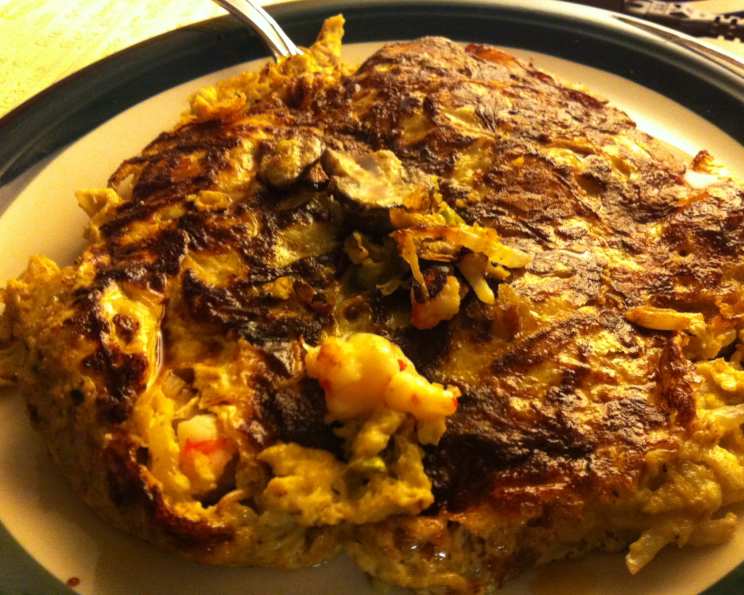
Shrimp Egg Foo Yong (Low Carb & Low Fat)
The scent of Egg Foo Yong instantly transports me back to my childhood, to a small, bustling Chinese restaurant in my hometown. I remember the sizzle of the wok, the clatter of dishes, and the comforting aroma that filled the air. It was a dish we’d order every single time, and it always felt like a special treat. Recreating that familiar flavor, while keeping things light and healthy, has been a delightful culinary challenge – and one I’m thrilled to share with you.
Recipe Overview
- Prep Time: 15 minutes
- Cook Time: 12-15 minutes
- Total Time: 27-30 minutes
- Servings: 2
- Dietary Type: Low Carb, Low Fat
Ingredients
- 4 tablespoons canola oil
- 1/4 cup onion, chopped
- 2 cups cabbage, shredded
- 6 eggs
- 1 tablespoon soy sauce
- 2 tablespoons sesame oil
- 1/2 teaspoon garlic powder
- 1/4 teaspoon salt
- 1/8 teaspoon fresh ground black pepper
- 1 cup bean sprouts, pressed down firmly in cup
- 1 cup cooked small shrimp (or large dice medium)
Equipment Needed
- Large Skillet
- Non-stick Pan
- Mixing Bowl
- Whisk
Instructions
-
Begin by preparing your vegetables. Heat 2 tablespoons of canola oil in a large skillet over medium-high heat. Add the chopped onion and shredded cabbage. Cook until the vegetables are tender, about 5-7 minutes, stirring occasionally.
-
Once the onions and cabbage are cooked, remove the skillet from the heat. Drain off any excess liquid that may have accumulated. Set the cooked vegetables aside in a bowl.
-
In a separate mixing bowl, whisk together the eggs, soy sauce, sesame oil, garlic powder, salt, and fresh ground black pepper until well combined.
-
Add the cooked onion and cabbage mixture to the egg mixture. Then, fold in the bean sprouts, ensuring they are evenly distributed.
-
Gently incorporate the cooked shrimp into the egg and vegetable mixture, being careful not to overmix.
-
Now it’s time to cook the Egg Foo Yong. Place a non-stick pan over medium-high heat. Add the remaining 2 tablespoons of canola oil to the hot pan.
-
Once the oil is heated, ladle approximately 4 ounces of the egg mixture into the hot pan, similar to how you would make pancakes.
-
Sprinkle the shrimp evenly on top of each Egg Foo Yong patty. This ensures that each bite is packed with flavor.
-
Cook the Egg Foo Yong for about 3 minutes, or until the edges begin to brown and the patties slide easily in the pan when jiggled. This indicates that the bottom is set.
-
Carefully flip the Egg Foo Yong patties over. Cook for another 2 to 3 minutes, or until the patties are cooked through and golden brown on both sides. The internal temperature should reach 160°F (71°C).
-
Note: If the Egg Foo Yong begins to brown too quickly before it is fully cooked, you can finish cooking it in a preheated 350°F (175°C) oven for a few minutes. This will ensure that the inside is cooked without burning the outside.
Expert Tips & Tricks
- For extra flavor, marinate the shrimp in a little soy sauce and sesame oil for about 15 minutes before cooking.
- If you don’t have canola oil, you can use another neutral-flavored oil like vegetable oil or peanut oil.
- Ensure your pan is hot before adding the egg mixture to prevent sticking.
- Don’t overcrowd the pan. Cook the Egg Foo Yong in batches to ensure even cooking and browning.
- To make ahead, you can prepare the vegetable and egg mixture in advance and store it in the refrigerator for up to 24 hours. Add the shrimp just before cooking.
Serving & Storage Suggestions
Serve the Shrimp Egg Foo Yong hot, straight from the pan. It’s delicious on its own or served with a side of steamed rice (if not adhering to a low-carb diet) or a light Asian salad.
Leftovers can be stored in an airtight container in the refrigerator for up to 3 days. To reheat, gently warm in a skillet over low heat or microwave until heated through. Freezing is not recommended as it can alter the texture of the eggs.
Nutritional Information
| Nutrient | Amount per Serving | % Daily Value |
|---|---|---|
| Calories | 384.1 kcal | N/A |
| Calories from Fat | 252 g | 66% |
| Total Fat | 28.1 g | 43% |
| Saturated Fat | 6.7 g | 33% |
| Cholesterol | 558 mg | 186% |
| Sodium | 1023.4 mg | 42% |
| Total Carbohydrate | 11.2 g | 3% |
| Dietary Fiber | 3.2 g | 12% |
| Sugars | 6 g | N/A |
| Protein | 22.6 g | 45% |
Variations & Substitutions
- Vegetarian Egg Foo Yong: Omit the shrimp and add more vegetables like mushrooms, bell peppers, or zucchini.
- Chicken Egg Foo Yong: Substitute the shrimp with diced cooked chicken breast.
- Spicy Egg Foo Yong: Add a pinch of red pepper flakes or a drizzle of sriracha to the egg mixture for a spicy kick.
- Different sprouts: Use mung bean sprouts or a mix of sprouts for a different texture.
- Add more greens: Add chopped spinach or kale for extra nutrients.
FAQs (Frequently Asked Questions)
Q: Can I use frozen shrimp?
A: Yes, just make sure the shrimp is fully thawed and drained before adding it to the egg mixture. Patting it dry will help prevent excess moisture.
Q: Can I make this Egg Foo Yong without bean sprouts?
A: While bean sprouts add a nice crunch and traditional flavor, you can omit them if you don’t have any on hand. Consider adding another vegetable to compensate.
Q: How do I prevent the Egg Foo Yong from sticking to the pan?
A: Use a good quality non-stick pan and ensure it is properly heated before adding the oil and egg mixture. Don’t be afraid to add a bit more oil if needed.
Q: Can I bake the Egg Foo Yong entirely in the oven?
A: Yes, you can bake them. Preheat your oven to 350°F (175°C). Pour the egg mixture into a greased baking dish and bake for 15-20 minutes, or until the eggs are set.
Q: How can I make this recipe even lower in fat?
A: Use less canola oil when cooking the vegetables and Egg Foo Yong. You can also use an egg substitute instead of whole eggs to further reduce the fat content.
Final Thoughts
This Shrimp Egg Foo Yong recipe is more than just a healthy twist on a classic; it’s a journey back to simpler times and cherished flavors. I hope you enjoy recreating this dish and sharing it with your loved ones. Don’t be afraid to experiment with different vegetables or proteins to make it your own. I’d love to hear your feedback and any variations you try – happy cooking!