
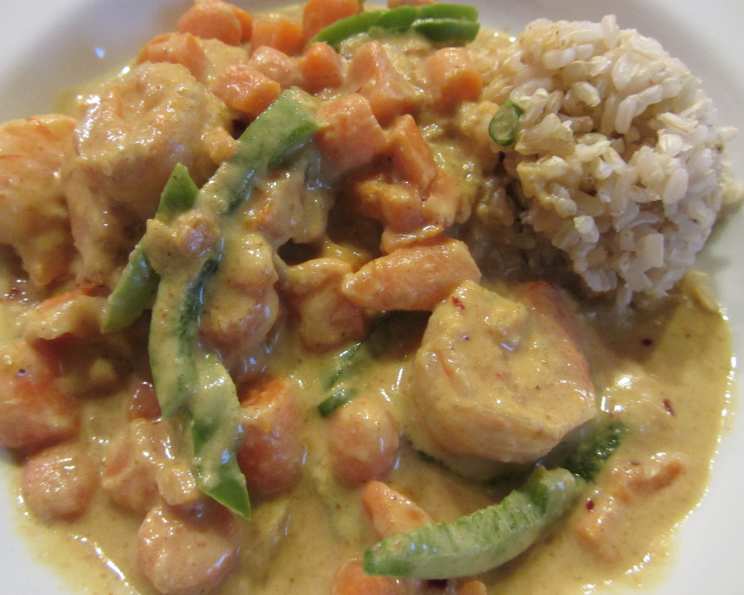
Shrimp in Yellow Curry (Gang Lueng Goong): A Taste of Sunshine
My first encounter with yellow curry was on a bustling street food stall in Bangkok. The vibrant colors of the dish, the fragrant steam rising from the bowl, and the promise of exotic spices – it was love at first sight. The creamy coconut milk, the tender shrimp, and the subtle warmth of the chilies created a symphony of flavors that danced on my palate. Now, years later, the memory of that first bite still inspires me to recreate that magic in my own kitchen, bringing a little bit of Thai sunshine into my home.
Recipe Overview
- Prep Time: 15 minutes
- Cook Time: 25 minutes
- Total Time: 40 minutes
- Servings: 4
- Dietary Type: Dairy-Free
Ingredients
- ½ lb medium shrimp, deveined and cleaned
- 1 tablespoon oil
- 1 onion, chopped
- 1 tablespoon minced ginger
- 2 garlic cloves, pressed
- 2 tablespoons yellow curry paste
- 2 cups light coconut milk (or 1 14oz can)
- 2-3 potatoes, diced
- 2 carrots, sliced
- 1 bell pepper, sliced
- 2 chili peppers, chopped (adjust to your spice preference)
- 1 teaspoon curry powder
- 1 tablespoon fish sauce
- 1 tablespoon sugar
- 1 spring onion, chopped
Equipment Needed
- Large saucepan
- Cutting board
- Knife
- Garlic press
Instructions
-
Begin by heating the oil in a large saucepan over medium heat.
-
Add the chopped onion and cook until softened and lightly browned, about 5 minutes. This step is crucial for building a flavorful base for your curry. Don’t rush it!
-
Next, add the minced ginger and pressed garlic to the saucepan. Cook for another minute, stirring constantly, until fragrant. Be careful not to burn the garlic, as it can become bitter.
-
Incorporate the yellow curry paste into the mixture. Stir well to ensure it is evenly distributed. The paste might seem a bit thick and globular at first, but don’t worry – it will blend in beautifully once the liquid is added. Cook the paste for about 2 minutes to release its aromatic oils and deepen the flavor.
-
Pour in the coconut milk and stir thoroughly to combine. If the mixture appears too thick, you can add about 1/3 cup of water to achieve your desired consistency. Remember, you’ll want a slightly thicker gravy by the end of cooking, so don’t overdo it with the water.
-
Add the diced potatoes and sliced carrots to the saucepan. Bring the mixture to a boil, then reduce the heat to a simmer. Leave the pot uncovered to allow some of the liquid to evaporate, which will help thicken the gravy and concentrate the flavors.
-
Simmer the vegetables until they are almost cooked through, about 10-15 minutes. You can test their doneness by piercing them with a fork. They should be tender but still hold their shape.
-
Once the potatoes and carrots are nearly cooked, gently stir in the shrimp, sliced bell pepper, fish sauce, sugar, chopped chili peppers, and curry powder.
-
Simmer for approximately 5 minutes, or until the shrimp turn pink and are cooked through. Be vigilant and avoid overcooking the shrimp, as they can become rubbery and lose their delicate texture.
-
Garnish with chopped spring onions just before serving. This adds a fresh, vibrant touch to the dish.
-
Taste the curry and adjust the seasonings as needed. The beauty of cooking is the ability to customize the dish to your liking. Depending on the brand of curry paste and curry powder you use, you may need to adjust the amount of sugar to balance the flavors. If you desire more heat, you can add additional chopped chili peppers or a pinch of red pepper flakes.
Expert Tips & Tricks
- Spice Level Control: For a milder curry, start with a smaller amount of chili peppers or even omit them entirely. You can always add more heat at the end if needed. If you accidentally add too much spice, a squeeze of lime juice or a dollop of plain yogurt can help temper the heat.
- Shrimp Selection: For the best flavor and texture, use fresh, high-quality shrimp. If using frozen shrimp, make sure they are fully thawed and patted dry before adding them to the curry.
- Coconut Milk Matters: Full-fat coconut milk will result in a richer, creamier curry, while light coconut milk will create a lighter version. Choose the type of coconut milk that best suits your taste and dietary preferences.
- Vegetable Variations: Feel free to add other vegetables to your yellow curry, such as broccoli florets, green beans, or zucchini slices. Just adjust the cooking time accordingly to ensure the vegetables are cooked to your desired level of tenderness.
- Make Ahead Tip: You can prepare the curry base (everything up to the addition of the shrimp) a day in advance. Store it in the refrigerator and simply add the shrimp and bell pepper just before serving.
Serving & Storage Suggestions
Serve your Shrimp in Yellow Curry hot, ideally with a generous portion of steamed jasmine rice to soak up all that delicious gravy. Garnish with fresh cilantro or a wedge of lime for an extra burst of flavor.
Leftovers can be stored in an airtight container in the refrigerator for up to 3 days. To reheat, gently warm the curry in a saucepan over low heat, stirring occasionally, until heated through. Avoid overheating, as this can cause the shrimp to become tough. While freezing is possible, the texture of the potatoes may change slightly upon thawing.
Nutritional Information
| Nutrient | Amount per Serving | % Daily Value |
|---|---|---|
| Calories | 214 kcal | N/A |
| Fat | 4.5g | 6% |
| Saturated Fat | 0.6g | 3% |
| Cholesterol | 72mg | 23% |
| Sodium | 708mg | 29% |
| Carbohydrates | 33g | 11% |
| Fiber | 5g | 19% |
| Sugars | 9g | N/A |
| Protein | 12g | 23% |
Note: Nutritional information is an estimate and may vary based on specific ingredients and portion sizes.
Variations & Substitutions
- Vegan Option: Substitute the shrimp with firm tofu or mixed vegetables. Use soy sauce instead of fish sauce.
- Gluten-Free: This recipe is naturally gluten-free. However, always double-check the labels of your curry paste and fish sauce to ensure they are certified gluten-free.
- Spicier Curry: Add a few extra chilies, a pinch of cayenne pepper, or a dash of your favorite hot sauce for a fiery kick.
- Creamier Curry: Add an extra 1/4 cup of coconut cream at the end of cooking for an extra-rich and decadent curry.
FAQs (Frequently Asked Questions)
Q: Can I use a different type of curry paste?
A: While this recipe specifically calls for yellow curry paste, you can experiment with other types of curry paste, such as red or green, for a different flavor profile. Keep in mind that the taste and spice level will vary.
Q: Can I add lime juice to the curry?
A: Absolutely! A squeeze of fresh lime juice at the end of cooking can brighten the flavors and add a touch of acidity to the dish.
Q: How do I prevent the potatoes from becoming mushy?
A: Choose a variety of potato that holds its shape well during cooking, such as Yukon Gold or red potatoes. Avoid overcooking the potatoes by adding them at the appropriate time and monitoring their doneness closely.
Q: Can I use chicken instead of shrimp?
A: Yes, chicken works well in this curry. Cut the chicken into bite-sized pieces and cook it until it’s no longer pink inside before adding the other ingredients.
Q: Is it possible to make this in a slow cooker?
A: Yes, you can adapt this recipe for a slow cooker. Combine all ingredients (except the shrimp) in the slow cooker and cook on low for 4-6 hours, or on high for 2-3 hours. Add the shrimp during the last 30 minutes of cooking time.
Final Thoughts
Shrimp in Yellow Curry is a dish that’s as comforting as it is flavorful, a true celebration of Thai cuisine that you can easily bring to your own table. Don’t be afraid to experiment with the ingredients and adjust the recipe to suit your personal preferences. So, gather your ingredients, embrace the aromas, and create your own sunshine in a bowl. And when you do, I hope you’ll share your experience and variations – because the best part of cooking is sharing the joy with others. Bon appétit!