
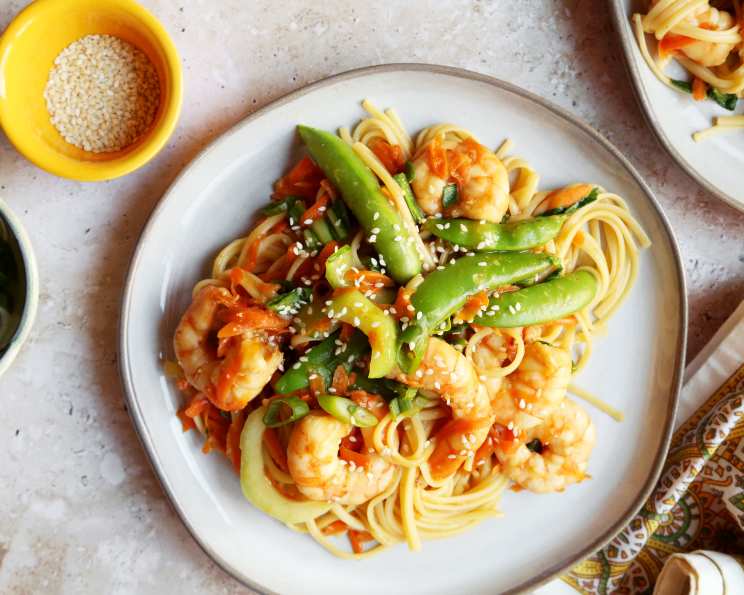
Shrimp Lo Mein: A Culinary Journey to Comfort
The aroma of soy sauce, ginger, and garlic sizzling in a hot wok – it instantly transports me back to my childhood. My grandmother, a culinary wizard in her own right, had a knack for turning simple ingredients into extraordinary meals. Her Shrimp Lo Mein was a weekly staple, a dish that soothed our souls and filled our bellies with warmth and happiness. Recreating her recipe today feels like a warm embrace, a delicious way to honor her memory.
Recipe Overview
- Prep Time: 20 minutes
- Cook Time: 15 minutes
- Total Time: 35 minutes
- Servings: 6
- Dietary Type: Pescatarian
Ingredients
- 2 lbs medium shrimp, peeled and deveined
- ½ cup soy sauce
- 8 teaspoons cornstarch
- ½ tablespoon grated fresh ginger
- 6 cloves garlic, minced
- 4 teaspoons sesame oil, divided
- 12 ounces snow peas
- 2 cups shredded carrots
- 1 head bok choy, sliced
- 1 (15 ounce) can chicken broth
- 7 scallions, sliced
- 12 ounces fettuccine, cooked and drained
Equipment Needed
- Large Skillet or Wok
- Mixing Bowl
Instructions
-
In a mixing bowl, combine the shrimp, soy sauce, cornstarch, grated ginger, and minced garlic. Set aside to marinate for 10 minutes. This allows the flavors to meld and the cornstarch to tenderize the shrimp slightly.
-
Heat 1 teaspoon of sesame oil in a large skillet or wok over high heat. Ensure the wok is hot before adding the oil to prevent sticking.
-
Drain the shrimp, reserving the soy mixture. The marinade will be used later to create a flavorful sauce.
-
Cook the shrimp in the hot skillet or wok until pink and cooked through, about 2-3 minutes. Avoid overcrowding the pan; cook in batches if necessary to ensure even cooking. Overcooked shrimp can become rubbery.
-
Remove the cooked shrimp from the skillet and set aside.
-
Add another 1 teaspoon of sesame oil to the skillet. Add the snow peas and shredded carrots and cook for 1 minute, stirring frequently. This quick cook time ensures they retain their crispness.
-
Add the snow peas and carrots to the cooked shrimp.
-
Add the remaining 2 teaspoons of sesame oil to the skillet. Add the sliced bok choy and cook for 1 minute, stirring constantly until slightly wilted.
-
Combine the chicken broth and the reserved soy mixture. Add this mixture to the skillet, along with the shrimp and vegetable mixture.
-
Cook until the sauce has thickened, about 1 minute, stirring continuously. The cornstarch in the marinade will help to thicken the sauce quickly.
-
Remove from heat and mix in the sliced scallions and the cooked fettuccine. Toss gently to ensure the noodles are evenly coated with the sauce.
Expert Tips & Tricks
- Shrimp Size Matters: Medium shrimp are ideal for this recipe as they cook quickly and evenly. If using larger shrimp, you may need to increase the cooking time slightly.
- Don’t Overcrowd: Overcrowding the wok or skillet will lower the temperature and steam the ingredients instead of searing them. Cook in batches for best results.
- Noodle Choice: While fettuccine is traditionally used, other noodle types like spaghetti, linguine, or even egg noodles can be substituted.
- Spice it Up: Add a pinch of red pepper flakes or a dash of sriracha to the marinade for a spicy kick.
- Ginger Power: Freshly grated ginger is essential for that authentic flavor. Avoid using powdered ginger as it lacks the same vibrancy.
- Vegetable Variety: Feel free to substitute or add other vegetables such as bell peppers, mushrooms, or broccoli florets.
- Make-Ahead Tip: The shrimp can be marinated ahead of time and stored in the refrigerator for up to 24 hours.
Serving & Storage Suggestions
Serve your Shrimp Lo Mein immediately while it’s hot and the noodles are perfectly coated in the flavorful sauce. A sprinkle of sesame seeds and extra sliced scallions adds a touch of elegance to the presentation. Leftovers can be stored in an airtight container in the refrigerator for up to 3 days. To reheat, microwave in short intervals, stirring occasionally, or heat gently in a skillet over medium heat, adding a splash of broth or water if needed to prevent sticking. Freezing is not recommended as the noodles may become mushy upon thawing.
Nutritional Information
| Nutrient | Amount per Serving | % Daily Value |
|---|---|---|
| Calories | 463 kcal | N/A |
| Calories from Fat | 72g | 16% |
| Total Fat | 8.1 g | 12% |
| Saturated Fat | 1.5 g | 7% |
| Cholesterol | 238.9 mg | 79% |
| Sodium | 2570.3 mg | 107% |
| Total Carbohydrate | 60.7 g | 20% |
| Dietary Fiber | 6.7 g | 26% |
| Sugars | 8.1 g | N/A |
| Protein | 37.4 g | 74% |
Note: Nutritional information is an estimate and may vary based on specific ingredients and portion sizes.
Variations & Substitutions
- Vegetarian Lo Mein: Substitute the shrimp with tofu or tempeh for a vegetarian option.
- Gluten-Free Lo Mein: Use gluten-free noodles such as rice noodles or soba noodles, and ensure the soy sauce is gluten-free (tamari).
- Chicken Lo Mein: Replace the shrimp with diced chicken breast or thigh meat. Adjust cooking time accordingly to ensure the chicken is fully cooked.
- Spicy Lo Mein: Add a tablespoon of chili garlic sauce or a pinch of red pepper flakes to the marinade for an extra kick.
- Deluxe Lo Mein: Add other proteins like thinly sliced pork or beef to create a more substantial meal.
- Low Sodium Lo Mein: Use low-sodium soy sauce and chicken broth.
FAQs (Frequently Asked Questions)
Q: Can I use frozen shrimp for this recipe?
A: Yes, you can use frozen shrimp. Make sure to thaw it completely before cooking, and pat it dry with paper towels to remove any excess moisture.
Q: How do I prevent the noodles from sticking together?
A: To prevent noodles from sticking, toss them with a little oil after cooking and draining. Also, ensure they are thoroughly coated with the sauce.
Q: Can I add different vegetables to this dish?
A: Absolutely! Feel free to add your favorite vegetables, such as bell peppers, mushrooms, or broccoli. Just adjust the cooking time accordingly.
Q: What if I don’t have sesame oil?
A: Sesame oil adds a distinct flavor, but you can substitute it with another oil like vegetable oil or canola oil. However, the flavor profile will be slightly different.
Q: How do I know when the shrimp is cooked properly?
A: Shrimp is cooked when it turns pink and opaque. Avoid overcooking, as it can become rubbery.
Final Thoughts
Shrimp Lo Mein is more than just a dish; it’s a celebration of flavors and textures, a culinary hug in a bowl. It’s a delicious and satisfying meal that can be easily customized to your liking. So, gather your ingredients, unleash your inner chef, and embark on this flavorful journey. I encourage you to try this recipe and share your creations with friends and family. Pair it with a refreshing glass of iced green tea for the ultimate dining experience. Happy cooking!