
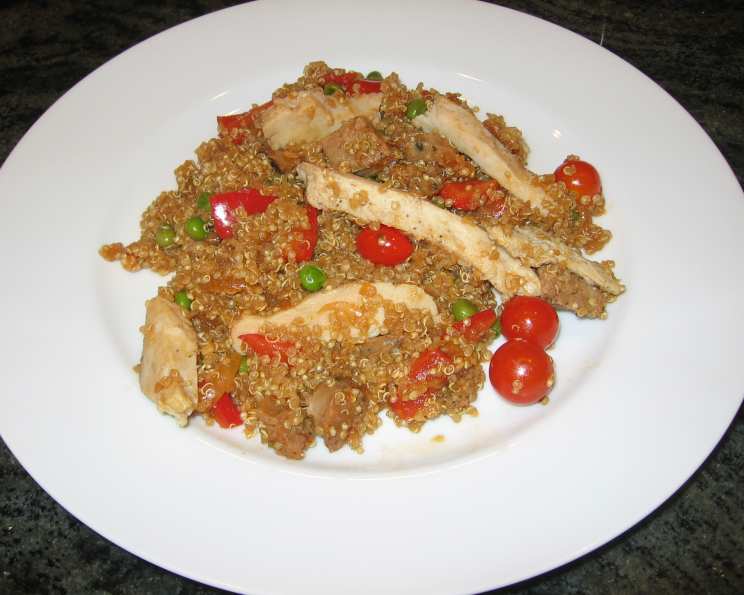
Shrimp, Sausage and Quinoa Jambalaya: A Taste of Louisiana in Your Kitchen
My grandmother, bless her heart, always said that the best meals tell a story. For her, Jambalaya was a tale of resilience, of flavors mingling and evolving, just like the vibrant culture of Louisiana itself. I remember sitting at her worn wooden table, the aroma of spices and simmering broth filling the air, as she’d recount anecdotes from her childhood in New Orleans, each bite of jambalaya a delicious punctuation mark in her narrative. This Shrimp, Sausage and Quinoa Jambalaya recipe isn’t just a meal; it’s an invitation to create your own story, a symphony of textures and tastes that will transport you straight to the heart of the South.
Recipe Overview
- Prep Time: 15 minutes
- Cook Time: 25 minutes
- Total Time: 40 minutes
- Servings: 8
- Dietary Type: Gluten-Free
Ingredients
- 4 1/2 cups low sodium chicken broth, divided
- 2 cups quinoa
- 1 tablespoon olive oil
- 1/2 lb smoked kielbasa, sliced in 1/4-inch rounds (Turkey kielbasa is a great, slightly leaner option)
- 1 large onion, chopped
- 1 red bell pepper, thinly sliced
- 4 garlic cloves, peeled and chopped
- 1 cup vegetable juice, spicy (such as V8)
- 1 lb medium shrimp, peeled and deveined
- 1 cup frozen peas
- 1 cup grape tomatoes, halved
Equipment Needed
- Medium saucepan
- Large skillet or Dutch oven
Instructions
- In a medium saucepan, combine 4 cups of the low sodium chicken broth with the quinoa.
- Bring the mixture to a boil over medium-high heat. Once boiling, reduce the heat to low, cover the saucepan, and cook for 15 minutes, or until the quinoa is cooked through and the liquid is absorbed.
- While the quinoa is cooking, heat the olive oil in a large skillet or Dutch oven over medium heat.
- Add the sliced kielbasa, chopped onion, sliced red bell pepper, and chopped garlic to the skillet.
- Sauté the ingredients for about 10 minutes, or until the vegetables are tender and the kielbasa is lightly browned. Stir occasionally to prevent burning.
- Add the remaining 1/2 cup of chicken broth and the spicy vegetable juice to the skillet.
- Bring the mixture to a simmer over medium heat.
- Add the shrimp to the simmering sauce.
- Simmer for approximately 5 minutes, or until the shrimp is cooked through and has turned pink. Be careful not to overcook the shrimp, as it can become rubbery.
- Add the frozen peas, halved grape tomatoes, and the cooked quinoa to the skillet.
- Toss all of the ingredients together gently to combine.
- Heat through, stirring occasionally, for a minute or two until the peas are heated through.
- Serve immediately.
Expert Tips & Tricks
- Spice it up: For an extra kick, add a pinch of cayenne pepper or a dash of your favorite hot sauce to the skillet along with the vegetable juice.
- Prep ahead: You can cook the quinoa ahead of time and store it in the refrigerator for up to 2 days. This will save you time on the day you plan to make the jambalaya. You can also chop the vegetables a day in advance.
- Don’t overcrowd the pan: If your skillet is too small, work in batches when sautéing the kielbasa and vegetables. Overcrowding the pan can lower the temperature and prevent proper browning.
- Shrimp substitutions: If you don’t have shrimp on hand, feel free to substitute with another protein such as chicken or andouille sausage.
- Vegetable boost: Feel free to add other vegetables you enjoy, such as celery, okra, or corn. Just be sure to adjust the cooking time accordingly.
- Broth flavor: Using homemade chicken broth will add more flavor to the jambalaya. If you don’t have time to make your own, use a high-quality store-bought broth.
Serving & Storage Suggestions
Serve the Shrimp, Sausage, and Quinoa Jambalaya hot, directly from the skillet or Dutch oven. Garnish with fresh parsley or a squeeze of lemon juice for added brightness. Jambalaya is a complete meal on its own, but you can also serve it with a side of cornbread or a simple green salad.
Leftovers can be stored in an airtight container in the refrigerator for up to 3 days. To reheat, gently warm the jambalaya in a skillet over medium heat, adding a splash of chicken broth or water if needed to prevent it from drying out. You can also reheat it in the microwave, but be careful not to overcook the shrimp. Jambalaya can also be frozen for up to 2 months. Thaw it in the refrigerator overnight before reheating.
Nutritional Information
| Nutrient | Amount per Serving | % Daily Value |
|---|---|---|
| Calories | 356.5 kcal | N/A |
| Calories from Fat | 99 g | 28% |
| Total Fat | 11.1 g | 17% |
| Saturated Fat | 2.7 g | 13% |
| Cholesterol | 106 mg | 35% |
| Sodium | 574.2 mg | 23% |
| Total Carbohydrate | 40.5 g | 13% |
| Dietary Fiber | 4.3 g | 17% |
| Sugars | 3.6 g | N/A |
| Protein | 25.2 g | 50% |
Note: Percent Daily Values are based on a 2,000 calorie diet.
Variations & Substitutions
- Vegetarian Jambalaya: Omit the kielbasa and shrimp and add more vegetables, such as mushrooms, zucchini, and eggplant. Use vegetable broth instead of chicken broth.
- Spicier Jambalaya: Add more spicy vegetable juice or a pinch of cayenne pepper for extra heat. You could also use andouille sausage instead of kielbasa.
- Seafood Jambalaya: Add other seafood such as crawfish, mussels, or clams for a richer seafood flavor.
- Grain Variations: While quinoa is used here, you can substitute brown rice or even traditional white rice. Remember cooking times will vary with different grains, so adjust accordingly.
- Lower Sodium: Ensure you are using truly low sodium chicken broth and be mindful of sodium content in the kielbasa. You can also omit the added salt from the recipe.
FAQs (Frequently Asked Questions)
Q: Can I use pre-cooked shrimp to save time?
A: Yes, you can use pre-cooked shrimp. Add it during the last minute of cooking, just to heat it through. Be careful not to overcook it.
Q: Is quinoa a good substitute for rice in jambalaya?
A: Absolutely! Quinoa adds a nutty flavor and a boost of protein and fiber compared to traditional white rice.
Q: How can I prevent the quinoa from sticking to the bottom of the saucepan?
A: Be sure to use a heavy-bottomed saucepan and keep the heat on low while simmering. Stir occasionally to prevent sticking.
Q: Can I make this jambalaya in a slow cooker?
A: Yes, you can. Sauté the kielbasa and vegetables first, then transfer everything to a slow cooker. Cook on low for 4-6 hours. Add the shrimp during the last 30 minutes of cooking.
Q: What’s the best way to devein shrimp?
A: Use a small, sharp knife to make a shallow cut along the back of the shrimp. Remove the dark vein with the tip of the knife or your fingers. You can also buy shrimp that has already been peeled and deveined to save time.
Final Thoughts
I hope this Shrimp, Sausage, and Quinoa Jambalaya recipe inspires you to create your own culinary stories! Don’t be afraid to experiment with different ingredients and flavors to make it your own. Whether you’re cooking for a crowd or enjoying a cozy meal at home, this dish is sure to bring a taste of Louisiana to your table. Please share your feedback and let me know how it turns out! Perhaps serve it with a crisp Sauvignon Blanc, or a refreshing Abita Amber beer, for a truly authentic experience. Bon appétit, y’all!