
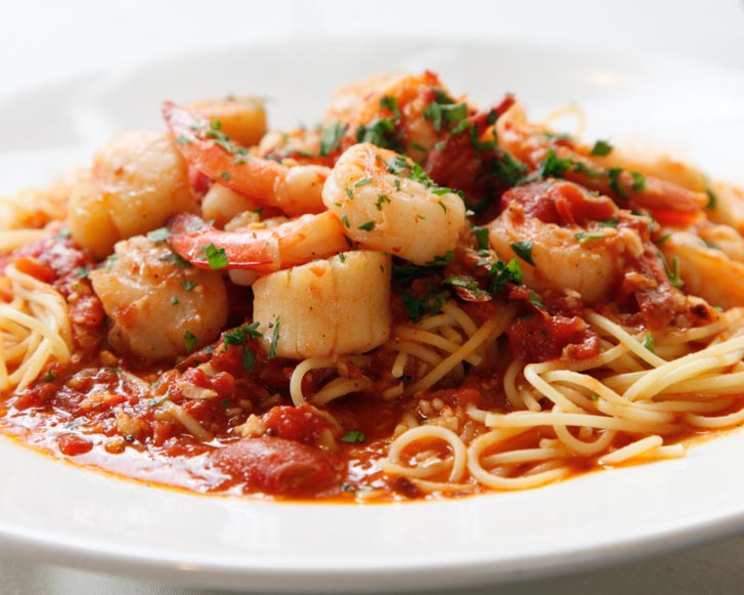
Shrimp & Scallop Fra Diavolo: A Taste of Italy at Home
The memory of my first Fra Diavolo still lingers, even after years of countless culinary adventures. It was a tiny trattoria in Little Italy, the air thick with garlic and the murmur of lively conversations. A steaming plate arrived, piled high with perfectly cooked seafood bathed in a vibrant, spicy tomato sauce. That first bite – the succulent shrimp, the sweet scallops, the fiery kick of chili – transported me. From that moment, I was hooked, determined to master this iconic dish and bring that taste of Italy into my own kitchen.
Recipe Overview
- Prep Time: 20 minutes
- Cook Time: 20 minutes
- Total Time: 40 minutes
- Servings: 4
- Dietary Type: Pescatarian
Ingredients
- 1 lb shrimp (peeled and deveined)
- 1 lb scallops (cleaned)
- 1 1/2 teaspoons crushed red pepper flakes (divided)
- 4 tablespoons olive oil (divided)
- 2 teaspoons table salt (divided)
- 1/2 cup cognac or 1/2 cup brandy
- 6 tablespoons minced garlic, divided (about 12 medium or 8 large cloves)
- 3/4 teaspoon granulated sugar
- 2 (28 ounce) cans diced tomatoes (drained)
- 1 1/2 cups medium-dry white wine (such as Sauvignon Blanc or Pinot Grigio)
- 1/4 cup plus 2 tablespoons minced fresh parsley leaves
- 2 tablespoons butter
- 1 lb linguine or 1 lb spaghetti
Equipment Needed
- Large stockpot
- 12-inch heavy-bottomed skillet
- Medium bowl
Instructions
-
Begin by bringing 4 quarts of salted water to a rolling boil in a large stockpot. Cover the pot to speed up the process. The pasta will be added to the boiling water later, during the 8-minute simmer of the sauce.
-
While the water is heating, heat a 12-inch heavy-bottomed skillet over high heat for 4 minutes. This ensures the pan is properly hot for searing the seafood.
-
In a medium bowl, gently toss the shrimp and scallops with half of the crushed red pepper flakes, 2 tablespoons of the olive oil, and 1 teaspoon of the table salt. Be careful not to overcrowd the bowl to ensure even coating.
-
Add the seasoned seafood to the preheated skillet and quickly toss for about 30 seconds. Don’t worry about cooking the seafood all the way through at this point; the aim is simply to sear the outside and develop flavor. The seafood will finish cooking later in the sauce. Remove the skillet from the heat.
-
Carefully add the cognac or brandy to the skillet. Allow it to sit off the heat for about 5 seconds, just long enough to warm slightly. Return the pan to high heat.
-
Carefully wave a flame (from a lighter or gas stove) over the skillet until the cognac ignites. This step is optional but adds a wonderful depth of flavor. Be cautious and maintain a safe distance. Shake the skillet gently until the flames subside. Once the flames are gone, transfer the seafood to the medium bowl, being sure to scrape up any accumulated juices. Set the bowl aside.
-
Remove the now-empty skillet from the heat and allow it to cool for 2 minutes. This prevents the garlic from burning in the next step. Return the skillet to the burner and reduce the heat to low.
-
Add the remaining 2 tablespoons of olive oil and 5 tablespoons of the minced garlic to the skillet. Cook, stirring constantly, until the garlic foams, becomes sticky, and turns a straw-colored hue, approximately 7 to 10 minutes. It’s essential to stir constantly to prevent burning, which can ruin the flavor of the sauce.
-
Add the remaining crushed red pepper flakes, the remaining 1 teaspoon of table salt, the granulated sugar, the drained diced tomatoes, and the white wine to the skillet. Increase the heat to medium-high and simmer until the sauce has thickened and become fragrant, about 8 minutes.
-
Stir in the reserved seafood and any accumulated juices from the bowl, the remaining 1 tablespoon of minced garlic, and the parsley. Simmer until the seafood is heated through, about 1 minute longer. Avoid overcooking the seafood at this point, as it will become rubbery.
-
Remove the skillet from the heat and stir in the butter until it is completely melted and incorporated into the sauce. This adds richness and a silky texture to the finished dish.
-
Meanwhile, while the sauce is simmering, add the linguine or spaghetti to the boiling water in the stockpot. Stir to separate the pasta and prevent sticking, cover the pot, and cook until the pasta is al dente, according to package directions. Reserve 1/3 cup of the pasta cooking water before draining the pasta.
-
Drain the pasta and transfer it back to the now-empty stockpot. Add about 1/2 cup of the sauce (without the seafood) to the pasta, along with 2 to 3 tablespoons of the reserved pasta cooking water. Toss to coat the pasta evenly with the sauce. The pasta water helps to create a creamy emulsion and bind the sauce to the pasta.
-
Divide the coated pasta among warm serving bowls. Top with a generous portion of the remaining sauce and seafood. Serve immediately with freshly grated Parmesan cheese (optional) and a nice, crusty bread to soak up the delicious sauce.
Expert Tips & Tricks
- For an even spicier Fra Diavolo, add a pinch of cayenne pepper or a finely chopped chili pepper to the sauce along with the crushed red pepper flakes.
- If you don’t have cognac or brandy, you can substitute dry sherry or simply omit the flambé step altogether. The dish will still be delicious.
- To prevent the garlic from burning, use a heavy-bottomed skillet and keep the heat on low. Stir frequently and watch it carefully.
- Don’t overcrowd the skillet when searing the seafood. Cook it in batches if necessary to ensure proper browning.
- If the sauce becomes too thick, add a little more white wine or pasta cooking water to thin it out.
Serving & Storage Suggestions
Serve the Shrimp & Scallop Fra Diavolo immediately after cooking for the best flavor and texture. Garnish with extra fresh parsley and a sprinkle of red pepper flakes for added visual appeal.
Leftovers can be stored in an airtight container in the refrigerator for up to 2 days. Reheat gently on the stovetop over low heat, adding a splash of water or white wine if needed to prevent the pasta from drying out. The seafood may become slightly tougher upon reheating. Freezing is not recommended as it can significantly affect the texture of the seafood and pasta.
Nutritional Information
| Nutrient | Amount per Serving | % Daily Value |
|---|---|---|
| Calories | 750 kcal | 38% |
| Total Fat | 20g | 31% |
| Saturated Fat | 7g | 35% |
| Cholesterol | 190mg | 63% |
| Sodium | 2400mg | 100% |
| Total Carbohydrate | 115g | 38% |
| Dietary Fiber | 9g | 36% |
| Sugars | 16g | N/A |
| Protein | 50g | 100% |
Note: Nutritional information is an estimate and may vary based on specific ingredients and portion sizes.
Variations & Substitutions
- Seafood Medley: Feel free to add other types of seafood to the Fra Diavolo, such as mussels, clams, or lobster.
- Gluten-Free: Use gluten-free pasta to make this dish suitable for those with gluten sensitivities.
- Vegetarian (Inspired): Replace the seafood with roasted vegetables like zucchini, bell peppers, and eggplant for a vegetarian twist. Adjust the seasoning to complement the vegetables. Consider adding a touch of smoked paprika for depth.
- Spicier Version: Add a finely chopped Scotch bonnet pepper (with seeds removed for less heat) to the sauce. Use caution, as these peppers are very potent.
FAQs (Frequently Asked Questions)
Q: Can I use frozen seafood?
A: Yes, you can use frozen shrimp and scallops, but make sure to thaw them completely before cooking and pat them dry with paper towels to remove excess moisture.
Q: Can I make the sauce ahead of time?
A: Yes, you can prepare the sauce up to a day in advance and store it in the refrigerator. Add the seafood just before serving to prevent it from becoming overcooked.
Q: What is the best type of wine to use in Fra Diavolo?
A: A dry to medium-dry white wine, such as Sauvignon Blanc or Pinot Grigio, works best in this recipe. Avoid using overly sweet wines.
Q: How do I know when the seafood is cooked through?
A: Shrimp is cooked when it turns pink and opaque, and scallops are done when they are opaque and slightly firm to the touch. Avoid overcooking, as this can make the seafood tough.
Q: Can I use crushed tomatoes instead of diced tomatoes?
A: Yes, you can use crushed tomatoes, but the texture of the sauce will be slightly different. If using crushed tomatoes, you may want to reduce the simmering time to prevent the sauce from becoming too thick.
Final Thoughts
Now, armed with this recipe, you have the power to recreate the magic of Fra Diavolo in your own home. Don’t be intimidated by the ingredient list or the (optional!) flambé step. Take your time, follow the instructions, and let the aromas fill your kitchen. I encourage you to experiment with variations, find your own signature touch, and share the joy of this incredible dish with your loved ones. Pair it with a crisp Italian white wine and a lively conversation, and you’ll be transported straight to the heart of Italy. Buon appetito!