
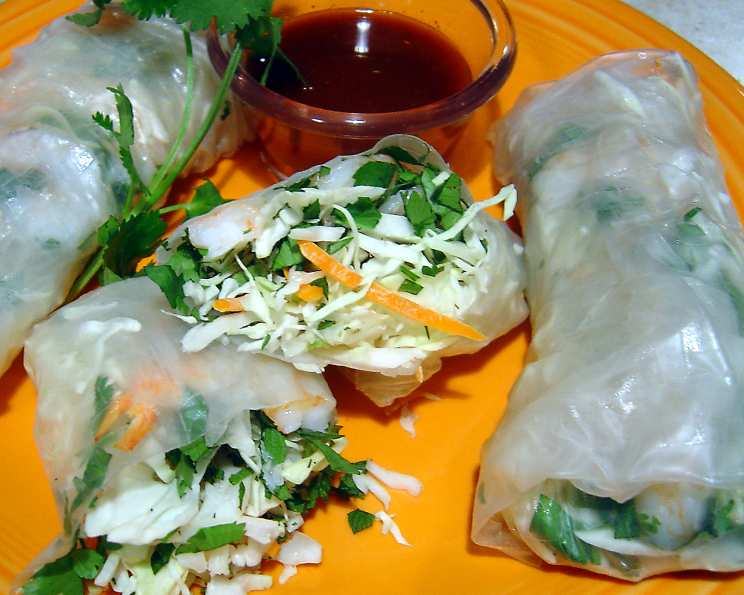
Shrimp Spring Rolls With Hoisin Dipping Sauce
I remember the first time I had a spring roll that truly transported me. It wasn’t in a fancy restaurant, but at a bustling night market in Bangkok. The air was thick with the aroma of street food, and amidst the vibrant chaos, a vendor handed me a freshly made spring roll, its translucent wrapper showcasing the colorful ingredients within. The explosion of flavors – the sweet shrimp, the crisp vegetables, and the savory-sweet dipping sauce – was an epiphany. Since then, I’ve been on a quest to recreate that perfect bite, and these Shrimp Spring Rolls with Hoisin Dipping Sauce come incredibly close, offering a taste of Southeast Asia in the comfort of my own kitchen.
Recipe Overview
- Prep Time: 20 minutes
- Cook Time: 0 minutes
- Total Time: 20 minutes
- Servings: 4
- Yield: 4 rolls
- Dietary Type: Dairy-Free
Ingredients
- 1⁄4 cup seasoned rice vinegar
- 4 teaspoons hoisin sauce
- 1 tablespoon minced peeled fresh ginger
- 2 teaspoons chili-garlic sauce
- 4 sheets rice paper rounds
- 2 2⁄3 cups coleslaw mix
- 4 tablespoons chopped fresh cilantro
- 8 teaspoons chopped fresh mint
- 8 cooked and deveined medium shrimp, halved horizontally
Equipment Needed
- Small bowl
- Large bowl
- Ramekin
- Cutting board
- Sharp knife
Instructions
- Begin by preparing the hoisin dipping sauce. In a small bowl, whisk together the seasoned rice vinegar, hoisin sauce, minced fresh ginger, and chili-garlic sauce until well combined. Pour the sauce into a ramekin and set aside. This allows the flavors to meld while you prepare the spring rolls.
- Next, prepare the rice paper wrappers. Fill a large bowl with room temperature water. Submerge one rice paper round in the water. Let it stand until soft and pliable, but not limp. This typically takes about 1 minute. Lift the rice paper occasionally to check its texture. It should be easy to handle without tearing.
- Carefully remove the softened rice paper from the water and place it on a clean work surface. Ensure the surface is slightly damp to prevent the rice paper from sticking, but not overly wet.
- Assemble the spring roll filling. Mound 2/3 cup of coleslaw mix at the end of the rice paper round closest to you. Distribute the coleslaw evenly in a log shape, leaving some space on either side and at the top.
- Sprinkle 1 tablespoon of chopped fresh cilantro and 2 teaspoons of chopped fresh mint over the coleslaw mix. These fresh herbs will add a burst of flavor and aroma to the spring roll.
- Top the herbs and coleslaw with 4 shrimp halves, cut side down, in a single layer. Arrange the shrimp neatly to ensure an even distribution of protein in each bite.
- Begin rolling the spring roll. Fold in the ends of the rice paper round towards the center, covering the sides of the filling. This will create a sealed edge and prevent the filling from spilling out.
- Roll up the spring roll tightly into a cylinder, starting from the end closest to you. Maintain a firm but gentle pressure to ensure the roll is compact and holds its shape.
- Repeat steps 2-8 with the remaining rice paper, coleslaw mix, cilantro, mint, and shrimp to form 3 more rolls.
- Before serving, use a sharp knife to cut each spring roll diagonally in half. This creates a visually appealing presentation and makes the rolls easier to handle and dip.
- Arrange the cut spring rolls on a plate and serve immediately with the prepared hoisin dipping sauce.
Expert Tips & Tricks
- Preventing Sticking: To prevent the rice paper from sticking to the work surface or to itself, lightly dampen your work surface and keep your hands slightly moist while handling the softened rice paper.
- Softening the Rice Paper: Don’t oversoak the rice paper. If it becomes too soft, it will be difficult to handle and may tear. The rice paper should be pliable but still have some structure.
- Make-Ahead Prep: You can prepare the hoisin dipping sauce and chop the herbs in advance. Store them separately in airtight containers in the refrigerator until ready to use. However, the spring rolls are best assembled fresh, as the rice paper can become sticky if stored for too long.
- Shrimp Variation: If you prefer a richer flavor, lightly sauté the shrimp in a little sesame oil with a pinch of ginger and garlic before adding them to the spring rolls. Be sure to let them cool slightly before assembling.
- Vegetable Prep: You can also use pre-shredded carrots or cabbage.
Serving & Storage Suggestions
Serve the Shrimp Spring Rolls immediately after assembly for the best texture and flavor. Arrange the rolls on a platter and garnish with extra cilantro and mint sprigs for a visually appealing presentation. The hoisin dipping sauce should be served in a separate ramekin alongside the spring rolls.
Leftover spring rolls are best consumed within a few hours of assembly, as the rice paper can become sticky and the vegetables may wilt. Store them in an airtight container in the refrigerator. Avoid storing them for more than 24 hours. Reheating is not recommended, as the rice paper will become soggy. It’s best to enjoy them cold.
Nutritional Information
| Nutrient | Amount per Serving | % Daily Value |
|---|---|---|
| Calories | 38.6 kcal | N/A |
| Calories from Fat | 4 g | 11% |
| Total Fat | 0.5 g | 0% |
| Saturated Fat | 0.1 g | 0% |
| Cholesterol | 18.4 mg | 6% |
| Sodium | 113.2 mg | 4% |
| Total Carbohydrate | 5.7 g | 1% |
| Dietary Fiber | 1.5 g | 6% |
| Sugars | 3.1 g | 12% |
| Protein | 3.5 g | 6% |
Variations & Substitutions
- Vegetarian Spring Rolls: Omit the shrimp and add extra vegetables, such as julienned carrots, cucumbers, bell peppers, or avocado. Tofu can be also added.
- Spicy Spring Rolls: Add a dash of sriracha or a pinch of red pepper flakes to the hoisin dipping sauce for an extra kick.
- Peanut Sauce: Substitute the hoisin dipping sauce with a peanut sauce for a different flavor profile. Combine peanut butter, soy sauce, rice vinegar, honey, and a pinch of chili flakes for a delicious alternative.
- Herbs: Experiment with different herbs, such as Thai basil or Vietnamese mint, for a unique twist.
- Lettuce Wraps: If you don’t have rice paper, use large lettuce leaves as wrappers for a lighter version.
FAQs (Frequently Asked Questions)
Q: Can I make these spring rolls ahead of time?
A: It’s best to assemble the spring rolls just before serving to prevent the rice paper from becoming sticky. However, you can prepare the dipping sauce and chop the vegetables in advance.
Q: What if my rice paper tears?
A: If the rice paper tears, it’s likely either too soft from being oversoaked or too dry. Start with a fresh sheet and adjust the soaking time accordingly.
Q: Can I use frozen shrimp?
A: Yes, you can use frozen shrimp. Make sure to thaw it completely and pat it dry before adding it to the spring rolls.
Q: How do I prevent the spring rolls from sticking to each other?
A: Arrange the spring rolls on a plate in a single layer, leaving a little space between each roll. You can also lightly brush them with a little oil to prevent sticking.
Q: What other fillings can I use?
A: The possibilities are endless! Try adding rice noodles, shredded chicken, pork, or beef. You can also experiment with different vegetables and herbs to create your own custom spring rolls.
Final Thoughts
These Shrimp Spring Rolls with Hoisin Dipping Sauce are a delightful and refreshing dish that’s perfect for a light lunch, appetizer, or snack. The combination of fresh ingredients, delicate rice paper, and flavorful dipping sauce is sure to impress. Don’t be intimidated by the rolling process; with a little practice, you’ll be whipping up these spring rolls like a pro in no time. I encourage you to try this recipe and make it your own, experimenting with different fillings and flavors to create your perfect spring roll masterpiece. Serve it with a crisp glass of Sauvignon Blanc for a complete and satisfying experience! I’m eager to hear how you enjoy it!