
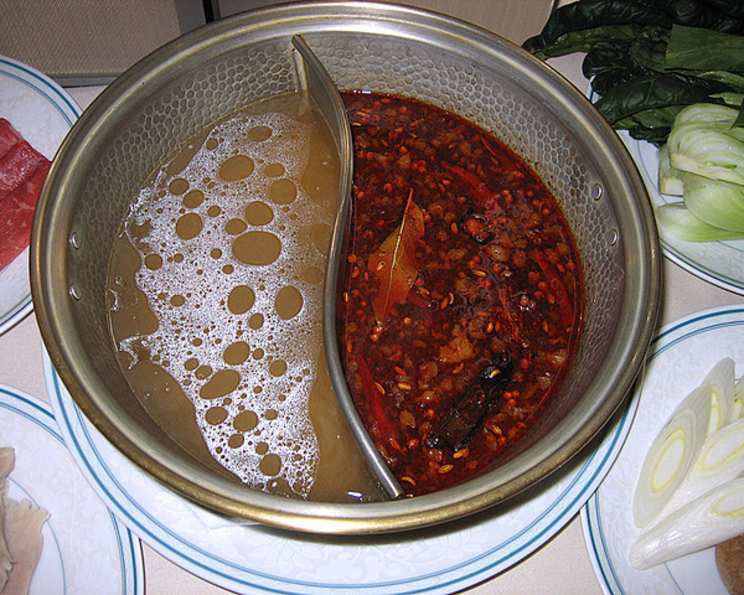
Sichuan Spicy Hot Pot: A Culinary Adventure
The first time I tasted Sichuan hot pot, I was completely overwhelmed – in the best possible way. The vibrant, bubbling broth, the dizzying array of ingredients, and the tingling, numbing sensation of ma la (Sichuan peppercorns) created an experience that transcended mere dining. It was a communal celebration, a fiery dance of flavors, and an unforgettable introduction to the magic of Sichuan cuisine. Now, decades later, the memory still sparks joy, and recreating that authentic hot pot experience at home is a culinary passion.
Recipe Overview
- Prep Time: 45 minutes
- Cook Time: 3 hours 40 minutes
- Total Time: 4 hours 25 minutes
- Servings: 4-6
- Yield: About 1 gallon broth, plus spicy paste
- Dietary Type: Not specified, but can be modified for gluten-free or dairy-free
Ingredients
For the Stock
- 2 lbs pork or 2 lbs chicken bones, or chicken or beef bouillon (to taste, if substituting)
- 3 slices fresh ginger
- 2 scallions
- 3 bay leaves
- 1 gallon water
For Aged-Spicy Paste
- 3 tablespoons Szechuan spicy bean paste (Doubanjiang)
- 5 dried chilies, soaked until soft
- 4 slices ginger
- 4 garlic cloves
- 1/2 cup cooking wine (medium sherry)
- 1 tablespoon rock sugar
- 3 star anise
- 1 tablespoon Szechuan peppercorn
- 1 black cardamom pod
- 4 green cardamoms
- 2 sand ginger (optional, but adds authentic flavor)
- 1 piece cinnamon stick
- 3 slices dried licorice
- 1 tablespoon fennel seed
For Serving (Optional, but Recommended)
- Assorted meats: Thinly sliced beef, lamb, pork, chicken
- Seafood: Shrimp, fish fillets, squid, mussels
- Vegetables: Napa cabbage, spinach, mushrooms (shiitake, enoki, oyster), lotus root, winter melon, bean sprouts
- Tofu: Firm tofu, tofu puffs, fried tofu
- Noodles: Glass noodles, udon noodles, sweet potato noodles
- Dipping Sauces: Sesame oil, garlic, cilantro, soy sauce, vinegar, chili oil
Equipment Needed
- Large stockpot or Dutch oven
- Small saucepan
- Knife
- Cutting board
- Mortar and pestle (optional, for grinding spices)
- Hot pot cooker or portable burner with a pot
- Slotted spoons or chopsticks for retrieving food
Instructions
- Prepare the base stock: In a large stockpot, combine the pork or chicken bones (or use bouillon), ginger, scallions, and bay leaves with water. Bring to a boil over high heat, then reduce the heat to low and simmer for 3 hours. If using bouillon, simply follow the package instructions for the desired strength and skip the 3-hour simmering process.
- Make the aged-spicy paste: While the stock simmers (or while using bouillon), prepare the spicy paste. Roughly chop the Szechuan spicy bean paste, soaked dried chilies, ginger, garlic, and black bean (if using).
- Cook the spicy paste: Heat 4 tablespoons of oil in a small saucepan over low heat. Add all the chopped ingredients from the previous step and cook for 10 minutes, stirring frequently to prevent burning.
- Add the spices: Add the remaining dry spices – star anise, Szechuan peppercorn, black cardamom pod, green cardamoms, sand ginger (if using), cinnamon stick, dried licorice, and fennel seed – to the paste. Stir to combine.
- Simmer the paste: Add the cooking wine (sherry) and rock sugar to the paste. Continue to cook over low heat for another 30 minutes, stirring frequently. This low and slow cooking process helps to develop the complex flavors of the paste. Turn off the heat and let the paste cool.
- Combine stock and paste: Before serving the hot pot, strain the base stock to remove the bones, ginger, scallions, and bay leaves. Pour the strained stock into your hot pot cooker or pot on a portable burner. Add the aged-spicy paste to the stock.
- Adjust seasoning: Bring the mixture to a boil. Add additional ginger slices, dried chilies, and salt to taste, adjusting the spiciness and saltiness to your preference. Remember that the flavor will intensify as the hot pot simmers and the ingredients cook in the broth.
- Prepare the dipping sauces: While the broth is heating, prepare your dipping sauces. A simple combination of sesame oil, garlic, cilantro, soy sauce, and vinegar is a great starting point. You can also add chili oil for extra heat.
- Enjoy the hot pot: Arrange the prepared meats, seafood, vegetables, tofu, and noodles around the hot pot. Bring the broth to a simmer and let everyone cook their desired ingredients in the broth. Use slotted spoons or chopsticks to retrieve the cooked food and dip it in your chosen sauce. Enjoy the spicy goodness!
Expert Tips & Tricks
- Customize the spice level: The beauty of hot pot is its adaptability. If you prefer a milder flavor, use fewer dried chilies or remove the seeds before soaking. For extra heat, add more Szechuan peppercorns or chili oil.
- Make the spicy paste ahead: The aged-spicy paste can be made a day or two in advance. This allows the flavors to meld and deepen even further. Store it in an airtight container in the refrigerator.
- Simmer the broth longer: The longer the broth simmers with the spicy paste, the richer and more complex the flavor will become. You can simmer it for up to an hour before serving, adding more stock or water as needed to maintain the liquid level.
- Don’t overcrowd the pot: Avoid adding too many ingredients to the hot pot at once. This will lower the temperature of the broth and slow down the cooking process. Cook in small batches to ensure everything is cooked evenly.
- Use high-quality ingredients: The quality of the ingredients will directly impact the flavor of the hot pot. Choose fresh, high-quality meats, seafood, and vegetables for the best results.
Serving & Storage Suggestions
Serve the Sichuan spicy hot pot immediately while the broth is hot and bubbling. Arrange the raw ingredients artfully around the pot to create an inviting presentation. Encourage guests to experiment with different dipping sauces to find their perfect flavor combination.
Leftover broth and cooked ingredients can be stored separately in airtight containers in the refrigerator for up to 3 days. Reheat the broth on the stovetop or in the microwave until simmering, then add the cooked ingredients to warm through. You can also freeze the broth for longer storage (up to 2 months).
Nutritional Information
| Nutrient | Amount per Serving (estimated) | % Daily Value |
|---|---|---|
| Calories | 800 kcal | 40% |
| Total Fat | 60g | 92% |
| Saturated Fat | 30g | 150% |
| Cholesterol | 100mg | 33% |
| Sodium | 1500mg | 65% |
| Total Carbohydrate | 20g | 7% |
| Dietary Fiber | 5g | 20% |
| Sugars | 5g | N/A |
| Protein | 40g | 80% |
Please note: Nutritional information is an estimate and may vary based on specific ingredients and portion sizes.
Variations & Substitutions
- Vegetarian/Vegan Hot Pot: Substitute the pork or chicken bones with vegetable broth or mushroom broth. Omit the meat and seafood, and focus on tofu, vegetables, and plant-based protein sources. Use vegetarian/vegan doubanjiang.
- Gluten-Free Hot Pot: Ensure that all ingredients, including soy sauce and noodles, are gluten-free. Rice noodles or glass noodles are excellent gluten-free options.
- Milder Spice Level: Reduce the amount of Szechuan peppercorns and dried chilies. You can also remove the seeds from the chilies before soaking them.
- Different Broth Base: While Sichuan hot pot traditionally features a spicy broth, you can experiment with other broth bases, such as chicken broth, mushroom broth, or tomato broth. You can even split the pot in half to offer both a spicy and a mild option.
FAQs (Frequently Asked Questions)
Q: What makes Sichuan hot pot so unique?
A: The use of Sichuan peppercorns, which create a distinct tingling and numbing sensation called ma la, is a hallmark of Sichuan cuisine and sets this hot pot apart.
Q: Can I use a different type of chili paste if I can’t find Szechuan spicy bean paste?
A: While Szechuan spicy bean paste (doubanjiang) is ideal for authenticity, you can substitute it with another fermented chili bean paste, but the flavor will be slightly different.
Q: How thinly should I slice the meat for hot pot?
A: The meat should be sliced very thinly, ideally using a meat slicer or asking your butcher to do it for you. This allows the meat to cook quickly and evenly in the hot broth.
Q: What are some essential dipping sauces for hot pot?
A: Common dipping sauces include sesame oil with garlic and cilantro, soy sauce with vinegar and chili oil, and peanut sauce. Experiment and find your favorite combinations!
Q: How do I avoid overcooking the ingredients in the hot pot?
A: Cook ingredients in small batches and for short periods. Thinly sliced meat and leafy vegetables will cook in just a few seconds, while denser ingredients like tofu and mushrooms will take a bit longer.
Final Thoughts
Sichuan spicy hot pot is more than just a meal; it’s an interactive culinary experience that invites sharing, experimentation, and delicious discovery. Don’t be intimidated by the long list of ingredients – each one contributes to the complex and unforgettable flavor profile. Gather your friends and family, prepare your ingredients, and embark on a spicy adventure that will tantalize your taste buds and warm your soul. I encourage you to give this recipe a try, adapt it to your own preferences, and share your feedback. Pair your hot pot with a chilled Tsingtao beer or a glass of dry Riesling to complement the heat and enhance the overall experience!