
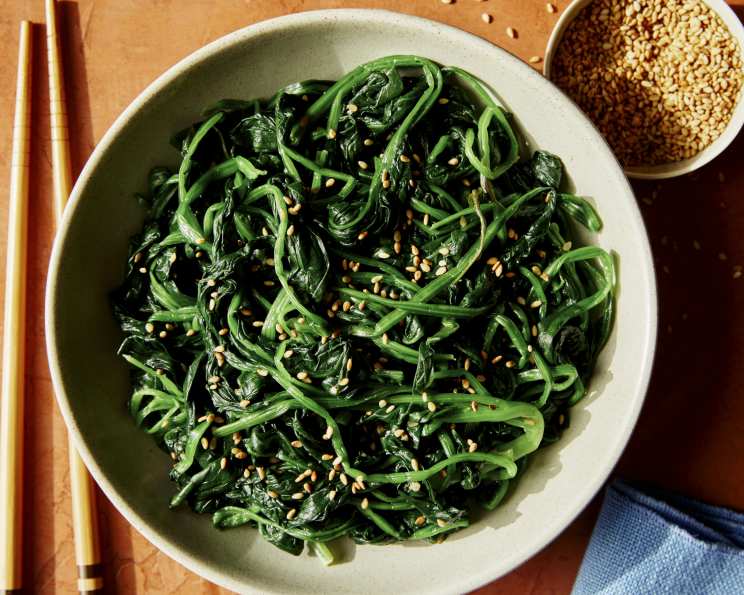
Sigeumchi Namul: A Taste of Korean Comfort
The first time I truly understood the soul of Korean cuisine wasn’t at a fancy restaurant, but at a humble family gathering in Seoul. My friend’s grandmother, a woman whose hands seemed to hold centuries of culinary wisdom, prepared a simple spinach dish – Sigeumchi Namul. The vibrant green of the spinach, the fragrant sesame oil, and the subtle hint of garlic were a revelation. It was more than just a side dish; it was a symbol of nourishment, family, and the delicate balance of flavors that defines Korean cooking. Ever since, I’ve strived to recreate that feeling of warmth and connection through this deceptively simple dish.
Recipe Overview
- Prep Time: 10 minutes
- Cook Time: 5 minutes
- Total Time: 15 minutes
- Servings: 4
- Dietary Type: Vegetarian, Gluten-Free (if using gluten-free soy sauce)
Ingredients
- 1 lb fresh spinach
- 3 tablespoons soy sauce
- 2 tablespoons sesame oil
- 1 tablespoon sesame seeds
- 1 clove crushed garlic
- 1 tablespoon sugar
- 1 tablespoon vinegar
- Black pepper to taste
Equipment Needed
- Large pot or steamer
- Strainer or colander
- Large mixing bowl
Instructions
-
Begin by thoroughly rinsing the fresh spinach. This is crucial, as spinach can often contain sand or grit. Repeat the rinsing process several times, changing the water each time, until the water runs clear. Ensure all the leaves are free from any dirt.
-
Prepare your cooking method. You can either steam the spinach or blanch it. For steaming, fill a pot with a small amount of water and bring it to a boil. Place the spinach in a steamer basket above the boiling water. Cover and steam for about 2-3 minutes, or until the spinach is tender but still retains its vibrant green color. Alternatively, for blanching, bring a large pot of water to a rolling boil. Gently add the spinach and cook for just 30-60 seconds, until wilted.
-
Immediately transfer the cooked spinach to a strainer or colander. This is important to stop the cooking process and preserve the color. Rinse the spinach with cold water to further cool it down.
-
Once the spinach is cool enough to handle, gently squeeze out as much excess water as possible. This step is crucial for preventing a watery salad. Use your hands to squeeze the spinach into small bundles, releasing the trapped water. After squeezing, coarsely chop the spinach leaves.
-
In a large mixing bowl, combine the chopped spinach with the remaining ingredients: soy sauce, sesame oil, sesame seeds, crushed garlic, sugar, and vinegar. Add a pinch of black pepper to taste.
-
Thoroughly mix all the ingredients together, ensuring the spinach is evenly coated with the sauce. Use your hands or a pair of tongs to gently toss the salad.
-
Taste and adjust the seasonings as needed. You may want to add more soy sauce for saltiness, vinegar for tanginess, or sugar for sweetness, depending on your preference.
-
Serve the Sigeumchi Namul at room temperature.
Expert Tips & Tricks
- Don’t overcook the spinach! Overcooked spinach will become mushy and lose its vibrant color. Aim for a tender-crisp texture.
- Squeezing out the excess water is key. If the spinach is too wet, the salad will be soggy and the flavors will be diluted.
- Toast the sesame seeds for added flavor. Gently toasting the sesame seeds in a dry pan over medium heat for a few minutes will enhance their nutty aroma and flavor. Be careful not to burn them.
- Use good-quality sesame oil. The flavor of sesame oil is central to this dish, so using a high-quality brand will make a big difference.
- Adjust the sweetness to your liking. Some people prefer a sweeter salad, while others prefer a more savory one. Adjust the amount of sugar accordingly.
- Garlic can be potent. One clove of crushed garlic is usually enough, but if you prefer a milder flavor, you can use less.
- Make it ahead: You can prepare the spinach and dressing separately and combine them just before serving. This will prevent the spinach from becoming soggy.
Serving & Storage Suggestions
Sigeumchi Namul is best served at room temperature as a side dish to accompany Korean meals. It pairs perfectly with rice, grilled meats, and other Korean side dishes (banchan). It can also be served as part of a bibimbap bowl.
Leftovers can be stored in an airtight container in the refrigerator for up to 2-3 days. The flavor may intensify over time, so you may want to add a little more sesame oil before serving. It’s generally not recommended to freeze Sigeumchi Namul, as the spinach can become mushy upon thawing.
Nutritional Information
| Nutrient | Amount per Serving | % Daily Value |
|---|---|---|
| Calories | 142 kcal | 7% |
| Total Fat | 8.4 g | 12% |
| Saturated Fat | 1.2 g | 6% |
| Cholesterol | 0 mg | 0% |
| Sodium | 846.8 mg | 35% |
| Total Carbohydrate | 13.5 g | 4% |
| Dietary Fiber | 3.2 g | 12% |
| Sugars | 4 g | 16% |
| Protein | 6 g | 12% |
Variations & Substitutions
- Gluten-Free: Use gluten-free soy sauce (tamari) to make this dish gluten-free.
- Vegan: This recipe is already vegan!
- Spicy: Add a pinch of gochugaru (Korean chili flakes) for a touch of heat.
- Sesame Oil Alternative: If you don’t have sesame oil, you can use another neutral oil, but the flavor will be different. Toasted sesame oil is a must for traditional sigeumchi namul.
- Spinach Alternative: While spinach is traditional, you can also use other leafy greens such as Swiss chard or kale, but you may need to adjust the cooking time.
FAQs (Frequently Asked Questions)
Q: Can I use frozen spinach for Sigeumchi Namul?
A: While fresh spinach is preferred for its texture and flavor, you can use frozen spinach in a pinch. Be sure to thaw it completely and squeeze out as much excess water as possible before using it.
Q: How can I prevent the spinach from becoming bitter?
A: Rinsing the spinach thoroughly before cooking and blanching it quickly can help to reduce any bitterness.
Q: Can I make this dish ahead of time?
A: Yes, you can prepare the spinach and dressing separately and combine them just before serving. This will prevent the spinach from becoming soggy.
Q: How long does Sigeumchi Namul last in the refrigerator?
A: Sigeumchi Namul can be stored in an airtight container in the refrigerator for up to 2-3 days.
Q: What is the best way to serve Sigeumchi Namul?
A: Sigeumchi Namul is traditionally served as a side dish (banchan) with other Korean dishes like rice, grilled meats, and stews. It is served cold or at room temperature.
Final Thoughts
Sigeumchi Namul is more than just a simple spinach salad; it’s a taste of Korean culture and tradition. It’s a dish that can be enjoyed any time of year, and it’s a great way to add some healthy greens to your diet. I hope you’ll give this recipe a try and experience the deliciousness of Korean cuisine. Feel free to adjust the seasonings to your liking and make it your own. And please, share your feedback with me – I’d love to hear how it turned out! Serve it alongside some bulgogi and a bowl of steaming rice for a truly authentic Korean experience. Bon appétit! (or as they say in Korean, Masitge deuseyo!)