
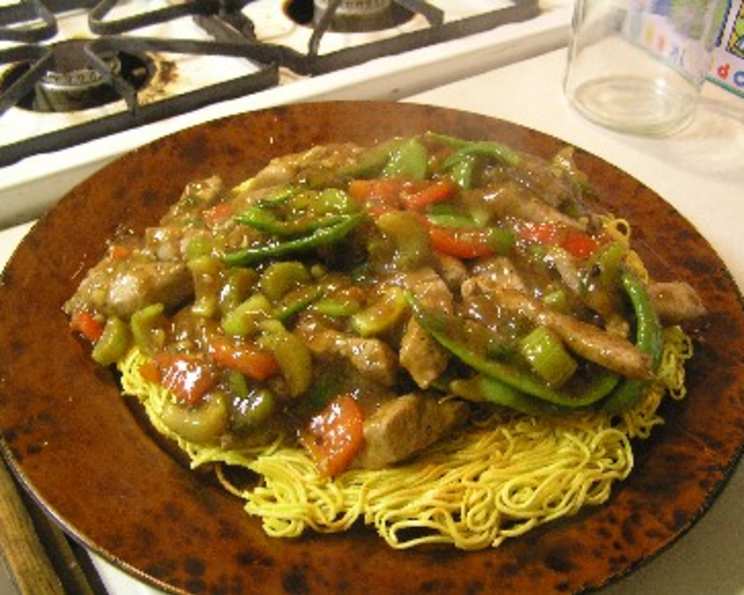
Silky Cantonese Chow Mein: A Symphony of Flavors and Textures
My earliest memories of Cantonese Chow Mein are tied to the bustling Chinatown in San Francisco. The aroma of sizzling noodles, mingling with the sweet and savory scent of soy sauce and ginger, would pull me into dim sum restaurants like a magnetic force. Watching the chefs expertly toss ingredients in their woks, creating that perfect balance of crispy and tender noodles, was pure culinary magic. This recipe is my attempt to capture that magic, bringing the vibrant flavors of Chinatown to your own kitchen.
Recipe Overview
- Prep Time: 20 minutes
- Cook Time: 20 minutes
- Total Time: 40 minutes
- Servings: 4
- Dietary Type: Adaptable (see variations for gluten-free)
Ingredients
-
For the Sauce:
- 1 cup chicken broth
- 4 teaspoons cornstarch
- 3 tablespoons dry sherry
- 2 tablespoons light soy sauce
- 1 teaspoon black bean sauce
-
For the Stir-Fry:
- 1 tablespoon cooking oil
- 12 ounces ground pork
- 3 cloves garlic, minced
- 1 red pepper, cubed
- 1 lb fresh white mushroom, quartered
- 3/4 cup celery, sliced
- 1 cup pea pods
- 5 green onions, thinly sliced
-
For the Pan-Fried Noodles:
- 8 ounces Chinese egg noodles
- 10 cups boiling water
- 1 1/2 tablespoons cooking oil
- 1 tablespoon light soy sauce
Equipment Needed
- Wok or large skillet
- Small bowl
- Large pot
Instructions
-
Prepare the Sauce: In a small bowl, whisk together the chicken broth and cornstarch until the cornstarch is fully dissolved. This is crucial to prevent lumps in your sauce. Then, add the dry sherry, light soy sauce, and black bean sauce. Set the sauce aside. Give it a quick whisk right before adding it to the wok, as the cornstarch will settle.
-
Cook the Noodles: In a large pot, bring 10 cups of water to a rolling boil. Add the Chinese egg noodles and cook for just 2 minutes. Do not overcook them at this stage; they will continue to cook in the wok. Drain the noodles thoroughly in a colander. Shaking the colander gently helps remove excess water, which will promote better crisping later.
-
Crisp the Noodles: Heat a wok or large pan over medium heat until it is hot. Add 1 1/2 tablespoons of cooking oil. Once the oil is shimmering, add the cooked noodles, spreading them out evenly in the pan. Drizzle 1 tablespoon of light soy sauce over the noodles. Cook the noodles for 3 to 5 minutes, without stirring too much, allowing them to crisp up on the bottom. Adjust the heat as needed to prevent burning. If the noodles start to stick, add a touch more oil.
-
Flip the Noodles: Once the noodles are golden and crisp on one side, carefully slide them onto a plate. Cover the noodles with another plate, flip the plates over, and then slide the noodles back into the wok, inverted from their previous position. Cook for another 3 to 4 minutes until the second side is also crisp and golden. Once both sides are cooked, remove the noodles from the wok and set them aside on a serving plate or in a large bowl.
-
Stir-Fry the Pork: Heat the wok to medium-high heat. Add 1 tablespoon of cooking oil. Add the ground pork and minced garlic and stir-fry for about 1 minute, breaking up the pork with your spatula or spoon. Cook until the pork is no longer pink.
-
Add the Vegetables: Add the cubed red pepper, quartered mushrooms, and sliced celery to the wok. Stir-fry for 2 minutes, until the vegetables start to soften slightly. The key here is to cook them until they’re tender-crisp, retaining some of their natural crunch.
-
Finish the Stir-Fry: Add the pea pods and thinly sliced green onions to the wok. Stir-fry for another 1 minute, until the pea pods are bright green and slightly tender.
-
Thicken the Sauce: Give the cornstarch mixture a quick stir and then pour it into the wok with the vegetables. Stir constantly until the sauce comes to a boil and thickens, usually about 1 to 2 minutes. The sauce should be glossy and coat the vegetables evenly.
-
Assemble and Serve: Arrange the crispy noodles onto a serving plate or in a large bowl. Pour the vegetable and pork mixture over the top of the noodles, ensuring that the sauce coats everything evenly. Serve immediately, while the noodles are still crispy.
Expert Tips & Tricks
- Crispy Noodles Secret: The key to achieving truly crispy noodles is not overcrowding the wok. Work in batches if necessary. Pressing down on the noodles with a spatula while they are cooking can also help them crisp up.
- Flavor Boost: For an extra layer of umami, add a splash of oyster sauce to the sauce mixture.
- Make-Ahead Prep: The vegetables can be prepped ahead of time and stored in the refrigerator. The sauce can also be made in advance. This will save time when you’re ready to cook.
- Noodle Choice: While Chinese egg noodles are traditional, you can use other types of noodles, such as lo mein noodles or even spaghetti, in a pinch. Just be sure to adjust the cooking time accordingly.
- Fixing a Bland Sauce: If the sauce tastes bland, add a pinch of salt, a dash of white pepper, or a few drops of sesame oil.
Serving & Storage Suggestions
Serve the Silky Cantonese Chow Mein immediately after cooking to enjoy the contrast between the crispy noodles and the tender vegetables. Garnish with extra green onions or a sprinkle of sesame seeds for a more appealing presentation.
Leftovers can be stored in an airtight container in the refrigerator for up to 3 days. The noodles will lose some of their crispness, but the dish will still be delicious. To reheat, warm the chow mein in a wok or skillet over medium heat, adding a splash of water or broth to prevent it from drying out. Avoid microwaving, as this can make the noodles soggy.
Nutritional Information
| Nutrient | Amount per Serving | % Daily Value |
|---|---|---|
| Calories | 609 kcal | 30% |
| Total Fat | 30g | 46% |
| Saturated Fat | 9g | 45% |
| Cholesterol | 109mg | 36% |
| Sodium | 1045mg | 44% |
| Total Carbohydrate | 54g | 18% |
| Dietary Fiber | 5g | 20% |
| Sugars | 7g | N/A |
| Protein | 30g | 60% |
Variations & Substitutions
- Vegetarian: Substitute the ground pork with tofu or tempeh. Press the tofu to remove excess water before stir-frying.
- Gluten-Free: Use gluten-free rice noodles instead of egg noodles. Be sure to use gluten-free soy sauce and black bean sauce.
- Spicy: Add a pinch of red pepper flakes or a drizzle of chili oil to the stir-fry.
- Seafood: Replace the ground pork with shrimp or scallops. Adjust cooking times accordingly, as seafood cooks quickly.
- Chicken: Substitute ground pork with diced chicken breast. Marinate the chicken in a mixture of soy sauce, sherry, and ginger for added flavor.
FAQs (Frequently Asked Questions)
Q: Can I use dried noodles instead of fresh egg noodles?
A: Yes, you can use dried egg noodles, but you’ll need to adjust the cooking time according to the package instructions. Be careful not to overcook them, as they will become mushy.
Q: How do I prevent the noodles from sticking to the wok?
A: Ensure the wok is hot before adding the oil. Use enough oil to coat the noodles evenly. Avoid overcrowding the wok, and don’t stir the noodles too much while they are cooking.
Q: Can I make this dish ahead of time?
A: You can prepare the vegetables and sauce ahead of time. However, it’s best to cook the noodles and stir-fry the dish just before serving to ensure the noodles remain crispy.
Q: What if I don’t have black bean sauce?
A: If you don’t have black bean sauce, you can substitute it with hoisin sauce or a mixture of soy sauce and a pinch of sugar.
Q: Can I freeze leftovers?
A: Freezing is not recommended, as the noodles will become very soft and the vegetables will lose their texture. It is best enjoyed fresh or stored in the refrigerator for a couple of days.
Final Thoughts
This Silky Cantonese Chow Mein is more than just a meal; it’s an experience. The interplay of textures and flavors – the satisfying crunch of the noodles, the savory richness of the pork, the vibrant freshness of the vegetables, and the umami depth of the sauce – is a testament to the magic of Cantonese cuisine. I encourage you to try this recipe, experiment with different variations, and make it your own. Share your creations with friends and family, and let the flavors of Chinatown transport you to a place of culinary delight. Pair this dish with a refreshing jasmine tea or a crisp Asian beer for the perfect meal.