
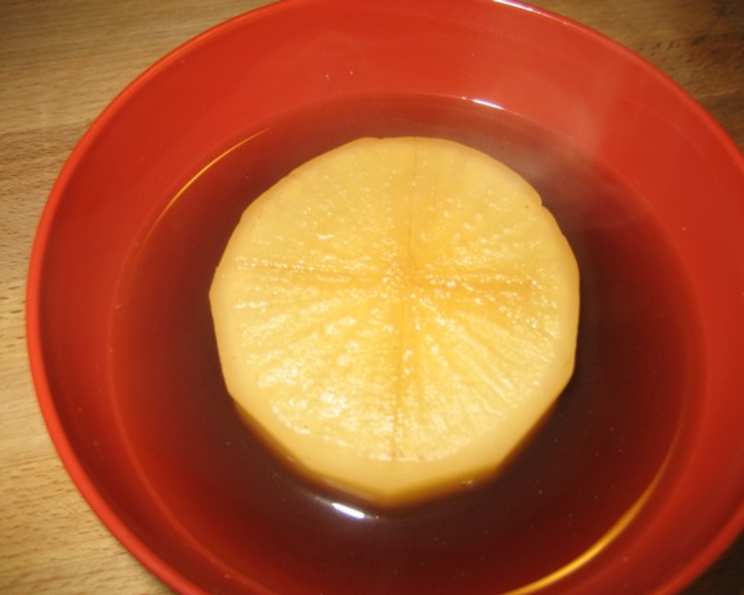
Furofuki Daikon: A Taste of Gentle Simplicity
The first time I tasted furofuki daikon, I was nestled in a tiny, bustling izakaya in Kyoto. The winter air was crisp, and the warm, subtly sweet daikon, meltingly tender from hours of simmering, was a revelation. It was more than just food; it was a comforting hug on a cold evening, a reminder that the simplest ingredients, treated with care, can yield the most profound flavors. The gentle fragrance of dashi and the delicate sweetness of mirin lingered in the air, creating a memory I’ve cherished ever since.
Recipe Overview
- Prep Time: 20 minutes
- Cook Time: 40 minutes
- Total Time: 60 minutes
- Servings: 4
- Dietary Type: Vegetarian
Ingredients
- 18 ounces daikon radishes
- 2 quarts water, from rinsing rice (see notes below)
- 1 piece konbu (2 x 5 inch)
Simmering Sauce
- 3 – 3 1⁄3 cups dashi stock
- 3 tablespoons light soy sauce
- 2 tablespoons mirin
- 2 tablespoons sugar
- 1 teaspoon salt
Equipment Needed
- Saucepan
- Knife
- Peeler
Instructions
- Begin by preparing the daikon. Cut it into 1 1/2-inch thick rounds.
- Peel each round completely.
- Bevel the edges of each slice using a knife. This step prevents the edges of the daikon from breaking up during cooking, ensuring a more appealing presentation.
- Carefully cut a shallow cross into one side of each slice. This helps the daikon cook more evenly and absorb the flavors of the simmering sauce.
- Place the daikon slices in a saucepan, arranging them with the cross-cut side down.
- Cover the daikon with the rice water. Using the water from rinsing rice is a traditional technique that helps to remove any bitterness from the daikon and gives it a smoother texture. If you don’t have rice water, you can use regular water.
- Cook the daikon in the rice water until it is tender. This typically takes about 15-20 minutes over medium heat. You can test for doneness by inserting a knife into the daikon – it should slide in easily with little resistance.
- Once tender, drain the daikon and set aside.
- In a separate bowl or measuring cup, combine all the simmering sauce ingredients: dashi stock, light soy sauce, mirin, sugar, and salt. Whisk until the sugar and salt are dissolved.
- Place the cooked daikon on top of the konbu in a saucepan. The konbu adds a subtle umami flavor to the daikon as it simmers.
- Pour the simmering sauce over the daikon and konbu.
- Bring the sauce just to a simmer over medium heat, then immediately reduce the heat to low.
- Simmer gently until the daikon is very soft and has absorbed the flavors of the sauce, about 20 minutes. Be careful not to let the sauce boil vigorously, as this can make the daikon tough.
- Arrange the daikon slices in warmed dishes.
- Discard the konbu.
- Pour the remaining cooking liquid over the daikon slices.
- Serve immediately.
Expert Tips & Tricks
- Rice Water Substitute: If you don’t have rice water, use regular water with a tablespoon of rice flour dissolved in it. This will mimic the effect of rice water.
- Konbu Enhancement: For a deeper umami flavor, soak the konbu in a small amount of dashi stock for 30 minutes before using it in the simmering process.
- Gentle Simmer: Maintaining a gentle simmer is key to achieving the perfect texture. A vigorous boil will make the daikon tough, while a low simmer ensures a melt-in-your-mouth experience.
- Flavor Infusion: For a richer flavor, add a small piece of ginger or a few dried shiitake mushrooms to the simmering sauce. Remove them before serving.
Serving & Storage Suggestions
Furofuki daikon is best served warm, immediately after cooking. The presentation is simple yet elegant: arrange the glistening daikon slices in a bowl, generously drizzled with the flavorful simmering sauce. A sprinkle of finely chopped green onions or a small dollop of grated ginger can add a visual and flavor contrast.
Leftovers can be stored in an airtight container in the refrigerator for up to 3 days. Reheat gently in a saucepan over low heat, adding a splash of water or dashi if needed to prevent sticking. While the texture may soften slightly upon reheating, the flavor will remain delightful. Freezing is not recommended as it can significantly alter the texture of the daikon.
Nutritional Information
| Nutrient | Amount per Serving | % Daily Value |
|---|---|---|
| Calories | 120 kcal | 6% |
| Total Fat | 1g | 1% |
| Saturated Fat | 0g | 0% |
| Cholesterol | 0mg | 0% |
| Sodium | 700mg | 30% |
| Total Carbohydrate | 25g | 9% |
| Dietary Fiber | 3g | 11% |
| Sugars | 15g | – |
| Protein | 3g | 6% |
Note: Nutritional information is an estimate and may vary based on specific ingredients and preparation methods.
Variations & Substitutions
- Vegan Variation: Ensure your dashi stock is vegan by using kombu and shiitake mushrooms instead of bonito flakes.
- Spicy Kick: Add a small piece of red chili pepper or a pinch of chili flakes to the simmering sauce for a touch of heat.
- Regional Adaptation: In some regions, furofuki daikon is served with a miso glaze instead of the dashi-based simmering sauce. Try mixing 2 tablespoons of miso paste with 1 tablespoon of mirin and 1 teaspoon of sugar, then brush it over the daikon slices before serving.
- Seasonal Twist: During the fall, add a few slices of kabocha squash to the simmering sauce for a seasonal variation.
FAQs (Frequently Asked Questions)
Q: Why use rice water for cooking daikon?
A: Rice water helps to remove any bitterness from the daikon and gives it a smoother, more delicate texture. It also helps the daikon to cook more evenly.
Q: Can I use regular water instead of dashi stock in the simmering sauce?
A: While you can use regular water, the dashi stock adds a depth of umami flavor that elevates the dish. If using water, consider adding a pinch of MSG or a teaspoon of soy sauce to enhance the savory notes.
Q: How do I know when the daikon is cooked through?
A: The daikon should be very tender and easily pierced with a fork or knife. It should also be slightly translucent around the edges.
Q: Can I make this dish ahead of time?
A: Yes, furofuki daikon can be made a day or two in advance. Store it in an airtight container in the refrigerator and reheat gently before serving.
Q: What other dishes pair well with furofuki daikon?
A: Furofuki daikon is a versatile side dish that pairs well with grilled fish, tofu dishes, or rice bowls. It can also be served as part of a larger Japanese meal.
Final Thoughts
Furofuki daikon is a testament to the beauty of simplicity in Japanese cuisine. With just a few humble ingredients and a little patience, you can create a dish that is both comforting and deeply flavorful. I encourage you to try this recipe and experience the gentle sweetness and melt-in-your-mouth texture for yourself. Feel free to experiment with variations to suit your taste, and don’t hesitate to share your creations and feedback. Pair it with a chilled glass of sake or a cup of green tea for a truly authentic experience.