
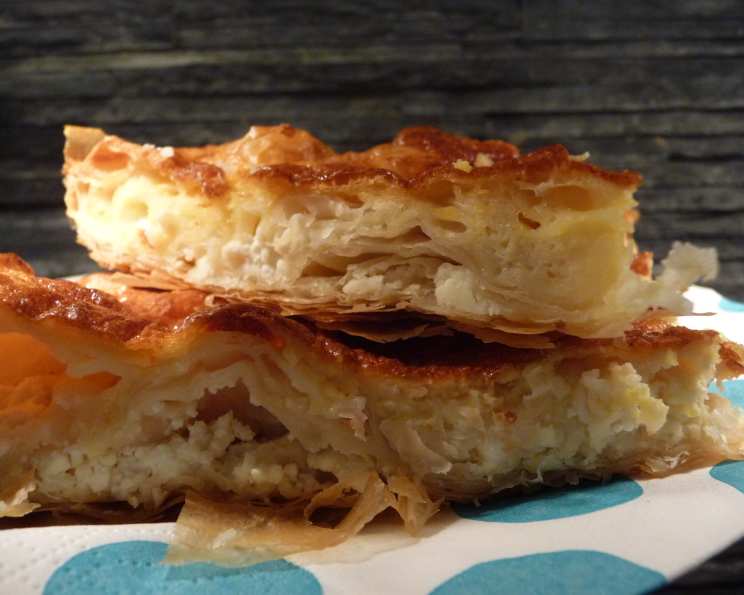
Simple Bulgarian Banitsa: A Taste of Home
The scent of banitsa baking always takes me back to my grandmother’s kitchen. I can almost feel the warmth of the wood-burning stove and the crinkle of phyllo dough under her weathered hands. It wasn’t just a breakfast pastry; it was a symbol of family, love, and the simple joys of life. Every bite was a memory, a connection to my heritage, a reminder that even the humblest ingredients can create something extraordinary.
Recipe Overview
- Prep Time: 15 minutes
- Cook Time: 25-35 minutes
- Total Time: 40-50 minutes
- Servings: 8
- Yield: 1 banitsa
- Dietary Type: Vegetarian
Ingredients
- 16 sheets phyllo dough, thawed
- 2 cups feta cheese
- 3 large eggs
- 1 teaspoon salt
- ¾ cup butter, melted
- 1 cup milk
Equipment Needed
- 9×13 inch glass baking dish (Pyrex recommended)
- Mixing bowl
- Whisk
- Pastry brush
Instructions
- Preheat your oven to 350 degrees Fahrenheit (175 degrees Celsius). It is highly recommended to use a glass Pyrex pan, as it distributes heat evenly and helps prevent sticking. Generously brush the bottom and sides of the baking pan with melted butter. This step is crucial for achieving a crispy, golden crust.
- In a mixing bowl, combine the feta cheese, eggs, milk, and salt. Use a whisk to thoroughly combine the ingredients until you have a smooth and well-integrated mixture. Make sure there are no large clumps of cheese.
- Lay 5 sheets of phyllo dough in the buttered pan, ensuring they cover the entire surface and slightly overhang the edges. Brush each sheet generously with melted butter. You can also opt to lay down one sheet at a time, buttering each separately, if you prefer more control over the layering process. The key is to ensure each layer is well-buttered for a flaky result.
- Pour enough of the feta cheese mixture to evenly cover the phyllo sheets. Use a spatula or spoon to gently spread the mixture across the dough.
- Top the cheese layer with 3 more sheets of phyllo dough. Remember to brush each sheet thoroughly with melted butter. Repeat the process of layering 3 sheets of phyllo dough, brushing each with butter, and then adding a layer of the cheese mixture. Continue this layering process until all of the cheese mixture is used up.
- Cover the final layer of cheese mixture with at least 2 sheets of phyllo dough. While some recipes call for buttering the top sheets, I prefer to skip this step, as it can cause them to become excessively hard during baking.
- Bake the banitsa for 25-35 minutes, or until it is golden brown. To ensure the filling is cooked through, insert a knife into the center of the banitsa. If the knife comes out clean, the banitsa is done. If the mixture is still runny, continue baking for a few more minutes. Keep a close eye on it to prevent over-browning.
- Once the banitsa is done, immediately cover it with a clean kitchen towel or the lid of the baking pan. This step allows the steam to soften the phyllo dough, creating a more tender and pleasant texture. Let it sit and cool for at least 15-20 minutes before cutting and serving.
Expert Tips & Tricks
- Phyllo Dough Handling: Phyllo dough dries out quickly, so keep the stack you’re not actively working with covered under a damp towel to prevent it from cracking.
- Even Buttering: Ensure even buttering of each phyllo layer. This creates the flaky texture we all crave. Use clarified butter for an even richer flavor.
- Cheese Mixture Consistency: The cheese mixture shouldn’t be too watery. If your feta is particularly wet, gently squeeze out excess moisture before mixing it with the eggs and milk.
- Baking Time Variation: Oven temperatures can vary, so keep a close eye on the banitsa during baking. If it starts to brown too quickly, tent it loosely with foil.
- Crispy vs. Soft: For a crispier banitsa, skip the towel-covering step after baking.
Serving & Storage Suggestions
Banitsa is best served warm or at room temperature. Cut it into squares or triangles and serve it as a breakfast item, a light lunch, or a snack. It pairs wonderfully with plain yogurt or a simple green salad.
Leftover banitsa can be stored in an airtight container in the refrigerator for up to 3 days. To reheat, warm it in a preheated oven at 350°F (175°C) for about 10-15 minutes, or until heated through. You can also microwave it, but the phyllo may become a bit softer. Banitsa can also be frozen for up to 2 months. Wrap individual slices tightly in plastic wrap and then place them in a freezer-safe bag. Thaw overnight in the refrigerator before reheating.
Nutritional Information
| Nutrient | Amount per Serving | % Daily Value |
|---|---|---|
| Calories | 411.5 kcal | N/A |
| Calories from Fat | 273 g | 67% |
| Total Fat | 30.4 g | 46% |
| Saturated Fat | 18.4 g | 91% |
| Cholesterol | 153.2 mg | 51% |
| Sodium | 1086.2 mg | 45% |
| Total Carbohydrate | 23.1 g | 7% |
| Dietary Fiber | 0.7 g | 2% |
| Sugars | 1.7 g | 6% |
| Protein | 11.6 g | 23% |
Variations & Substitutions
- Cheese Variations: Experiment with different types of cheese. Ricotta, cottage cheese, or a combination of cheeses can add unique flavors.
- Spinach & Cheese Banitsa (Spanakopita-style): Add sautéed spinach and dill to the cheese mixture for a Greek-inspired twist. Squeeze out the moisture from the cooked spinach before adding it.
- Pumpkin Banitsa: Add pumpkin puree and warming spices like cinnamon and nutmeg to the filling for a seasonal variation. Reduce the amount of milk slightly to compensate for the moisture in the pumpkin.
- Vegan Banitsa: Use vegan phyllo dough, plant-based butter, and a tofu-based feta cheese alternative. Substitute the milk with plant-based milk like almond or soy milk.
- Gluten-Free Banitsa: While traditional phyllo dough is not gluten-free, you can experiment with gluten-free phyllo dough alternatives, though the texture may differ.
- Savory Herbs: Add chopped fresh herbs like parsley, chives, or thyme to the cheese mixture for added flavor.
FAQs (Frequently Asked Questions)
Q: Can I make banitsa ahead of time?
A: Yes, you can assemble the banitsa a day ahead of time and store it covered in the refrigerator. Add a few minutes to the baking time.
Q: Why is my banitsa soggy?
A: Soggy banitsa can be caused by too much moisture in the filling or not enough butter between the layers. Ensure you squeeze out excess moisture from the feta, and generously butter each layer of phyllo.
Q: Can I use olive oil instead of butter?
A: While butter provides a richer flavor, you can use olive oil as a substitute. Opt for a good-quality extra virgin olive oil.
Q: My phyllo dough keeps tearing. What am I doing wrong?
A: Phyllo dough is delicate. It’s likely too dry. Keep the stack of phyllo you’re not using covered with a damp towel.
Q: How do I prevent the top from browning too quickly?
A: If the top of the banitsa is browning too quickly, tent it loosely with aluminum foil during the last 10-15 minutes of baking.
Final Thoughts
I hope this simple banitsa recipe inspires you to create your own memories in the kitchen. Don’t be afraid to experiment with different variations and substitutions to make it your own. Whether you’re sharing it with family and friends or simply enjoying a slice on your own, I hope it brings you the same comfort and joy that it brings me. And, If you decide to add a unique ingredient or have a special serving idea, please share it. Cheers to happy baking!