
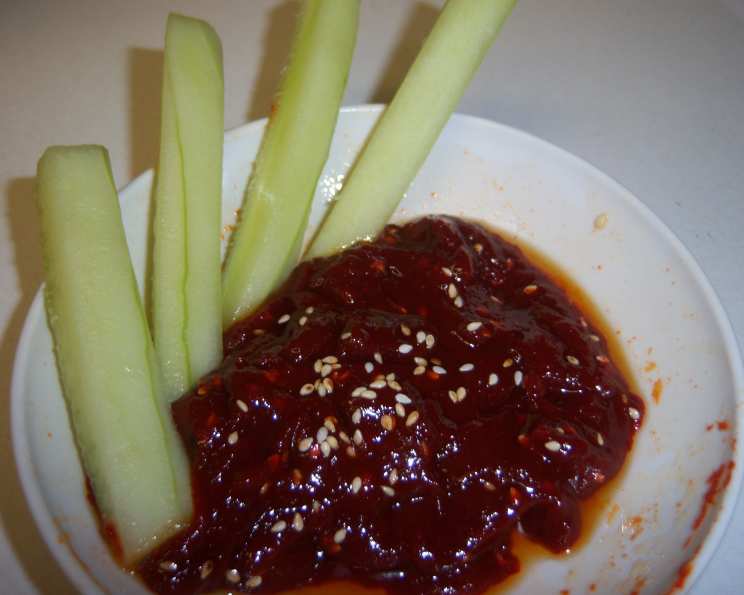
Simple Spicy Korean Hot Red Pepper Paste Dip for Cucumbers
The first time I tasted this fiery dip, I was at a tiny Korean barbecue restaurant tucked away in a bustling city alleyway. The air was thick with the tantalizing aroma of grilled meats, and the table was overflowing with small dishes – banchan – each a vibrant explosion of flavor. Amongst the pickles, kimchi, and seasoned vegetables was a small bowl of crimson paste, sprinkled with sesame seeds. I tentatively dipped a crisp cucumber slice into it, and the world exploded. The cool, refreshing cucumber was immediately enveloped by a wave of intense heat, savory umami, and nutty sesame. It was addictive, electrifying, and utterly unforgettable. I’ve been chasing that perfect balance of cool and spicy ever since, and this simple recipe gets me pretty darn close.
Recipe Overview
- Prep Time: 1 minute
- Cook Time: 0 minutes
- Total Time: 1 minute
- Servings: 3 Tablespoons
- Yield: 3 Tablespoons
- Dietary Type: Vegetarian, Vegan
Ingredients
- 3 tablespoons Korean red pepper paste (gochujang)
- 1 tablespoon sesame oil
- ½ teaspoon sesame seeds
Equipment Needed
- Small mixing bowl
- Measuring spoons
Instructions
- In a small mixing bowl, combine the Korean red pepper paste (gochujang) and sesame oil.
- Mix thoroughly until the ingredients are evenly incorporated and the mixture is smooth.
- Stir in the sesame seeds.
- Serve immediately with fresh cucumbers or other vegetables.
Expert Tips & Tricks
- Adjust the spice level: Gochujang varies in its heat level, so taste the paste before adding it to the sesame oil. If you prefer a milder dip, start with 2 tablespoons of gochujang and add more to taste. You can also add a tiny pinch of sugar to mellow the heat.
- Bloom the flavors: Allow the dip to sit for 10-15 minutes after mixing to allow the flavors to meld together. This simple step intensifies the taste.
- Toast the sesame seeds: Toasting sesame seeds before adding them to the dip enhances their nutty flavor. Simply dry toast them in a pan over medium heat for a few minutes, until lightly golden and fragrant, being careful not to burn them.
- Add a touch of sweetness: If you want a hint of sweetness to balance the spice, add a tiny drizzle of honey or maple syrup. Just be sure to add it sparingly so it doesn’t overpower the other flavors.
- Mix with mayonnaise: For a creamier and less intense dip, mix a tablespoon of mayonnaise with the gochujang and sesame oil.
- Use high-quality gochujang: The flavor of your gochujang will greatly impact the flavor of your dip. Opt for a high-quality brand made with traditional methods for the best results.
- Thin the dip: If you prefer a thinner consistency, add a teaspoon of rice vinegar or a splash of water to thin it out.
Serving & Storage Suggestions
This spicy Korean dip is best served chilled or at room temperature. It’s a fantastic accompaniment to fresh, crisp cucumbers, carrot sticks, bell pepper strips, or any other raw vegetables. It also makes a delicious condiment for lettuce wraps, bibimbap, grilled meats, or even scrambled eggs.
Storage: Store leftover dip in an airtight container in the refrigerator for up to 5 days. The flavors may intensify over time. Note that the sesame oil may solidify when chilled, so allow the dip to come to room temperature for a few minutes before serving. Do not store at room temperature for more than 2 hours for food safety reasons. Freezing is not recommended as it may affect the texture of the gochujang.
Nutritional Information
| Nutrient | Amount per Serving | % Daily Value* |
|---|---|---|
| Calories | 80 kcal | 4% |
| Total Fat | 7g | 9% |
| Saturated Fat | 1g | 5% |
| Cholesterol | 0mg | 0% |
| Sodium | 400mg | 17% |
| Total Carbohydrate | 3g | 1% |
| Dietary Fiber | 1g | 4% |
| Sugars | 1g | 0% |
| Protein | 1g | 2% |
*Percent Daily Values are based on a 2,000 calorie diet. Your daily values may be higher or lower depending on your calorie needs.
Variations & Substitutions
- Milder Version: For a less spicy dip, use gochujang mixed with doenjang (Korean soybean paste) in a 1:1 ratio. Doenjang is fermented soybean paste that has a savory and earthy flavor.
- Gluten-Free: Most gochujang is gluten-free, but always check the label to ensure it doesn’t contain wheat or other gluten-containing ingredients.
- Add Garlic: Mince a clove of garlic and add it to the dip for a more pungent flavor.
- Spicy Mayo: Combine equal parts of this gochujang dip with mayonnaise for a spicy mayo that’s perfect for sandwiches, burgers, or as a dipping sauce for fries.
- Sesame Oil Infusion: Infuse your sesame oil with red pepper flakes for an extra kick. Gently heat the sesame oil with a pinch of red pepper flakes over low heat for a few minutes, then strain before using.
- Nut-Free: Omit the sesame seeds or substitute with toasted pumpkin seeds for a similar crunchy texture and nutty flavor.
- Use different vegetables: Try dipping blanched green beans, radishes, or even grilled eggplant into this spicy dip.
FAQs (Frequently Asked Questions)
Q: Can I make this dip ahead of time?
A: Yes, absolutely! This dip can be made up to 5 days in advance and stored in the refrigerator. The flavors will meld together and intensify over time.
Q: Is gochujang the same as sriracha?
A: No, gochujang and sriracha are different. Gochujang is a Korean fermented red pepper paste that is savory, spicy, and slightly sweet, while sriracha is a Thai chili sauce that is primarily spicy and tangy.
Q: Can I adjust the amount of sesame oil?
A: Yes, you can adjust the amount of sesame oil to your liking. Adding more sesame oil will create a smoother and richer dip, while using less will result in a thicker and spicier dip.
Q: What if I can’t find gochujang at my local grocery store?
A: Gochujang can be found in most Asian grocery stores or online retailers. As a substitute, you can try using a mixture of red pepper flakes, miso paste, and a touch of maple syrup, but the flavor will not be exactly the same.
Q: Is this dip too spicy for kids?
A: This dip is quite spicy, so it may not be suitable for young children. You can reduce the spiciness by using less gochujang or mixing it with mayonnaise.
Final Thoughts
This simple spicy Korean red pepper paste dip is a fantastic way to add a burst of flavor and excitement to your meals. Whether you’re dipping crunchy cucumbers, jazzing up your lettuce wraps, or simply seeking a quick and delicious condiment, this recipe is a guaranteed crowd-pleaser. Don’t be afraid to experiment with variations and make it your own. So, grab your gochujang, gather your favorite vegetables, and get ready to experience a taste of Korean culinary magic. I encourage you to give this recipe a try and share your creations – and any exciting flavor combinations you discover! – with friends and family. Enjoy!