
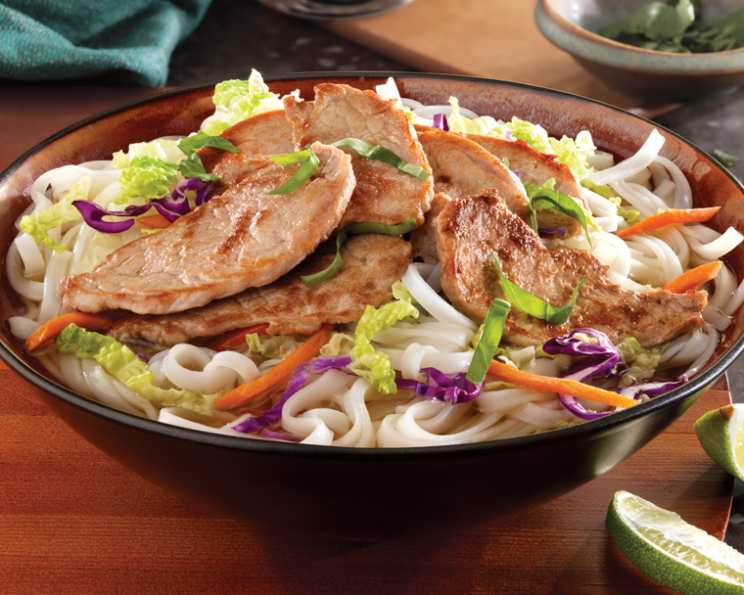
Simple Vietnamese Pork Noodle Bowl: A Culinary Journey
The first time I tasted a proper Vietnamese noodle bowl, I was wandering through a bustling market in Hanoi. The air was thick with the scent of spices and grilling meats, and the cacophony of sounds was exhilarating. I remember sitting on a tiny plastic stool, slurping up a bowl of noodles bursting with flavor. The combination of tender pork, crisp vegetables, fragrant herbs, and the subtle tang of lime was an explosion in my mouth. From that moment on, I was hooked, and I’ve been chasing that perfect bowl ever since. This recipe brings the authentic taste of Vietnam right to your kitchen, simple enough for a weeknight meal yet impressive enough for company.
Recipe Overview
- Prep Time: 15 minutes
- Cook Time: 40 minutes
- Total Time: 55 minutes
- Servings: 6
- Dietary Type: Dairy-Free
Ingredients
- 1 1⁄4 lbs pork tenderloin, trimmed and cut into 1/4-inch slices
- 12 ounces rice noodles
- 4 cups prepared coleslaw mix
- 1⁄4 red onion, thinly sliced
- 4 1⁄2 cups reduced-sodium chicken broth
- 4 1⁄2 teaspoons fish sauce (a crucial component, but use sparingly until you find your perfect balance)
- 1 teaspoon reduced sodium soy sauce
- 2 tablespoons canola oil or 2 tablespoons other neutral-flavored oil
- 1⁄4 cup thinly sliced fresh basil leaves
- 1 lime, cut into 6 wedges
Equipment Needed
- Medium saucepan
- Very large skillet
- 6 serving bowls
Instructions
- Begin by preparing the rice noodles according to the package directions. This usually involves boiling water, adding the noodles, and cooking until they are tender but still slightly firm. Drain the noodles well.
- Divide the cooked rice noodles evenly among the 6 serving bowls.
- Top each bowl with the coleslaw mix and thinly sliced red onion. Set the bowls aside.
- While the noodles are cooking, prepare the broth. In a medium saucepan, combine the reduced-sodium chicken broth, fish sauce, and reduced sodium soy sauce.
- Bring the broth mixture to a boil over medium-high heat. Once boiling, reduce the heat to low and keep the broth just below a simmer. This will allow the flavors to meld together beautifully.
- In a very large skillet, warm the canola oil over medium-high heat. Make sure the skillet is hot before adding the pork for a good sear.
- Add the pork slices to the skillet. Be careful not to overcrowd the pan; you may need to cook the pork in batches to ensure even browning.
- Cook the pork until it is browned and the internal temperature reaches 145°F (63°C), about 1 to 2 minutes per side. Use a meat thermometer to ensure accuracy.
- Remove the cooked pork from the skillet and let it rest for 3 minutes before slicing or serving. This allows the juices to redistribute, resulting in a more tender and flavorful pork.
- Arrange the cooked pork on top of the noodle bowls.
- Ladle the hot broth into each bowl, being generous but leaving enough room to prevent spilling.
- Garnish each bowl with the thinly sliced fresh basil leaves and a lime wedge.
- Serve immediately and enjoy! Encourage everyone to squeeze the lime juice over their bowl just before eating for that final burst of flavor.
Expert Tips & Tricks
- For an extra layer of flavor, consider marinating the pork for about 30 minutes before cooking. A simple marinade of soy sauce, garlic, and a touch of ginger works wonders.
- If you prefer a bit of heat, add a pinch of red pepper flakes to the broth or a drizzle of sriracha to each bowl before serving.
- Don’t be afraid to experiment with different types of vegetables. Shredded carrots, cucumbers, or bean sprouts are all excellent additions.
- The quality of the fish sauce greatly impacts the overall flavor. Look for a reputable brand with a clean, balanced taste. Start with less and add more to taste, as fish sauce can be quite potent.
- To avoid overcooking the pork, ensure your skillet is hot before adding the meat, and don’t overcrowd the pan. This will help create a nice sear and keep the pork tender and juicy.
- If you are cooking for a crowd, you can prepare all the components ahead of time and assemble the bowls just before serving.
Serving & Storage Suggestions
Serve the Vietnamese Pork Noodle Bowl immediately after assembling. The combination of hot broth and fresh ingredients is best enjoyed fresh.
Leftovers can be stored in the refrigerator for up to 2 days. Store the noodles, vegetables, pork, and broth separately to prevent the noodles from becoming soggy. When ready to reheat, gently warm the broth on the stovetop or in the microwave. Reheat the pork separately in a skillet or microwave. Assemble the bowls with the reheated components and fresh garnishes.
While freezing is not recommended for the entire assembled dish (the fresh vegetables will lose their texture), you can freeze the cooked pork and broth separately for up to 1 month. Thaw overnight in the refrigerator before reheating and assembling.
Nutritional Information
| Nutrient | Amount per Serving | % Daily Value |
|---|---|---|
| Calories | 409.3 kcal | N/A |
| Calories from Fat | 85 g | 21% |
| Total Fat | 9.5 g | 14% |
| Saturated Fat | 1.9 g | 9% |
| Cholesterol | 61.5 mg | 20% |
| Sodium | 597.6 mg | 24% |
| Total Carbohydrate | 54 g | 17% |
| Dietary Fiber | 2.5 g | 10% |
| Sugars | 2.3 g | N/A |
| Protein | 26.1 g | 52% |
Note: Percent Daily Values are based on a 2000 calorie diet.
Variations & Substitutions
- For a gluten-free option, ensure your soy sauce and fish sauce are certified gluten-free.
- If you don’t have pork tenderloin, you can substitute it with chicken breast or shrimp. Adjust the cooking time accordingly.
- For a vegetarian version, use tofu or tempeh instead of pork. Marinate the tofu or tempeh for added flavor.
- Experiment with different herbs. Mint, cilantro, or Thai basil would all be delicious additions.
- Add a splash of rice vinegar to the broth for an extra tang.
- For a richer broth, use bone broth instead of chicken broth.
- Add julienned cucumbers or carrots for extra crunch.
- Spice it up with sliced jalapeños.
FAQs (Frequently Asked Questions)
Q: Can I make this ahead of time?
A: Yes, you can prepare all the components separately and assemble the bowls just before serving. This prevents the noodles from becoming soggy.
Q: Is fish sauce necessary?
A: Fish sauce is a key ingredient that provides a unique umami flavor, but you can substitute it with a vegetarian fish sauce alternative or a combination of soy sauce and a tiny bit of seaweed flakes.
Q: Can I use different types of noodles?
A: While rice noodles are traditional, you can use other types of noodles like cellophane noodles or even spaghetti in a pinch. However, the texture and flavor will be slightly different.
Q: How do I prevent the pork from drying out?
A: Don’t overcook the pork. Cook it quickly over high heat until it reaches an internal temperature of 145°F (63°C) and let it rest for a few minutes before slicing.
Q: Can I add vegetables other than coleslaw mix and red onion?
A: Absolutely! Feel free to add other vegetables like shredded carrots, cucumbers, bean sprouts, or bell peppers.
Final Thoughts
I truly believe that food is more than just sustenance; it’s a journey, a memory, and a connection to different cultures. This Simple Vietnamese Pork Noodle Bowl is an invitation to explore the vibrant flavors of Vietnam from the comfort of your own kitchen. Don’t be intimidated by the unfamiliar ingredients – embrace the process, experiment with the flavors, and most importantly, have fun! I encourage you to try this recipe, share it with your loved ones, and let me know what you think. Consider pairing this delightful dish with a refreshing Vietnamese iced coffee or a crisp Sauvignon Blanc for the ultimate culinary experience.