
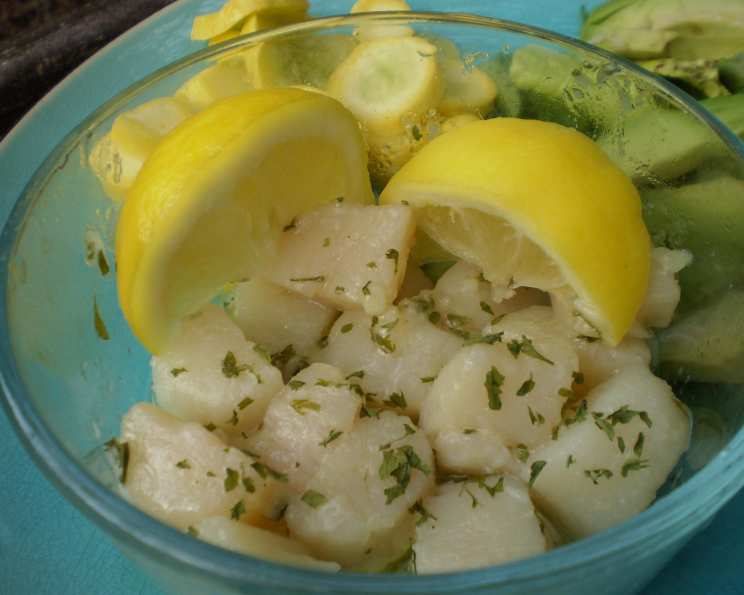
Simply Delicious Sauteed Scallops
The first time I ever tasted truly exquisite scallops was at a tiny seaside bistro in Maine. I was barely old enough to order off the “adult” menu, but the lure of the ocean on my plate was too strong to resist. I remember the almost ethereal sweetness, the delicate sear that gave way to a melt-in-your-mouth interior, and the bright, lemony sauce that kissed each bite. It was a revelation, a taste of culinary perfection that I’ve been chasing ever since. This recipe, though simple, captures that magic, bringing a taste of the ocean to your table in minutes.
Recipe Overview
- Prep Time: 5 minutes
- Cook Time: 15 minutes
- Total Time: 20 minutes
- Servings: 4-6
- Dietary Type: Pescatarian, Gluten-Free (naturally)
Ingredients
- 2 lbs sea scallops
- 6 tablespoons butter
- 2 tablespoons chopped shallots
- 3 tablespoons dry vermouth or 3 tablespoons dry white wine
- 2 tablespoons chopped parsley
- Lemon wedge
- Parsley (for garnish)
Equipment Needed
- Large, heavy skillet
Instructions
- Gently rinse the scallops under cold water, then drain them thoroughly. This step removes any grit and helps the scallops sear properly.
- If the scallops are large, cut them in half horizontally. This ensures even cooking and prevents the outside from becoming overcooked while the inside remains raw.
- In a large, heavy skillet, melt the butter over medium heat. The skillet should be large enough to accommodate the scallops without overcrowding, which can lower the pan temperature and steam the scallops instead of searing them.
- Once the butter is hot and shimmering, sauté the chopped shallots for about 2 minutes, or until they are softened and fragrant. Be careful not to burn them; burnt shallots will impart a bitter taste to the sauce.
- Add the scallops to the skillet in a single layer. If necessary, do this in batches to avoid overcrowding. Overcrowding lowers the pan temperature and results in steamed, rather than seared, scallops.
- Sauté the scallops over medium heat, stirring occasionally, until they are browned and cooked through. This should take about 5-8 minutes. Look for a golden-brown crust on the outside and an opaque, firm (but still slightly yielding) texture throughout. Undercooked scallops will be translucent and mushy, while overcooked scallops will be rubbery.
- Using a slotted spoon, remove the scallops from the skillet and transfer them to a heated platter to keep them warm while you finish the sauce.
- Add the dry vermouth (or dry white wine) and chopped parsley to the skillet.
- Cook over low heat, stirring constantly to dissolve any browned bits from the bottom of the pan. These browned bits, also known as fond, are packed with flavor and will enrich the sauce. Continue cooking until the sauce is bubbling and slightly reduced, about 1 minute.
- Pour the sauce over the scallops on the platter.
- Garnish with lemon wedges and additional parsley, if desired. Serve immediately.
Expert Tips & Tricks
- Pat the scallops dry: Before searing, pat the scallops dry with paper towels. This is crucial for achieving a beautiful golden-brown crust. Excess moisture will prevent browning.
- Don’t overcrowd the pan: As mentioned above, overcrowding the pan will steam the scallops instead of searing them. Cook in batches if necessary.
- Use a heavy-bottomed skillet: A heavy-bottomed skillet, such as cast iron or stainless steel, will distribute heat more evenly and prevent hot spots, ensuring that the scallops cook uniformly.
- Don’t overcook: Scallops cook quickly and can become rubbery if overcooked. Err on the side of slightly undercooked, as they will continue to cook slightly from residual heat.
- Deglaze the pan properly: Make sure to scrape up all the browned bits from the bottom of the pan when deglazing with vermouth or wine. This is where much of the flavor lies.
- Make ahead tip: While best served immediately, you can prepare the sauce ahead of time. Just keep it warm and add the scallops right before serving.
Serving & Storage Suggestions
Serve these sautéed scallops immediately while they are still warm and tender. They are delicious served over pasta, risotto, polenta, or alongside a simple green salad. The bright, lemony sauce pairs well with the sweetness of the scallops.
Leftover scallops should be stored in an airtight container in the refrigerator. They will keep for up to 2 days. Reheat gently in a skillet over low heat, or in the microwave. Be careful not to overcook them during reheating, as they can become rubbery.
It is not recommended to freeze cooked scallops, as freezing can alter their texture and make them tough.
Nutritional Information
| Nutrient | Amount per Serving | % Daily Value |
|---|---|---|
| Calories | 357.1 kcal | N/A |
| Calories from Fat | 171 g | 48% |
| Total Fat | 19 g | 29% |
| Saturated Fat | 11.1 g | 55% |
| Cholesterol | 120.8 mg | 40% |
| Sodium | 490.4 mg | 20% |
| Total Carbohydrate | 6.3 g | 2% |
| Dietary Fiber | 0.1 g | 0% |
| Sugars | 0 g | 0% |
| Protein | 38.5 g | 77% |
Note: Nutritional information is an estimate and may vary based on specific ingredients and cooking methods.
Variations & Substitutions
- Lemon-Garlic Scallops: Add minced garlic to the shallots when sautéing for a more robust flavor. You can also add a squeeze of fresh lemon juice to the sauce.
- Spicy Scallops: Add a pinch of red pepper flakes to the butter when sautéing the shallots for a touch of heat.
- Herb Variations: Experiment with different herbs in addition to, or instead of, parsley. Thyme, chives, or tarragon would all be delicious.
- Wine Substitution: If you don’t have vermouth or white wine, you can use chicken broth or seafood stock to deglaze the pan, although the flavor will be slightly different.
- Dairy-Free Scallops: Substitute olive oil for butter for a dairy-free option. The flavor will be slightly different, but still delicious.
- Creamy Scallops: After deglazing the pan, stir in a splash of heavy cream or crème fraîche for a richer, more decadent sauce.
FAQs (Frequently Asked Questions)
Q: Can I use frozen scallops for this recipe?
A: Yes, you can use frozen scallops. Make sure to thaw them completely before cooking, and pat them very dry to remove excess moisture.
Q: How do I know when the scallops are done?
A: Scallops are done when they are opaque and firm to the touch, but still slightly yielding. Avoid overcooking, as they can become rubbery.
Q: Can I make this recipe ahead of time?
A: While the scallops are best served immediately, you can prepare the sauce ahead of time. Just keep it warm and add the scallops right before serving.
Q: What’s the best way to sear scallops to get a good crust?
A: Pat the scallops dry, use a hot skillet, and don’t overcrowd the pan. This will ensure that the scallops sear properly instead of steaming.
Q: What can I serve with sautéed scallops?
A: Sautéed scallops are delicious served over pasta, risotto, polenta, or alongside a simple green salad.
Final Thoughts
This simple sautéed scallop recipe is a celebration of fresh, high-quality ingredients and straightforward cooking techniques. It’s a dish that’s elegant enough for a special occasion yet easy enough for a weeknight dinner. I encourage you to try this recipe and experience the pure, unadulterated flavor of perfectly cooked scallops. Feel free to experiment with different herbs and seasonings to create your own signature version. And don’t forget to share your feedback – I’d love to hear how it turns out! Consider pairing this dish with a crisp Sauvignon Blanc or a light-bodied Pinot Grigio for a truly memorable meal. Bon appétit!