
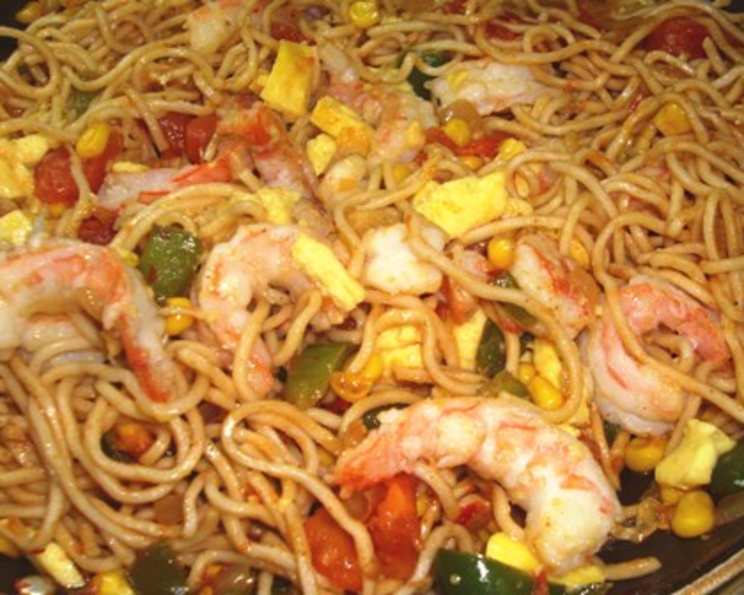
Singapore Fried Noodles: A Symphony of Flavors
The aroma of Singapore Fried Noodles instantly transports me back to the bustling hawker centers of my travels. The sheer energy of the place, the symphony of sizzling woks, and the incredible explosion of flavors in every bite – it was an experience I’ll never forget. I remember one particular evening, rain pattering on the canvas roof above, watching a seasoned hawker deftly tossing noodles, shrimp, and vegetables in his wok, the flames licking high with each skillful movement. This recipe aims to capture that very magic, bringing the taste of Singapore to your kitchen.
Recipe Overview
- Prep Time: 20 minutes
- Cook Time: 15 minutes
- Total Time: 35 minutes
- Servings: 4
- Yield: Large platter
- Dietary Type: Varies (can be made gluten-free with tamari and gluten-free noodles)
Ingredients
- 1 package chow mein noodles
- 10 large cooked frozen shrimp, thawed
- 3 eggs
- 1 can bean sprouts, drained
- 1 can water chestnuts, drained and sliced
- 1 can baby sweet corn cob, drained and halved or quartered, depending on size
- 1 small onion, sliced
- 2 medium tomatoes, sliced
- 1 clove garlic, minced
- 1 teaspoon fresh ginger, minced
- 1 tablespoon curry powder
- 6 tablespoons peanut oil (or other high-heat oil)
SAUCE
- ½ cup canned chicken broth or stock
- 2 teaspoons soy sauce (or tamari for gluten-free)
- 1 teaspoon sugar
- 3 teaspoons chili oil (adjust to taste)
Equipment Needed
- Large pot
- Colander
- Wok or large skillet
- Mixing bowl
Instructions
- Prepare the Noodles: Bring a large pot of water to a boil. Add the chow mein noodles and cook until tender but still firm – about 3 minutes. Be careful not to overcook them.
- Drain and Rinse: Drain the noodles in a colander and immediately rinse with cold water to stop the cooking process. This also prevents them from sticking together. Refrigerate the noodles until ready to use.
- Prepare the Shrimp: If using frozen cooked shrimp, ensure they are fully thawed. Cut off the tails. This step is optional, but it improves the presentation and makes eating easier.
- Scramble the Eggs: In a small bowl, beat the eggs. Heat a lightly oiled skillet over medium heat. Pour in the beaten eggs and stir-fry/scramble until cooked through. Set the scrambled eggs aside.
- Blanch the Vegetables: Lightly blanch the bean sprouts, water chestnuts, and baby sweet corn cob by briefly plunging them into boiling water for about 30 seconds, then immediately transferring them to an ice bath to stop the cooking. This helps retain their crispness and color. Drain well and set aside.
- Slice the Onion and Tomatoes: Slice the onion and tomatoes as directed in the ingredient list, and set them aside separately.
- Prepare the Sauce: In a small bowl, whisk together the chicken broth (or stock), soy sauce (or tamari), sugar, and chili oil. Set the sauce aside.
- First Stir-Fry: Add 2 tablespoons of peanut oil to a hot wok over high heat.
- Aromatics and Vegetables: When the oil begins to shimmer and almost smoke, add the garlic, ginger, shrimp, and the blanched vegetables (bean sprouts, water chestnuts, and baby corn).
- Stir-fry on high heat for about 2 minutes, stirring constantly to prevent burning.
- Add Sauce: Pour the prepared sauce over the shrimp and vegetables and continue cooking for about 3 minutes, or until the sauce has thickened slightly and everything is heated through. Remove the mixture to a holding bowl and set aside.
- Second Stir-Fry: Rinse the wok to remove any residue and return it to high heat.
- Curry Oil: When the wok is dry, reduce the heat to medium and add the remaining 4 tablespoons of peanut oil. Heat the oil until it is moderately hot but not smoking.
- Bloom the Curry: Add the curry powder and stir to mix it with the oil. Cook the curry powder for about 30 seconds, stirring constantly, ensuring it doesn’t burn. This process, called “blooming” the spice, helps release its aroma and flavor.
- Add Noodles: Add the cooked noodles to the wok and toss to coat them with the curry-infused oil and heat them through.
- Combine: Add the previously stir-fried vegetables and shrimp mixture to the noodles and toss everything together to combine.
- Final Touches: Turn the heat down to low.
- Add Tomatoes and Eggs: Add the sliced tomatoes and the scrambled eggs to the wok and gently mix everything together. Be careful not to overmix, as you want to keep the tomatoes somewhat intact.
Expert Tips & Tricks
- Wok Hei: The key to authentic Singapore Fried Noodles is “wok hei,” which translates to “breath of the wok.” This smoky flavor comes from cooking over high heat in a well-seasoned wok. If you don’t have a wok, a large cast iron skillet will work well.
- Noodle Texture: Overcooked noodles will become mushy, so be sure to cook them al dente. Rinsing them with cold water after cooking is crucial to prevent sticking.
- Sauce Consistency: Adjust the amount of chili oil to your preference. If you want a thicker sauce, you can add a cornstarch slurry (1 tablespoon cornstarch mixed with 2 tablespoons cold water) during the last minute of cooking.
- Vegetable Prep: Preparing all the vegetables ahead of time ensures a smooth and efficient stir-frying process. This is called “mise en place.”
Serving & Storage Suggestions
Serve the Singapore Fried Noodles immediately while they are hot and fresh. Garnish with extra chili oil or a sprinkle of chopped green onions for added flavor and visual appeal.
Leftovers can be stored in an airtight container in the refrigerator for up to 2 days. Reheat in a wok or skillet over medium heat, adding a splash of broth or water if needed to prevent drying out. Microwaving is also an option, but the noodles may become slightly softer. I don’t recommend freezing this dish, as the texture of the noodles and vegetables can change significantly.
Nutritional Information
| Nutrient | Amount per Serving | % Daily Value |
|---|---|---|
| Calories | 420 kcal | 21% |
| Total Fat | 25g | 38% |
| Saturated Fat | 5g | 25% |
| Cholesterol | 190mg | 63% |
| Sodium | 500mg | 21% |
| Total Carbohydrate | 30g | 10% |
| Dietary Fiber | 3g | 12% |
| Sugars | 5g | N/A |
| Protein | 15g | 30% |
Note: Nutritional information is an estimate and may vary based on specific ingredients and portion sizes.
Variations & Substitutions
- Protein: Feel free to substitute the shrimp with other proteins like chicken, pork, beef, or tofu. Adjust cooking times accordingly.
- Vegetables: Add or substitute your favorite vegetables, such as bell peppers, snow peas, broccoli, or mushrooms.
- Gluten-Free: Use gluten-free chow mein noodles and tamari instead of soy sauce to make this dish gluten-free.
- Vegetarian/Vegan: Omit the shrimp and eggs. Use vegetable broth instead of chicken broth. Add extra tofu or other plant-based protein sources.
- Spice Level: Adjust the amount of chili oil to your liking. You can also add a pinch of red pepper flakes for extra heat.
FAQs (Frequently Asked Questions)
Q: Can I use dried noodles instead of fresh chow mein noodles?
A: Yes, you can use dried noodles, but you’ll need to cook them according to the package directions before adding them to the wok. Be sure to drain and rinse them well.
Q: What if I don’t have a wok?
A: A large skillet, preferably cast iron, can be used as a substitute for a wok. Just make sure it’s large enough to accommodate all the ingredients.
Q: Can I make this dish ahead of time?
A: While it’s best served fresh, you can prepare the individual components (noodles, vegetables, sauce) ahead of time and store them separately. Then, when you’re ready to eat, simply stir-fry everything together.
Q: How do I prevent the noodles from sticking together?
A: Rinsing the noodles with cold water after cooking is crucial to prevent sticking. You can also toss them with a little oil before refrigerating them.
Q: What kind of curry powder should I use?
A: Any good quality curry powder will work. Experiment with different brands and blends to find one that you like. Some curry powders are spicier than others, so adjust the amount accordingly.
Final Thoughts
Singapore Fried Noodles is more than just a dish; it’s an experience. The vibrant flavors, the satisfying textures, and the aromatic spices all come together to create a truly unforgettable meal. I encourage you to try this recipe and experiment with your own variations. Don’t be afraid to add your favorite vegetables or protein sources. And most importantly, have fun in the kitchen! Share your creations and feedback – I’d love to hear how it turns out! Pair this with a crisp, cold Asian beer for a truly authentic experience.