
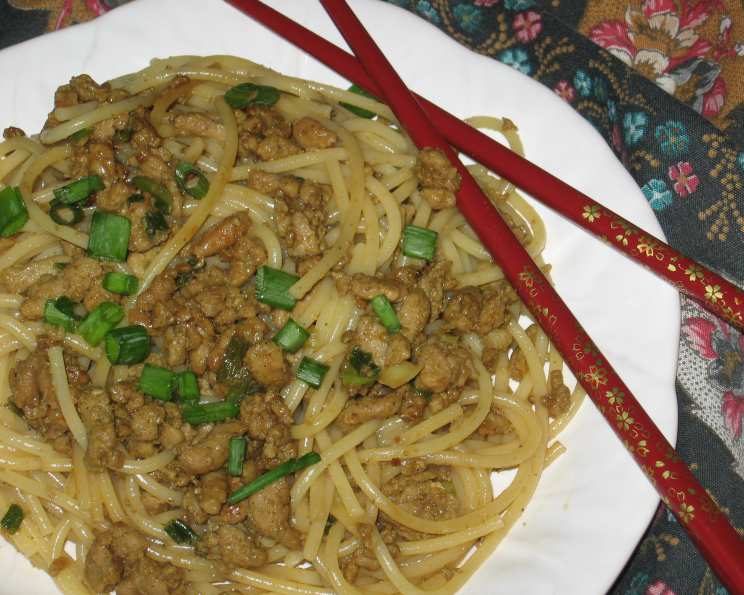
Singapore Noodles: A Symphony of Spice and Flavor
I still remember the first time I tasted Singapore Noodles. It was at a bustling hawker center in, surprisingly, Vancouver, not Singapore. The aroma of curry, ginger, and something subtly sweet hung in the air, beckoning me closer. One bite of those perfectly stir-fried noodles, coated in a vibrant sauce and studded with pork and scallions, and I was hooked. It was a flavor explosion, a dish that transported me to another world, a world I was eager to explore with every single bite.
Recipe Overview
- Prep Time: 15 minutes
- Cook Time: 15 minutes
- Total Time: 30 minutes
- Servings: 4-6
- Dietary Type: Adaptable (can be made gluten-free with rice noodles and gluten-free soy sauce)
Ingredients
- 1 lb ground pork (or beef or poultry)
- 5 garlic cloves, minced
- 3 teaspoons ground ginger
- 1/4 teaspoon cayenne
- 1 1/2 tablespoons curry powder
- 1/3 cup green onion, slivered (or chopped)
- 1/4 cup oyster sauce
- 2 teaspoons soy sauce
- 1 lb spaghetti
Equipment Needed
- Wok or large frying pan
- Large pot for boiling pasta
- Colander
Instructions
- First, prepare your ingredients. Mince the garlic, measure out the ground ginger, cayenne, and curry powder. Slice the green onion.
- In a wok or large frying pan over medium-high heat, scramble-fry the ground pork with the minced garlic, ground ginger, cayenne, curry powder, and sliced green onion.
- If you are using ground meat that is not lean, you may want to partially cook the meat by itself and then drain most of the fat before adding the other ingredients. This will prevent the dish from becoming greasy.
- Meanwhile, while the meat is cooking, cook the spaghetti according to package instructions in a large pot of boiling salted water until al dente.
- Once the spaghetti is cooked, drain it thoroughly in a colander. Don’t rinse the pasta, as the slight starchiness helps the sauce cling to the noodles.
- Add the oyster sauce and soy sauce to the meat mixture in the wok or frying pan. Toss well to mix thoroughly and ensure the meat is evenly coated in the sauce.
- Add the drained spaghetti to the meat mixture in the wok. Toss to mix thoroughly until the noodles are evenly coated in the sauce and meat mixture. Ensure the noodles are heated through.
- Serve immediately.
Expert Tips & Tricks
- Spice Level Control: The cayenne pepper is the key to the heat level. If you prefer a milder dish, reduce or omit the cayenne. You can also serve it with a side of chili oil for those who like extra spice.
- Meat Alternatives: Feel free to experiment with different proteins. Shrimp, chicken, or tofu all work beautifully in this dish. If using shrimp, add them towards the end of the cooking process to avoid overcooking.
- Noodle Choice: While spaghetti is traditionally used, you can substitute with other noodles. Rice noodles, especially thin vermicelli, create a more authentic Singaporean flavor. If using rice noodles, soak them in hot water according to package directions before adding them to the wok.
- Vegetable Boost: Add some extra vegetables for added nutrition and flavor. Bell peppers, bean sprouts, carrots, and snow peas are all excellent additions. Add them to the wok along with the meat.
- Make-Ahead Tip: The meat sauce can be made ahead of time and stored in the refrigerator for up to 2 days. When ready to serve, cook the spaghetti and toss it with the reheated sauce.
- Deglazing the Pan: If the meat sticks to the bottom of the pan, add a splash of chicken broth or water and scrape up any browned bits. This will add extra flavor to the sauce.
Serving & Storage Suggestions
Singapore Noodles are best served immediately while hot. Garnish with extra green onions or a sprinkle of toasted sesame seeds for added visual appeal. This dish pairs well with spring rolls, potstickers, or a refreshing cucumber salad.
Leftovers can be stored in an airtight container in the refrigerator for up to 3 days. To reheat, microwave until heated through, or stir-fry in a pan with a little oil until warmed. You may need to add a splash of water or broth to prevent the noodles from drying out. Freezing is not recommended, as the noodles may become mushy upon thawing.
Nutritional Information
| Nutrient | Amount per Serving | % Daily Value |
|---|---|---|
| Calories | 792 kcal | – |
| Calories from Fat | 232 g | 29% |
| Total Fat | 25.8 g | 39% |
| Saturated Fat | 9.2 g | 45% |
| Cholesterol | 106.7 mg | 35% |
| Sodium | 761.6 mg | 31% |
| Total Carbohydrate | 91.5 g | 30% |
| Dietary Fiber | 5 g | 20% |
| Sugars | 2.4 g | – |
| Protein | 45.4 g | 90% |
Note: Nutritional information is an estimate and may vary based on specific ingredients and portion sizes.
Variations & Substitutions
- Vegetarian/Vegan: Substitute the ground pork with crumbled tofu or a plant-based ground meat alternative. Replace the oyster sauce with a vegetarian oyster sauce made from mushrooms.
- Gluten-Free: Use rice noodles instead of spaghetti and substitute the soy sauce with tamari, a gluten-free soy sauce alternative. Ensure all other ingredients are also gluten-free.
- Seafood Lover’s Delight: Add shrimp or scallops to the dish for a seafood twist. Sauté them separately and add them to the noodles at the end of the cooking process.
- Spicy Peanut Noodles: Add a tablespoon of peanut butter and a dash of sriracha to the sauce for a creamy, spicy, and nutty variation.
- Regional Variations: Incorporate ingredients common in other Asian cuisines, such as bean sprouts, bok choy, or bamboo shoots.
FAQs (Frequently Asked Questions)
Q: Can I use a different type of noodle?
A: Absolutely! Rice noodles, particularly thin vermicelli, are a great alternative and provide a more authentic flavor. Just be sure to cook them according to package directions.
Q: How can I make this dish spicier?
A: Add more cayenne pepper to the sauce or serve with a side of chili oil or sambal oelek for those who like extra heat.
Q: Is it possible to make this dish ahead of time?
A: The meat sauce can be prepared in advance and stored in the refrigerator for up to 2 days. However, it’s best to cook the noodles fresh and combine them with the sauce just before serving.
Q: Can I freeze Singapore Noodles?
A: Freezing is not recommended, as the noodles may become mushy upon thawing.
Q: What if I don’t have oyster sauce?
A: You can substitute oyster sauce with hoisin sauce or a combination of soy sauce and a touch of brown sugar for a similar flavor profile.
Final Thoughts
Singapore Noodles is a dish that’s as versatile as it is delicious. Feel free to experiment with different ingredients and flavors to create your own unique version. Don’t be afraid to adjust the spice level to your liking, and most importantly, have fun in the kitchen! This vibrant and flavorful dish is sure to become a family favorite, perfect for a quick weeknight meal or a casual gathering with friends. So, grab your wok, gather your ingredients, and get ready to experience the magic of Singapore Noodles!