
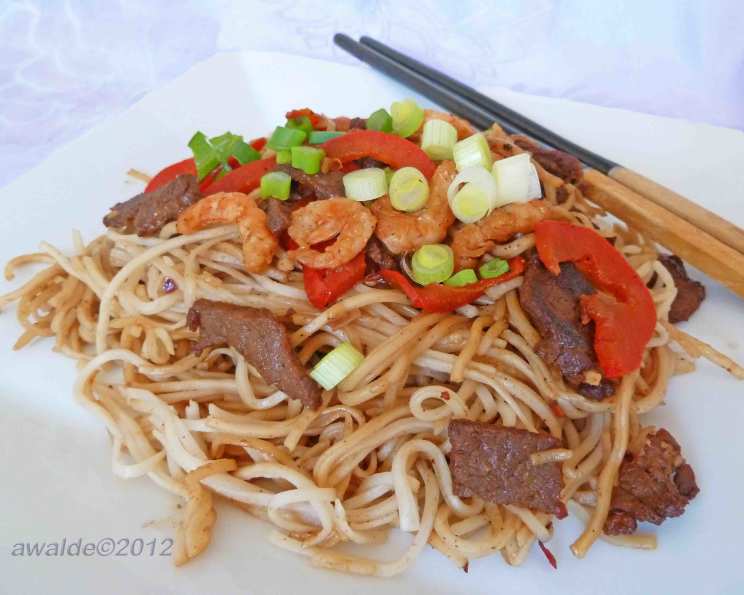
Singapore Noodles: A Culinary Journey Through Southeast Asia
The scent of curry powder, a wisp of ginger, and the sizzling dance of ingredients in a hot wok – those are the sense-memories that flood back whenever I think of Singapore Noodles. I remember the first time I tasted them, a late-night food stall in a bustling market overflowing with tempting aromas. The vendor, a blur of practiced motion, tossed noodles and shrimp with theatrical flair. Each bite was a burst of flavor, a spicy, savory symphony that transported me to a faraway land. Recreating that magic at home has become a cherished culinary quest.
Recipe Overview
- Prep Time: 20 minutes
- Cook Time: 30 minutes
- Total Time: 50 minutes
- Servings: 2-3
- Dietary Type: Dairy-Free
Ingredients
- 8 ounces thin rice stick noodles (vermicelli)
- ½ cup low sodium chicken broth
- 1 tablespoon soy sauce (to taste)
- 1 tablespoon rice wine or 1 tablespoon dry sherry
- 3 tablespoons peanut oil or 3 tablespoons vegetable oil
- 1 tablespoon minced garlic
- 1 tablespoon minced ginger
- ¼ teaspoon red pepper flakes
- 4 ounces small shrimp, peeled and deveined
- 1 cup thinly sliced green bell pepper
- 1 tablespoon curry powder
- ¼ teaspoon salt (optional)
- ¾ teaspoon sugar
- ⅛ teaspoon fresh ground black pepper
- 4 ounces barbecued pork, julienned (about 1 cup) – store-bought or homemade
- 1 cup finely shredded scallion
Equipment Needed
- Large pan or bowl
- Colander
- Kitchen shears
- Small bowl
- 14-inch wok
- Spatula
- Plate
Instructions
- Begin by preparing the rice noodles. Place them in a large pan or bowl and cover them with enough warm water to fully submerge them. Let them soak for 20 minutes, or until they are soft and pliable. This rehydrates the noodles, ensuring they cook evenly in the wok.
- Once the noodles are softened, drain them thoroughly in a colander. Shake well to remove any excess water. This step is crucial to prevent the noodles from becoming soggy during the stir-fry.
- Using kitchen shears, roughly cut the noodles into more manageable lengths of 6 to 8 inches. This makes them easier to handle and eat.
- In a small bowl, whisk together the chicken broth, soy sauce, and rice wine (or dry sherry). This mixture forms the flavorful base for the sauce.
- Heat a 14-inch wok over high heat. The wok is hot enough when a bead of water vaporizes within 1 to 2 seconds of contact. A screaming hot wok is essential for achieving that signature smoky flavor known as “wok hei”.
- Swirl in 1 tablespoon of the peanut oil (or vegetable oil) to coat the wok’s surface. Add the minced garlic, minced ginger, and red pepper flakes.
- Using a spatula, stir-fry the aromatics for approximately 10 seconds, or until they become fragrant. Be careful not to burn the garlic, as it can become bitter.
- Add the shrimp to the wok and stir-fry for 1 minute, or until the shrimp have just turned pink/orange but are not fully cooked through. They will finish cooking later with the noodles.
- Transfer the shrimp to a plate and set aside.
- Swirl the remaining 2 tablespoons of oil into the wok. Add the thinly sliced green bell peppers and stir-fry for 30 seconds, or until the peppers are bright green and slightly softened.
- Add the curry powder to the wok and stir-fry for 5 seconds, or until the curry is fragrant. This short burst of heat intensifies the curry’s aroma and flavor.
- Swirl the broth mixture into the wok. Add the drained rice noodles and stir-fry until they are completely coated in the curry mixture. Ensure the noodles are evenly saturated with the sauce.
- Sprinkle on the salt (if using), sugar, and black pepper. Stir-fry for 1 to 2 minutes, or until the noodles are just tender and have absorbed some of the sauce.
- Add the cooked shrimp and julienned barbecued pork to the wok. Stir-fry for another 1 to 2 minutes, or until the shrimp are fully cooked through and any remaining liquid has been absorbed by the noodles. The pork should be heated through.
- Stir in the finely shredded scallions. Serve immediately.
Expert Tips & Tricks
- Noodle Prep is Key: Don’t oversoak the noodles, or they’ll be mushy. Test them frequently after 15 minutes. They should be pliable but still firm.
- High Heat is Essential: The key to authentic Singapore Noodles is the “wok hei,” that smoky, slightly charred flavor you get from cooking over extremely high heat.
- Ingredient Prep: Have all your ingredients prepped and ready to go before you start cooking. Stir-frying is a fast-paced process, and there’s no time to chop vegetables mid-way.
- Adjust the Spice: If you’re sensitive to spice, reduce the amount of red pepper flakes or omit them altogether. You can always add more at the end if needed.
- Homemade Char Siu: For the best flavor, make your own barbecued pork (Char Siu). The flavor is far superior to store-bought versions.
Serving & Storage Suggestions
Serve your Singapore Noodles hot, straight from the wok. The vibrant colors and enticing aroma make it a feast for the senses. Garnish with extra scallions for added freshness.
Leftovers can be stored in an airtight container in the refrigerator for up to 2 days. Reheat in a wok or frying pan over medium heat, adding a splash of water or broth if the noodles seem dry. Microwaving is also an option, but the texture may not be as good.
Nutritional Information
| Nutrient | Amount per Serving | % Daily Value |
|---|---|---|
| Calories | 880.7 kcal | N/A |
| Calories from Fat | 318 g | 36% |
| Total Fat | 35.4 g | 54% |
| Saturated Fat | 8.2 g | 40% |
| Cholesterol | 214.6 mg | 71% |
| Sodium | 1205.7 mg | 50% |
| Total Carbohydrate | 96 g | 32% |
| Dietary Fiber | 7.7 g | 30% |
| Sugars | 7.1 g | N/A |
| Protein | 43.9 g | 87% |
Note: Nutritional information is an estimate and may vary based on specific ingredients and portion sizes.
Variations & Substitutions
- Vegetarian/Vegan: Substitute the shrimp and pork with tofu or tempeh. Use vegetable broth instead of chicken broth.
- Gluten-Free: Ensure your soy sauce is gluten-free (tamari is a good option).
- Spicy Singapore Noodles: Add more red pepper flakes or a dash of chili oil for extra heat.
- Protein Variations: Try adding chicken, beef, or scallops instead of or in addition to the shrimp and pork.
- Vegetable Boost: Incorporate other vegetables like bean sprouts, carrots, or snow peas.
FAQs (Frequently Asked Questions):
Q: Can I use different types of noodles?
A: While rice vermicelli is traditional, you can experiment with other thin noodles like angel hair pasta, but the texture and flavor profile will change slightly.
Q: How do I prevent the noodles from sticking together?
A: Make sure the noodles are well-drained after soaking and that the wok is hot enough before adding them. Stir-frying constantly also helps to prevent sticking.
Q: Can I make this ahead of time?
A: While best served immediately, you can prep all the ingredients ahead of time. The sauce can be mixed, the vegetables chopped, and the protein pre-cooked. Assemble and stir-fry just before serving.
Q: What is Char Siu, and where can I find it?
A: Char Siu is Chinese barbecued pork, known for its sweet and savory flavor and reddish color. You can find it in Chinese markets or make it at home.
Q: How do I adjust the saltiness of the dish?
A: Start with less soy sauce and add more to taste. Keep in mind that some chicken broths are saltier than others.
Final Thoughts
Singapore Noodles, with their vibrant colors, intoxicating aromas, and complex flavors, are more than just a dish; they’re an experience. Don’t be intimidated by the ingredient list or the stir-frying technique. With a little practice and a hot wok, you can transport yourself (and your taste buds) to the bustling streets of Southeast Asia. So, gather your ingredients, fire up the wok, and embark on a culinary adventure. And be sure to let me know what you think! Consider pairing this delightful dish with a crisp, cold Tsingtao beer for an authentic experience.