
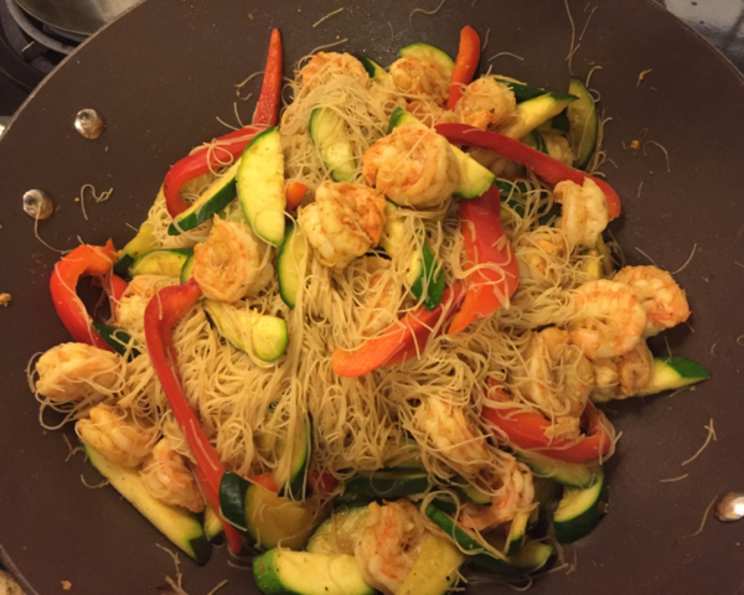
Singapore Rice Noodles: A Culinary Journey
The first time I tasted Singapore Rice Noodles, I was a wide-eyed culinary student on a sweltering summer trip through Southeast Asia. The vibrant colors of the hawker stall, the cacophony of sizzling woks, and the intoxicating aroma of curry and spices swirling in the humid air – it was a sensory overload in the best way possible. But the noodles themselves? A revelation. The delicate strands, infused with smoky wok hei and punctuated by bursts of sweet barbecued pork, savory shrimp, and crisp vegetables, transported me to a world of culinary possibilities. It was then I knew I wanted to recreate this magic in my own kitchen.
Recipe Overview
- Prep Time: 30 minutes
- Cook Time: 15 minutes
- Total Time: 45 minutes
- Servings: 4
- Yield: 1 large platter
- Dietary Type: Varies (can be gluten-free, dairy-free)
Ingredients
- 7 – 8 ounces fine dried rice noodles (rice sticks)
- 3 large eggs
- 2 tablespoons curry powder
- 2 teaspoons oriental sesame oil
- 5 tablespoons peanut oil or 5 tablespoons vegetable oil
- 8 ounces medium shrimp, shelled and deveined
- 4 ounces raw lean pork, trimmed and cut into 1/4 inch julienne
- 4 ounces boneless skinless chicken breasts, cut into 1/4 inch julienne
- 1 tablespoon minced fresh ginger
- 1 garlic clove, minced
- 1 – 2 fresh hot chili pepper, partly seeded and slivered
- 3 ounces Chinese barbecue pork or 3 ounces smoked ham, cut into 1/4 inch julienne
- 1⁄2 red bell pepper, cut into 1/4 inch julienne
- 1⁄2 green bell pepper, cut into 1/4 inch julienne
- 12 whole scallions, cut diagonally into 1 1/2 inch lengths
- 1 1⁄2 cups fresh bean sprouts or 1 1/2 cups shredded napa cabbage
- 1⁄2 cup chicken broth (vegetable broth for vegetarian option)
- 3 tablespoons soy sauce (tamari for gluten-free)
- 2 tablespoons dry sherry
- 1 pinch salt
- 2 tablespoons chopped fresh cilantro
Equipment Needed
- Large pot
- Colander
- Heavy skillet or wok
- Small bowls
- Large, heavy wok
- Large platter
Instructions
- Begin by preparing the rice noodles. Bring a large pot of water to a rolling boil.
- Drop the rice noodles into the boiling water and cook until they are tender but still firm to the bite, about 1 to 2 minutes. Be careful not to overcook them, as they will become mushy.
- Immediately drain the noodles and rinse them thoroughly under cold running water to stop the cooking process and prevent them from sticking together.
- Transfer the drained noodles to a colander and allow them to air-dry and firm up for at least 30 minutes, or even up to 2 to 3 hours. Toss them occasionally to ensure even drying. This step is crucial for achieving the right texture in the final dish.
- While the noodles are drying, prepare the egg mixture. In a bowl, whisk together the eggs, 1/2 teaspoon of the curry powder, and all of the sesame oil until well blended.
- Heat 1/2 tablespoon of the peanut or vegetable oil in a heavy skillet or wok set over moderately high heat.
- Pour in the egg mixture and immediately reduce the heat to low.
- Scramble the eggs until they are just set but still slightly moist. Turn them out onto a plate and reserve.
- Return the skillet to moderately high heat and add another 1/2 tablespoon of the oil.
- Add the shrimp and stir-fry until they are just barely cooked, about 1 minute. Remember, they will continue to cook later in the process.
- Remove the shrimp from the skillet and reserve them in a small bowl.
- Return the skillet to moderately high heat once more and add 1 tablespoon of the oil.
- Add the pork and chicken to the skillet and stir-fry until they are just cooked through, about 1 minute.
- Remove the pork and chicken from the skillet and reserve them in a separate small bowl.
- Now, prepare the wok. Place a large, heavy wok over high heat. This is where the magic happens!
- Once the wok is very hot, add 2 tablespoons of the oil.
- Add the minced ginger, minced garlic, slivered chilies, and the remaining curry powder to the wok.
- Stir-fry until fragrant, about 30 seconds. Be careful not to burn the garlic.
- Add the Chinese barbecue pork or smoked ham, red bell pepper, and green bell pepper to the wok.
- Stir-fry for another 30 seconds, allowing the flavors to meld together.
- Sprinkle on 1 to 2 tablespoons of water and cook until it boils away. This helps to soften the vegetables slightly and create a bit of steam.
- Push the ingredients to the sides of the wok, creating a well in the center. Add the remaining 1 tablespoon of oil to the center.
- Add the scallions, bean sprouts (or shredded napa cabbage), and the dried rice noodles to the wok. Toss everything over high heat until very hot, about 30 seconds, ensuring the noodles are well coated with the oil and spices.
- Pour in the chicken broth and bring it to a boil. The broth will help to steam the noodles and infuse them with flavor.
- Return the shrimp, pork, and chicken to the wok.
- Add the soy sauce and dry sherry to the wok.
- Toss everything together well, ensuring all the ingredients are evenly distributed and coated with the sauce.
- Add the salt and the reserved scrambled eggs to the wok.
- Sprinkle on the chopped fresh cilantro.
- Turn the Singapore Rice Noodles out onto a large platter and serve hot.
Expert Tips & Tricks
- Wok Hei: The key to truly authentic Singapore Rice Noodles is achieving “wok hei,” that characteristic smoky flavor imparted by a blazing hot wok. Use a good quality wok and make sure it’s thoroughly heated before adding any ingredients.
- Noodle Texture: Pre-drying the noodles is vital. It prevents them from becoming soggy when stir-fried.
- Curry Powder Blend: Experiment with different curry powder blends to find one you love. Some are hotter, some are sweeter, and some are more fragrant.
- Protein Prep: Cut the meats into uniform sizes for even cooking.
Serving & Storage Suggestions
Serve the Singapore Rice Noodles hot, directly from the wok (or platter). Garnish with extra cilantro and a wedge of lime for a bright, fresh finish. Leftovers can be stored in an airtight container in the refrigerator for up to 3 days. Reheat in a wok or skillet over medium heat, adding a splash of chicken broth or water if needed to prevent sticking. While freezing is possible, the texture of the noodles may suffer slightly upon thawing.
Nutritional Information
| Nutrient | Amount per Serving | % Daily Value |
|---|---|---|
| Calories | 450 kcal | 23% |
| Total Fat | 20g | 31% |
| Saturated Fat | 5g | 25% |
| Cholesterol | 180mg | 60% |
| Sodium | 900mg | 38% |
| Total Carbohydrate | 50g | 17% |
| Dietary Fiber | 5g | 20% |
| Sugars | 8g | N/A |
| Protein | 25g | 50% |
Note: Nutritional information is an estimate and may vary based on specific ingredients and portion sizes.
Variations & Substitutions
- Vegetarian/Vegan: Omit the meat and shrimp, and substitute vegetable broth for chicken broth. Add extra vegetables like mushrooms, tofu, or snow peas. Use tamari instead of soy sauce for gluten-free option.
- Seafood Extravaganza: Add scallops, calamari, or mussels for a more luxurious seafood dish.
- Spice Level: Adjust the amount of chili pepper to control the heat level. You can also add a dash of chili oil for an extra kick.
- Regional Variations: Experiment with adding other Southeast Asian flavors like fish sauce, lime juice, or coconut milk.
- Healthier option: Use brown rice noodles and lower the amount of oil.
FAQs (Frequently Asked Questions)
Q: Can I make this dish ahead of time?
A: While the noodles are best served fresh, you can prep all the ingredients (chopping vegetables, marinating meats) ahead of time to streamline the cooking process.
Q: My noodles are sticking together. What am I doing wrong?
A: Ensure you rinse the noodles thoroughly after boiling and allow them to air-dry completely. Tossing them occasionally during the drying process will also prevent sticking.
Q: Can I use different types of noodles?
A: While fine rice noodles are traditional, you can experiment with other types of noodles like vermicelli or even spaghetti, but the flavor profile will be different.
Q: I don’t have Chinese barbecue pork. What can I substitute?
A: Smoked ham is a good substitute, or you can use any other type of cooked pork or even omit it entirely.
Q: How do I get that smoky wok flavor at home?
A: Using a hot wok and cooking over high heat is essential. You can also use a gas stove, which tends to get hotter than electric stoves.
Final Thoughts
Now it’s your turn to embark on a culinary adventure and create your own version of Singapore Rice Noodles! Don’t be afraid to experiment with different flavors and ingredients to make it your own. The most important thing is to have fun and enjoy the process of creating a delicious and satisfying meal. I’d love to hear about your experiences and any variations you try! Pair this dish with a refreshing glass of iced tea or a crisp, dry white wine for the perfect Southeast Asian feast. Happy cooking!