
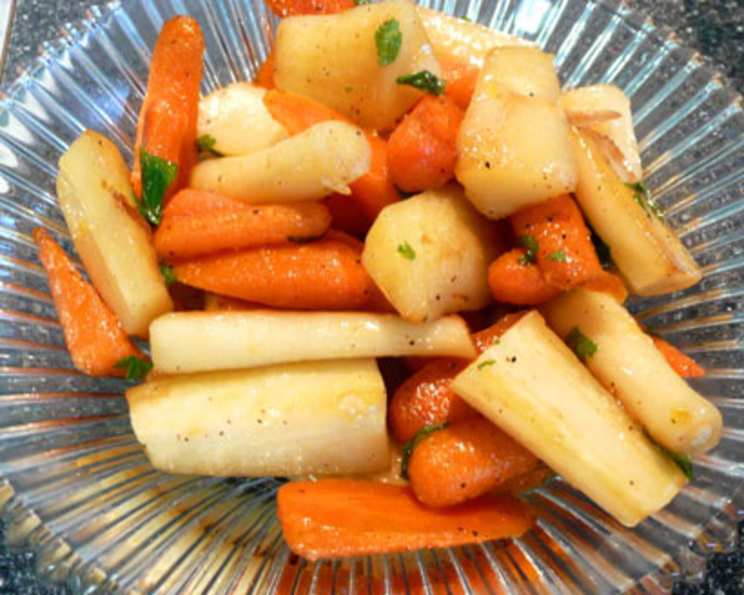
Skillet-Roasted Carrots and Parsnips: A Sweet and Savory Delight
Growing up in the countryside, autumn always meant root vegetables. I have distinct memories of helping my grandfather harvest carrots and parsnips from his garden, their earthy scent clinging to my little hands. He’d always roast them simply, with just a touch of sweetness to bring out their natural flavors. This skillet-roasted version, with its caramelized edges and tender interior, brings back those heartwarming memories with every bite.
Recipe Overview
- Prep Time: 15 minutes
- Cook Time: 26-28 minutes
- Total Time: 41-43 minutes
- Servings: 6-8
- Dietary Type: Vegetarian, Gluten-Free
Ingredients
- 3 tablespoons vegetable oil
- 1 1/2 lbs carrots, peeled and cut diagonally into 1/2-inch-thick pieces
- 1 1/2 lbs parsnips, peeled and cut diagonally into 1/2-inch-thick pieces
- 3/4 cup warm water
- 1 1/2 teaspoons sugar
- Salt and pepper to taste
- 1 tablespoon finely chopped fresh flat-leaf parsley leaves
Equipment Needed
- Large skillet
- Small bowl
- Whisk
- Measuring cups and spoons
- Cutting board
- Knife
Instructions
- Begin by heating the vegetable oil in a large skillet over medium-high heat. You’ll know it’s ready when the oil appears to shimmer slightly.
- Add the prepared carrots and parsnips to the skillet. Be careful not to overcrowd the pan; if necessary, work in batches to ensure even browning.
- Cook the vegetables, stirring occasionally, until they are nicely golden brown. This should take approximately 12 to 14 minutes. The browning process is key for developing a rich, deep flavor.
- While the vegetables are browning, prepare the sweet and savory liquid. In a small bowl, whisk together the warm water, sugar, and 1 teaspoon of salt until the sugar is completely dissolved. Using warm water aids in dissolving the sugar more readily.
- Once the vegetables are browned, pour the water mixture into the skillet. Stir gently to combine.
- Reduce the heat to medium-low, cover the skillet, and continue to cook, stirring occasionally. This allows the vegetables to steam and become tender, and for the liquid to reduce and create a light glaze. This step will take about 12 to 14 minutes.
- Check for doneness. The carrots and parsnips should be easily pierced with a fork and most of the liquid should have evaporated, leaving a slightly sticky glaze. If the vegetables are not yet tender, continue cooking, covered, for a few more minutes, checking frequently.
- Once the vegetables are tender and the liquid has reduced, remove the skillet from the heat.
- Stir in the finely chopped fresh parsley.
- Season the vegetables with salt and pepper to taste. Remember that you already added some salt to the water mixture, so start with a small amount and adjust as needed.
Expert Tips & Tricks
- Even Cuts, Even Cooking: To ensure that the carrots and parsnips cook evenly, make sure they are cut into pieces of roughly the same size and thickness.
- Don’t Overcrowd the Pan: Overcrowding the skillet will lower the temperature and cause the vegetables to steam instead of brown properly. If you have a lot of vegetables, cook them in batches.
- Quality of Parsnips: It’s best to use parsnips less than an inch wide as wider parsnips tend to have tough, fibrous cores that are best trimmed and discarded.
- Sweetness Adjustment: The amount of sugar can be adjusted to your preference. If you prefer a less sweet dish, reduce the amount of sugar slightly. Alternatively, a touch of maple syrup can be substituted for the sugar to add more depth of flavor.
- Herb Infusion: For a different flavor profile, try adding other fresh herbs such as thyme or rosemary along with the parsley. Add them towards the end of cooking to preserve their aroma.
- Make-Ahead Tip: You can peel and chop the carrots and parsnips a day in advance and store them in the refrigerator in an airtight container filled with cold water to prevent them from drying out.
Serving & Storage Suggestions
Serve the skillet-roasted carrots and parsnips warm as a side dish to complement roasted meats, poultry, or vegetarian mains. They make a wonderful addition to a holiday meal or a simple weeknight dinner.
To store leftovers, allow the vegetables to cool completely before transferring them to an airtight container. They can be stored in the refrigerator for up to 3-4 days.
To reheat, you can warm them in a skillet over medium heat, stirring occasionally, until heated through. Alternatively, you can microwave them for a minute or two. Adding a drizzle of olive oil during reheating can help to restore some of their original moisture and flavor.
Nutritional Information
| Nutrient | Amount per Serving | % Daily Value |
|---|---|---|
| Calories | 196.2 kcal | N/A |
| Calories from Fat | 66 kcal | 34% |
| Total Fat | 7.4 g | 11% |
| Saturated Fat | 1 g | 4% |
| Cholesterol | 0 mg | 0% |
| Sodium | 90.9 mg | 3% |
| Total Carbohydrate | 32.4 g | 10% |
| Dietary Fiber | 8.8 g | 35% |
| Sugars | 11.9 g | 47% |
| Protein | 2.4 g | 4% |
Note: Nutritional information is an estimate and may vary based on specific ingredients and cooking methods.
Variations & Substitutions
- Spicy Kick: Add a pinch of red pepper flakes to the water mixture for a touch of heat.
- Citrus Zest: Grate some orange or lemon zest over the vegetables during the last few minutes of cooking for a bright, citrusy flavor.
- Maple Glaze: Substitute maple syrup for the sugar in the water mixture for a richer, more complex flavor.
- Other Root Vegetables: Feel free to add other root vegetables such as sweet potatoes, turnips, or rutabagas to the mix. Just be sure to adjust the cooking time accordingly.
- Herbs de Provence: Use a blend of Herbs de Provence instead of just parsley.
- Balsamic Glaze: Drizzle with balsamic glaze after cooking for a sweet and tangy finish.
FAQs (Frequently Asked Questions)
Q: Can I use baby carrots for this recipe?
A: While you can use baby carrots, they often lack the same depth of flavor as full-size carrots. If using baby carrots, you may want to reduce the cooking time slightly.
Q: Can I use olive oil instead of vegetable oil?
A: Yes, you can substitute olive oil for vegetable oil. Keep in mind that olive oil has a lower smoke point than vegetable oil, so be careful not to overheat it.
Q: How do I know when the parsnips are cooked through?
A: The parsnips are cooked through when they are easily pierced with a fork and are tender throughout.
Q: Can I add other spices to this dish?
A: Absolutely! Spices like cumin, coriander, or smoked paprika would be delicious additions. Add them to the skillet along with the vegetables.
Q: Is it necessary to peel the carrots and parsnips?
A: While peeling is recommended, it’s not strictly necessary if the vegetables are very fresh and the skins are thin. Just be sure to wash them thoroughly.
Final Thoughts
I hope this recipe inspires you to embrace the simple joys of cooking with seasonal vegetables. The combination of sweetness and savory flavors in this dish is truly irresistible. Don’t be afraid to experiment with different herbs and spices to create your own unique version. I’d love to hear how it turns out! Pair these skillet-roasted root vegetables with a hearty lentil soup or a pan-seared chicken breast for a complete and satisfying meal. Happy cooking!