
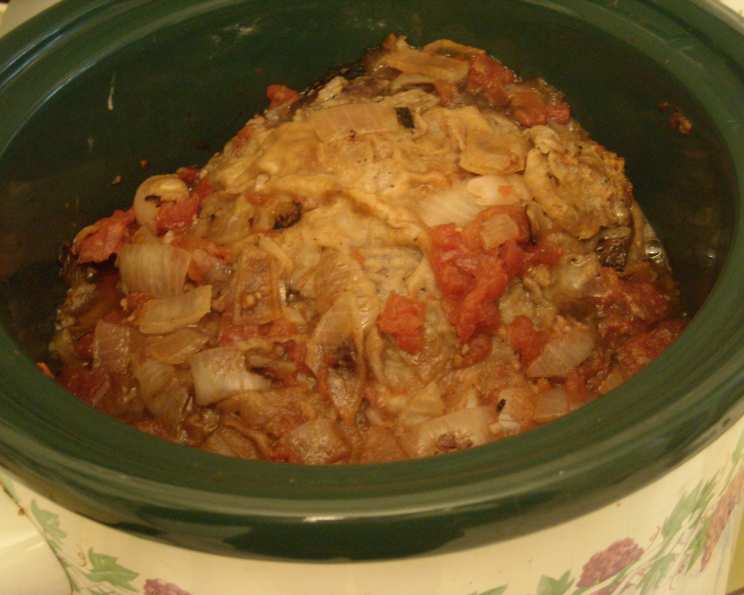
Slow-Cooked Pot Roast With Wine: A Culinary Embrace
The aroma still lingers in my memory, a comforting embrace that transported me back to my grandmother’s kitchen. It was a Sunday ritual: the low, steady hum of the slow cooker, the savory scent of beef mingling with wine and herbs, promising a hearty, love-filled meal. This pot roast, simmered to fork-tender perfection, wasn’t just food; it was a symbol of family, tradition, and unwavering affection. Each bite was a warm hug, a reminder of the simple joys in life, and the power of a home-cooked meal to nourish both body and soul.
Recipe Overview
- Prep Time: 15 minutes
- Cook Time: 9-11 hours
- Total Time: 9 hours 15 minutes – 11 hours 15 minutes
- Servings: 6
- Yield: About 6 servings
- Dietary Type: Varies (see variations for gluten-free/dairy-free)
Ingredients
- 3-4 lbs chuck roast
- Salt
- Pepper
- 3 tablespoons flour
- 2 tablespoons olive oil
- 1 medium onion, coarsely chopped
- 1 (14 ½ ounce) can diced tomatoes, with juices
- ½ cup port wine or ½ cup red wine
- 2 tablespoons red wine vinegar
- 3 garlic cloves, finely minced
Equipment Needed
- Large skillet
- Slow cooker
- Saucepan
- Serving platter
Instructions
-
Begin by generously sprinkling the chuck roast with salt and pepper. Then, thoroughly coat the roast with the flour, ensuring all sides are evenly covered. This will help create a lovely crust during searing and also contribute to thickening the sauce later.
-
In a large skillet, heat the olive oil over medium-high heat. Make sure the skillet is hot before adding the roast; this will give you a beautiful sear.
-
Carefully place the floured roast in the hot skillet. Sear the roast on all sides, about 2-3 minutes per side, until a rich brown crust forms. This searing process is crucial as it locks in the juices and adds a depth of flavor to the final dish. Don’t overcrowd the pan; sear in batches if necessary to ensure proper browning.
-
Transfer the seared roast to your slow cooker. Be sure to get all the lovely browned bits from the bottom of the pan, they add so much flavour to the roast.
-
Add the coarsely chopped onions to the same skillet used for searing the roast. Cook the onions over medium heat, stirring occasionally, until they are softened and browned. This step builds another layer of flavor for the pot roast.
-
Add the diced tomatoes (with their juices), port wine (or red wine), red wine vinegar, and finely minced garlic to the skillet with the onions. Stir to combine all the ingredients well, scraping up any browned bits from the bottom of the pan – these are packed with flavor!
-
Cook the mixture in the skillet, stirring occasionally, until it reaches a gentle simmer. This allows the flavors to meld together before being added to the roast.
-
Carefully pour the simmering mixture over the roast in the slow cooker. Make sure the roast is mostly submerged in the liquid.
-
Cover the slow cooker and cook on high for 1 hour. This initial burst of heat helps to quickly bring the roast and surrounding liquid up to temperature.
-
After the first hour, taste the broth in the slow cooker. At this point, you can adjust the seasoning with additional salt and pepper to your liking. This is a crucial step to ensure the final dish is perfectly seasoned.
-
Reduce the heat to low and continue cooking for 8-10 hours longer. Alternatively, if you’re short on time, you can continue cooking on high for 4-5 hours. The longer cooking time on low heat allows the chuck roast to become incredibly tender and flavorful as the connective tissues break down.
-
Once the roast is cooked to your liking, carefully transfer it to a serving platter. Cover the platter with foil to keep the roast warm while you prepare the sauce.
-
Pour the juices from the slow cooker into a saucepan. Simmer the juices over medium heat for about 10 minutes, or until the liquid has reduced to your desired consistency. This concentrates the flavors and creates a richer, more intense sauce. If you prefer a thicker sauce, you can whisk in a cornstarch slurry (1 tablespoon cornstarch mixed with 2 tablespoons cold water) during the last few minutes of simmering.
-
Slice or shred the pot roast and serve with the reduced sauce.
Expert Tips & Tricks
- Sear Like a Pro: Don’t skip the searing step! A good sear on all sides creates a delicious crust and adds depth of flavor. Ensure your pan is hot before adding the roast, and don’t overcrowd the pan – sear in batches if needed.
- Wine Selection: While the recipe calls for port or red wine, feel free to experiment with different varieties. A dry red wine like Cabernet Sauvignon or Merlot works well, adding complexity to the sauce.
- Thickening the Sauce: If you prefer a thicker sauce, you can use a cornstarch slurry (1 tablespoon cornstarch mixed with 2 tablespoons cold water). Add it to the simmering juices during the last few minutes of cooking, stirring constantly until thickened.
- Vegetable Boost: Add hearty root vegetables like carrots, potatoes, and parsnips to the slow cooker during the last few hours of cooking. This creates a complete and satisfying one-pot meal.
- Make-Ahead Magic: You can sear the roast and prepare the sauce a day in advance. Store them separately in the refrigerator, and then combine them in the slow cooker the next day. This is a great time-saver for busy weeknights.
Serving & Storage Suggestions
Serve the slow-cooked pot roast hot, sliced or shredded, with the reduced sauce ladled over the top. It pairs wonderfully with mashed potatoes, roasted vegetables, egg noodles, or crusty bread for soaking up the delicious sauce.
Leftover pot roast can be stored in an airtight container in the refrigerator for up to 3-4 days. For longer storage, freeze it in freezer-safe containers for up to 2-3 months. Reheat gently in a saucepan over low heat, or in the microwave, until heated through. Add a splash of beef broth or water if the sauce has thickened too much during storage.
Nutritional Information
| Nutrient | Amount per Serving | % Daily Value |
|---|---|---|
| Calories | 425.8 kcal | N/A |
| Calories from Fat | 166 g | 39% |
| Total Fat | 18.5 g | 28% |
| Saturated Fat | 6.8 g | 34% |
| Cholesterol | 149.7 mg | 49% |
| Sodium | 190.4 mg | 7% |
| Total Carbohydrate | 11.3 g | 3% |
| Dietary Fiber | 1.3 g | 5% |
| Sugars | 4.1 g | 16% |
| Protein | 49.3 g | 98% |
Note: Nutritional information is an estimate and may vary based on specific ingredients and cooking methods.
Variations & Substitutions
- Gluten-Free: To make this recipe gluten-free, simply substitute the all-purpose flour with a gluten-free flour blend for coating the roast. Ensure that the diced tomatoes and any other ingredients used are also gluten-free.
- Dairy-Free: This recipe is naturally dairy-free.
- Vegetable Additions: Add carrots, potatoes, celery, or parsnips to the slow cooker for a more complete meal.
- Herb Infusion: Add fresh herbs like rosemary, thyme, or bay leaves to the slow cooker for added flavor.
- Spicy Kick: Add a pinch of red pepper flakes or a chopped jalapeño to the sauce for a touch of heat.
- Beer Braised: Substitute the red wine with a dark beer, such as a stout or porter, for a richer, maltier flavor.
FAQs (Frequently Asked Questions)
Q: Can I use a different cut of beef?
A: While chuck roast is the ideal cut for slow cooking due to its marbling, you can also use brisket or round roast. Keep in mind that these cuts may require slightly different cooking times.
Q: Can I cook this in an Instant Pot?
A: Yes, you can adapt this recipe for an Instant Pot. Sear the roast using the sauté function, then add the remaining ingredients and cook on high pressure for 60-75 minutes, followed by a natural pressure release.
Q: What if I don’t have red wine vinegar?
A: You can substitute red wine vinegar with balsamic vinegar or apple cider vinegar in equal amounts.
Q: Can I freeze the pot roast?
A: Absolutely! Allow the pot roast to cool completely before transferring it to freezer-safe containers or bags. Freeze for up to 2-3 months.
Q: How do I know when the pot roast is done?
A: The pot roast is done when it is fork-tender and easily shreds apart with a fork. The internal temperature should reach at least 203°F (95°C).
Final Thoughts
I hope this recipe inspires you to create your own cherished memories in the kitchen. Whether you’re cooking for a special occasion or simply craving a comforting meal, this slow-cooked pot roast with wine is sure to delight. Don’t be afraid to experiment with variations and make it your own. I encourage you to try this recipe and share your feedback. Consider pairing it with a hearty red wine or a crusty loaf of bread for the perfect culinary experience. Happy cooking!