
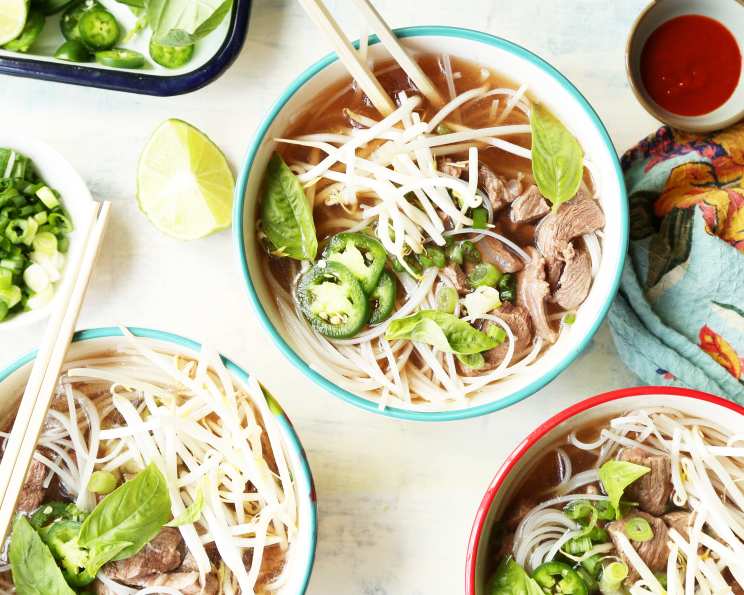
Slow-Cooker Pho: A Symphony of Flavors
The first time I truly understood pho, it wasn’t in a fancy restaurant, but on a bustling Hanoi street corner. The air hung thick with the aroma of star anise and simmering beef, and I watched, mesmerized, as a street vendor assembled a bowl with practiced ease. The slurp of noodles, the vibrant herbs, the rich broth—it was a revelation. I’ve spent years chasing that same level of depth and complexity, and while replicating street-side perfection is a tall order, this slow-cooker version brings that soul-satisfying essence of pho right to your kitchen.
Recipe Overview
- Prep Time: 20 minutes
- Cook Time: 8-12 hours
- Total Time: 8 hours 20 minutes – 12 hours 20 minutes
- Servings: 6
- Yield: 6 servings
- Dietary Type: Dairy-Free (easily adaptable to Gluten-Free by using gluten-free fish sauce and ensuring broth is gluten-free)
Ingredients
- 2 medium onions, peeled and quartered
- 1 head garlic, split horizontally
- One 4-inch piece ginger, split in half horizontally
- 2 serrano chilies, split in half horizontally, plus 2-3 additional, thinly sliced, for serving
- 2 cinnamon sticks
- 4 star anise
- 2 ½ teaspoons coriander seeds
- 7 cloves
- 1 tablespoon black peppercorns
- 2 teaspoons fennel seeds
- 5 cardamom pods
- Three pieces bone-in beef shank, cut into 2-inch rounds, about 5-6 pounds total
- 8 cups low sodium chicken broth (can substitute with beef broth for a richer flavor)
- 2 teaspoons salt or 2 teaspoons fish sauce, plus additional for serving
- 1 lb thin rice noodles, soaked in hot water until tender for 30 minutes
- 1 cup bean sprouts, for serving
- Lime wedges, for serving
- Mixed herbs, such as cilantro, Thai basil, and mint, for serving
- Thinly sliced scallion, for serving
Equipment Needed
- Slow Cooker (Crock-Pot)
- Small Baking Sheet
- Spider or Mesh Strainer
- Large Spoon
Instructions
-
Preheat your broiler. This initial step is key to developing deep, smoky flavors.
-
Place the onion, garlic, ginger, and serrano chilies on a small baking sheet. Broil, rotating occasionally, until nicely charred, about 8 minutes. The charring brings out the sweetness of the onions and garlic and adds a subtle heat.
-
Remove the baking sheet from the broiler. Add the cinnamon sticks, star anise, coriander, cloves, peppercorns, fennel, and cardamom. Return the baking sheet to the broiler until the spices are toasted and aromatic, about 30 seconds to a minute more. Watch closely to prevent burning, which can impart a bitter taste.
-
Transfer the charred aromatics and toasted spices to your slow cooker. Add the beef shanks and chicken broth. Then, add salt or fish sauce.
-
Add enough water to cover the beef shanks by ½-inch, approximately 8 cups. This ensures the meat is fully submerged and will become incredibly tender.
-
Place the lid on the slow cooker. Cook on low for at least 8 hours and up to 12 hours for an even fuller flavor. The longer it cooks, the more the flavors meld and deepen, and the meat becomes wonderfully tender and yielding.
-
Remove the beef from the slow cooker.
-
Using a spider or mesh strainer, carefully remove all the aromatics from the pot. This step is important for a clean, flavorful broth, free of any large pieces.
-
With a large spoon, skim off as much fat as possible from the surface of the broth. This step contributes to a cleaner, more refined final flavor and texture.
-
Once the beef is cool enough to handle, shred it into bite-sized pieces. Return the shredded beef to the broth in the slow cooker.
-
For best results, chill the broth completely and then skim off any solidified fat. Reheat before serving. Alternatively, if you’re short on time, you can skim the fat while the soup is warm with a large spoon.
-
Taste the broth and season to taste with additional salt or fish sauce. Adjust the seasoning to your preference; remember that fish sauce adds umami and depth.
-
To serve, divide the broth and meat among serving bowls. Top with the rice noodles, bean sprouts, lime wedges, mixed herbs, thinly sliced scallions, and thinly sliced chilies (if desired). Encourage your guests to customize their bowls to their liking.
Expert Tips & Tricks
- Charring is Key: Don’t skip the broiling step! The charring of the onions, garlic, and ginger is crucial for developing the signature pho flavor.
- Spice it Up: Adjust the amount of serrano chilies to your heat preference. Remember, you can always add more heat, but you can’t take it away!
- Broth Depth: For an even richer broth, use beef broth instead of chicken broth. You can also add a few beef bones to the slow cooker for extra flavor.
- Fat Removal: Skimming the fat is essential for a clear, clean broth. Chilling the broth beforehand makes this process much easier.
- Noodle Perfection: Don’t overcook the rice noodles! Soaking them in hot water until tender ensures they don’t become mushy in the hot broth.
- Make Ahead: The broth can be made 1-2 days in advance and stored in the refrigerator. This allows the flavors to meld even further.
- Herb Garden: Use a generous amount of fresh herbs! They add a burst of freshness and aroma to each bowl.
Serving & Storage Suggestions
Serve the pho immediately after assembling the bowls. Encourage diners to squeeze lime juice into their soup and add chili slices to taste. Leftover broth can be stored in an airtight container in the refrigerator for up to 3 days or frozen for up to 2 months. Rice noodles are best enjoyed fresh, but can be stored separately in the refrigerator for up to 2 days. Reheat the broth gently on the stovetop or in the microwave before serving.
Nutritional Information
| Nutrient | Amount per Serving | % Daily Value |
|---|---|---|
| Calories | 370 kcal | 19% |
| Total Fat | 24g | 31% |
| Saturated Fat | 8g | 40% |
| Cholesterol | 0mg | 0% |
| Sodium | 1014mg | 44% |
| Total Carbohydrate | 76g | 28% |
| Dietary Fiber | 3g | 11% |
| Sugars | 2g | N/A |
| Protein | 10g | 20% |
Note: Nutritional information is an estimate and may vary depending on specific ingredients and portion sizes.
Variations & Substitutions
- Vegetarian Pho: Substitute the beef shanks with hearty mushrooms, such as shiitake or oyster mushrooms. Use vegetable broth instead of chicken broth.
- Chicken Pho: Use chicken thighs or a whole chicken carcass instead of beef shanks.
- Spicy Pho: Add more serrano chilies to the broth or a dash of chili oil to each bowl.
- Gluten-Free Pho: Ensure your chicken broth is gluten-free and use gluten-free fish sauce (if using).
- Herb Variations: Experiment with different herbs, such as perilla leaves or sawtooth coriander, for unique flavor profiles.
FAQs (Frequently Asked Questions)
Q: Can I make pho in an Instant Pot instead of a slow cooker?
A: Yes, you can. Use the pressure cook setting for about 45 minutes with natural pressure release for 15 minutes, then quick release any remaining pressure.
Q: How do I prevent the rice noodles from becoming mushy?
A: Soak the rice noodles in hot water until just tender, then drain them well. Add them to the bowls just before serving to prevent overcooking in the hot broth.
Q: Can I use pre-ground spices instead of whole spices?
A: While you can, whole spices offer a fresher, more aromatic flavor. If using ground spices, reduce the amounts by half.
Q: How long does the slow-cooker pho broth last in the refrigerator?
A: The broth will last for 3-4 days in the refrigerator in an airtight container.
Q: Can I freeze the pho broth?
A: Yes, you can freeze the broth for up to 2 months. Allow it to cool completely before transferring it to a freezer-safe container.
Final Thoughts
Creating slow-cooker pho is more than just following a recipe; it’s an act of patience and an invitation to savor the complex, nuanced flavors that develop over time. Don’t be intimidated by the ingredient list—each element plays a vital role in the final symphony of taste. Gather your friends and family, prepare a pot of this comforting soup, and transport yourselves to the vibrant streets of Vietnam with every spoonful. I encourage you to experiment with the herbs and toppings to create your own signature pho experience. And, as always, please share your feedback and creations!