
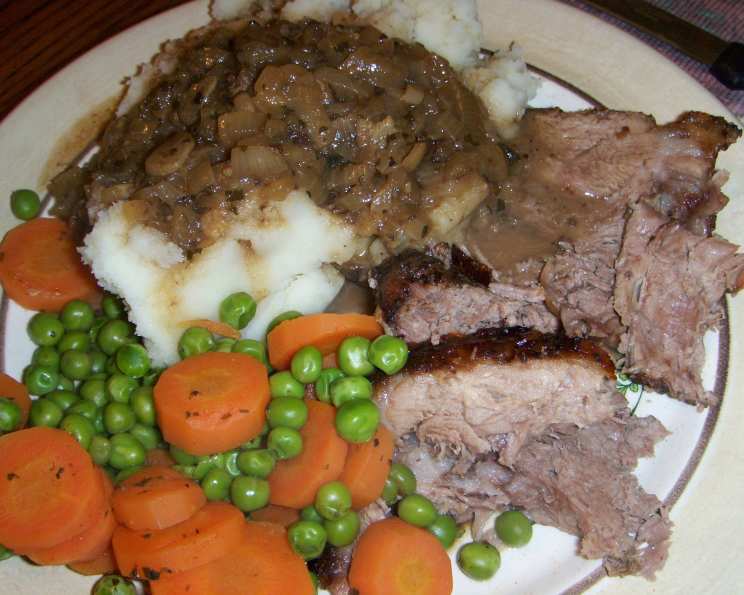
Slow-Roasted Leg of Lamb with White Wine: A Culinary Embrace
The memory is etched in my mind: Sunday dinners at my grandmother’s. The whole house would fill with an aroma that promised comfort and joy. But the star, the undisputed champion of the table, was always her leg of lamb. Roasted low and slow until it practically surrendered to the touch, it was a dish born of patience and love. The rich, savory gravy, clinging to every tender morsel, tasted like home. That’s the feeling I strive for every time I prepare this dish, a feeling I’m excited to share with you.
Recipe Overview
- Prep Time: 20 minutes
- Cook Time: 3 hours 30 minutes to 4 hours
- Total Time: 3 hours 50 minutes to 4 hours 20 minutes
- Servings: 6
- Yield: 6 servings
- Dietary Type: Gluten-Free (naturally), Dairy-Free
Ingredients
- 2 tablespoons olive oil
- 4 lbs leg of lamb
- 2 tablespoons plain flour
- Salt and pepper
- 1 lb peeled small onions or 2 large sliced onions
- 4 garlic cloves, thinly sliced
- 1 cup dry white wine
- 2 cups chicken stock
- 1 teaspoon dried rosemary or 3-5 sprigs fresh rosemary
- 2 tablespoons red currant jelly
Equipment Needed
- Large, sturdy roasting tin
- Sharp knife
- Large cutting board
Instructions
-
Preheat your oven to 325°F (160°C). This low temperature is key to achieving that melt-in-your-mouth tenderness.
-
Pour the olive oil into a large, sturdy roasting tin. Place the tin directly on your stovetop over medium heat. This allows you to sear the lamb efficiently.
-
Using a sharp knife, make several slashes all over the leg of lamb. Take one of the sliced garlic cloves and insert slivers into these cuts. This infuses the meat with aromatic garlic.
-
Season the lamb generously with salt and pepper. Then, roll the seasoned lamb in the plain flour, ensuring it’s evenly coated. This will help create a beautiful crust and thicken the gravy.
-
Brown the lamb all over in the hot oil for 5-10 minutes. The goal is to get a rich, golden-brown color on all sides. This step is essential for developing deep flavor.
-
Add the onions to the roasting tin and cook for a further 5-10 minutes, turning the lamb and stirring the onions until both are nicely browned. Browning the onions alongside the lamb adds sweetness and depth to the gravy.
-
Add the remaining sliced garlic, white wine, chicken stock, rosemary, and red currant jelly to the roasting tin. Bring the mixture to a simmer on the stovetop.
-
Transfer the roasting tin to the preheated oven. Cover the tin with a lid or tightly sealed foil. Cook for 2 hours, basting the lamb with the juices from the pan every 30-45 minutes. Basting keeps the lamb moist and infuses it with flavor.
-
Remove the lid or foil and continue to cook for another 1 1/2-2 hours, basting again at intervals. This allows the lamb to develop a beautiful, caramelized crust.
-
Once the lamb is cooked (internal temperature should reach 145°F/63°C for medium-rare, 160°F/71°C for medium), take it out of the tin and place it on a large cutting board to rest in a warm place for at least 15-20 minutes. Resting allows the juices to redistribute, resulting in a more tender and flavorful roast.
-
While the lamb is resting, skim off any excess fat from the pan juices. If needed, reduce the pan juices by simmering them on the stovetop until they thicken to your desired consistency. Mash up the onions a bit to further thicken the gravy.
-
Cut the lamb into thick slices. Because it has been slow-roasted, you’ll find the meat falls away from the bone, so you may end up with more chunks than neatly carved slices. But don’t worry; it will still be delicious!
Expert Tips & Tricks
-
Don’t skip the searing! This step adds a tremendous amount of flavor to the final dish.
-
Use a meat thermometer. This is the most accurate way to ensure your lamb is cooked to your desired level of doneness.
-
Basting is key. Don’t be afraid to open the oven and baste the lamb frequently.
-
If the gravy is too thin, you can thicken it by mixing a tablespoon of cornstarch with a tablespoon of cold water, then whisking it into the simmering gravy.
-
For extra flavor, add a few carrots and celery stalks to the roasting tin along with the onions.
-
Make ahead: The lamb can be cooked a day ahead of time. Let it cool completely, then store it in the fridge. Reheat gently in the oven with the gravy.
Serving & Storage Suggestions
Serve the slow-roasted leg of lamb hot, drizzled with the rich pan gravy. It pairs beautifully with roasted vegetables like potatoes, carrots, and parsnips, or a simple side of mashed potatoes and steamed green beans.
Leftovers can be stored in an airtight container in the refrigerator for up to 3 days. Reheat gently in the oven or microwave until warmed through. The meat is also delicious cold in sandwiches or salads.
It is not recommended to leave the cooked lamb at room temperature for more than 2 hours.
Nutritional Information
| Nutrient | Amount per Serving | % Daily Value |
|---|---|---|
| Calories | 772 kcal | N/A |
| Calories from Fat | 417 g | 54% |
| Total Fat | 46.4 g | 71% |
| Saturated Fat | 18.5 g | 92% |
| Cholesterol | 205 mg | 68% |
| Sodium | 293.7 mg | 12% |
| Total Carbohydrate | 19.1 g | 6% |
| Dietary Fiber | 1.3 g | 5% |
| Sugars | 8.5 g | 33% |
| Protein | 59.3 g | 118% |
Variations & Substitutions
- Herb Variations: As the initial note suggested, feel free to substitute oregano for the rosemary for a different flavor profile. Other herbs like thyme or bay leaf would also work well.
- Wine Substitutions: If you don’t have dry white wine, you can use dry red wine or even chicken broth in a pinch, although the flavor will be slightly different.
- Sweetness Adjustment: Adjust the amount of red currant jelly based on your preference. Some people prefer a sweeter gravy, while others prefer a more savory one. You can also use other types of fruit preserves, such as apricot jam or orange marmalade.
- Vegetable Boost: Adding root vegetables like carrots, parsnips, or celery to the roasting pan will enhance the flavor of the gravy and provide additional side dishes.
FAQs (Frequently Asked Questions)
Q: How do I prevent the lamb from drying out during the long cooking time?
A: The key is to cook the lamb at a low temperature and baste it frequently with the pan juices. Covering the roasting tin for the first half of the cooking time also helps to retain moisture.
Q: Can I use a different cut of lamb for this recipe?
A: While a leg of lamb is ideal for slow roasting, you could also use a shoulder of lamb. The cooking time may need to be adjusted slightly depending on the size of the shoulder.
Q: How do I know when the lamb is cooked through?
A: The best way to check for doneness is to use a meat thermometer. Insert it into the thickest part of the lamb, avoiding the bone. Aim for an internal temperature of 145°F (63°C) for medium-rare or 160°F (71°C) for medium.
Q: What if I don’t have red currant jelly?
A: If you don’t have red currant jelly, you can substitute another type of fruit preserve, such as apricot jam or orange marmalade. You can also use a tablespoon of honey or maple syrup for a touch of sweetness.
Q: Can I freeze leftover slow-roasted leg of lamb?
A: Yes, leftover slow-roasted leg of lamb can be frozen for up to 2-3 months. Make sure to wrap it tightly in freezer-safe packaging to prevent freezer burn. Thaw it in the refrigerator overnight before reheating.
Final Thoughts
Slow-roasting a leg of lamb is a labor of love, but the result is truly worth the effort. The tender, flavorful meat and rich, savory gravy are sure to impress your family and friends. So, gather your ingredients, put on some music, and get ready to create a culinary masterpiece. Don’t hesitate to experiment with different herbs and seasonings to make it your own. I encourage you to try this recipe, share your results, and perhaps pair it with a robust red wine for an unforgettable meal. Happy cooking!