
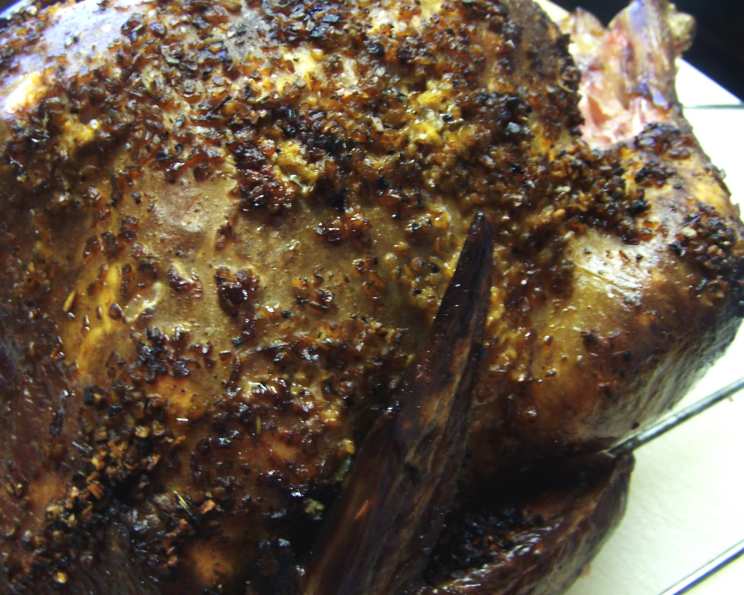
The Ultimate Smoked Holiday Turkey: A Family Tradition
Every Thanksgiving, the aroma of wood smoke, garlic, and rosemary would envelop our home, a fragrant promise of the feast to come. My dad, the culinary patriarch, would be stationed by his beloved smoker, tending to the star of our holiday table: a beautifully bronzed, impossibly juicy smoked turkey. He started experimenting with this recipe decades ago, and after a few…well, let’s call them “learning experiences,” he perfected it. The smoky, herbaceous flavor became so coveted that one year he unwisely offered to make them as gifts. The overwhelming demand nearly drove him into early retirement from turkey-making! Now, this is the only turkey we ever want for Thanksgiving, Christmas or any Holiday.
Recipe Overview
- Prep Time: 30 minutes
- Cook Time: 4-5 hours
- Total Time: 4.5-5.5 hours
- Servings: 8-10
- Yield: 1 large turkey
- Dietary Type: Varies (naturally gluten-free and dairy-free)
Ingredients
- 1 large turkey (12-14 pounds)
- ½ cup minced onion
- ⅛ cup minced garlic
- 1 tablespoon minced rosemary
- 1 tablespoon fresh black pepper
- 2 teaspoons paprika
- 1 teaspoon salt
- ⅓ cup olive oil, plus more for coating
- 2 large onions, quartered
- 1 small rosemary branch, whole (optional)
Equipment Needed
- Smoker
- Large bowl
- Paring knife
- Spoon
- Butcher’s twine
Instructions
-
In a large bowl, prepare the aromatic paste. Combine the minced onion, minced garlic, minced rosemary, black pepper, 1 teaspoon of paprika, and salt. Add just enough olive oil (about ⅓ cup) to create a thick, easily spreadable paste. Don’t be afraid to get your hands in there and really mix it well.
-
Prepare the turkey. Remove the giblets and neck from the turkey cavity. Rinse the turkey inside and out under cold running water. Pat it completely dry with paper towels – a dry bird will absorb more smoke and develop a better skin.
-
Now for the fun part: injecting flavor. Using a paring knife, make incisions straight down into the turkey meat, reaching all the way to the bone. These cuts should be about 1 to 1.5 inches long and spaced about 1.5 to 2 inches apart all over the bird, wherever you can make a hole. Wiggle the knife within each incision to create a larger cavity beneath the surface; this will allow you to pack in more of the flavorful paste.
-
With a spoon and your fingers (yes, it’s messy!), pack all of the holes you’ve created with the onion-garlic-rosemary paste. Really stuff those cavities to the top! This is where the magic happens, infusing the turkey with incredible flavor from the inside out.
-
Prepare the turkey cavity. Quarter the large onions and pack them, along with the whole rosemary sprig (if using), inside the turkey cavity. The onions will steam and add moisture and flavor during the smoking process, while the rosemary will impart a subtle herbaceousness.
-
Coat the turkey. Generously coat the entire outside of the turkey with olive oil. Then, dust the turkey down fairly heavily with the remaining 1 teaspoon of paprika. The olive oil will help the skin crisp up, and the paprika will contribute to a beautiful color.
-
Secure the legs. Tie the turkey legs together with butcher’s twine to help maintain a uniform shape during smoking. This also helps prevent the legs from drying out too quickly.
-
Smoke the turkey. Place the prepared turkey on the smoker rack, breast side up. Smoke as you usually would. In my particular smoker (using hickory wood chips), this typically takes about 4 to 5 hours to reach an internal temperature of 165°F (74°C) in the thickest part of the thigh. The exact smoking time will vary depending on your smoker, the outside temperature, and the size of your turkey.
Expert Tips & Tricks
- Brining: For an even moister turkey, consider brining it for 12-24 hours before smoking. This will help the meat retain moisture during the long smoking process.
- Wood Choice: Experiment with different wood chips to find your favorite flavor profile. Hickory is a classic choice for turkey, but apple, pecan, or maple can also be delicious.
- Water Pan: Keep a water pan in your smoker to maintain humidity. This will help prevent the turkey from drying out.
- Temperature Control: Maintain a consistent smoker temperature of around 225-250°F (107-121°C). This will ensure even cooking and prevent the turkey from becoming tough.
- Doneness Check: Always use a meat thermometer to check the internal temperature of the turkey. Insert the thermometer into the thickest part of the thigh, being careful not to touch the bone. The turkey is done when it reaches 165°F (74°C).
- Resting Period: Allow the turkey to rest for at least 30 minutes before carving. This allows the juices to redistribute throughout the meat, resulting in a more flavorful and moist bird. Tent it loosely with foil to keep it warm.
Serving & Storage Suggestions
Once rested, carve the smoked turkey and serve immediately. It pairs perfectly with classic Thanksgiving sides like mashed potatoes, stuffing, cranberry sauce, and gravy. Leftovers should be stored in an airtight container in the refrigerator for up to 3-4 days. You can also freeze leftover turkey for up to 2-3 months. To reheat, gently warm the turkey in the oven or microwave, adding a little broth or gravy to keep it moist.
Nutritional Information
| Nutrient | Amount per Serving | % Daily Value |
|---|---|---|
| Calories | 250 kcal | 13% |
| Total Fat | 12g | 18% |
| Saturated Fat | 3g | 15% |
| Cholesterol | 100mg | 33% |
| Sodium | 300mg | 13% |
| Total Carbohydrate | 3g | 1% |
| Dietary Fiber | 1g | 4% |
| Sugars | 1g | — |
| Protein | 30g | 60% |
Note: Nutritional information is an estimate and may vary depending on the size of the turkey and specific ingredients used.
Variations & Substitutions
- Spice it up: Add a pinch of cayenne pepper to the onion-garlic-rosemary paste for a little heat.
- Citrus notes: Include the zest of one lemon or orange in the paste for a brighter flavor.
- Herb variations: Experiment with different herbs, such as thyme, sage, or oregano, in place of or in addition to the rosemary.
- Maple glaze: Brush the turkey with a maple syrup glaze during the last hour of smoking for a sweet and smoky flavor. Combine 1/4 cup maple syrup, 2 tablespoons melted butter, and 1 tablespoon apple cider vinegar.
- Injection Marinade: Inject the turkey with a savory marinade instead of or in addition to the paste. Use a mixture of melted butter, chicken broth, garlic powder, onion powder, and your favorite herbs and spices.
FAQs (Frequently Asked Questions)
Q: How do I prevent the turkey from drying out?
A: Brining the turkey beforehand, maintaining a water pan in the smoker, and not overcooking it are all key to preventing dryness. Resting the turkey after smoking is also crucial for retaining moisture.
Q: Can I use a different type of smoker?
A: Yes, this recipe can be adapted for different types of smokers, but the smoking time may vary. Always use a meat thermometer to ensure the turkey reaches an internal temperature of 165°F (74°C).
Q: What if I don’t have fresh rosemary?
A: Dried rosemary can be used as a substitute, but use about half the amount as fresh rosemary since it is more concentrated.
Q: Can I prepare the onion-garlic-rosemary paste ahead of time?
A: Yes, you can prepare the paste up to 24 hours in advance. Store it in an airtight container in the refrigerator.
Q: How do I know when the turkey is done smoking?
A: The best way to tell if the turkey is done is to use a meat thermometer. Insert it into the thickest part of the thigh, avoiding the bone. The turkey is done when it reaches an internal temperature of 165°F (74°C).
Final Thoughts
This smoked holiday turkey is more than just a recipe; it’s a tradition, a labor of love, and a delicious centerpiece for any celebration. Don’t be intimidated by the process – the reward is a succulent, smoky turkey that your family and friends will rave about. Gather your ingredients, fire up your smoker, and get ready to create a memorable meal that will become a cherished tradition for years to come. And please, share your own experiences and any variations you try! I’d love to hear about your own turkey triumphs. Serve it with a robust Cabernet Sauvignon for a truly unforgettable pairing.