
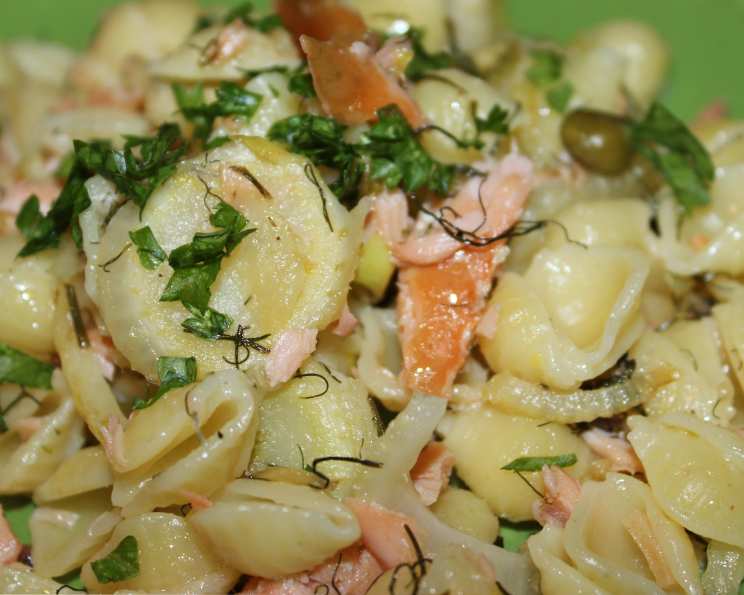
Smoked Trout, Lemon & Fennel Pasta
I remember the first time I tasted this pasta. It was on a sun-drenched terrace overlooking the Ligurian Sea. The salty air mingled with the bright citrus notes of the dish, and the smoky fish added a layer of complexity that lingered on my palate. It was simple, elegant, and utterly unforgettable, and I’ve been recreating it ever since, tweaking it slightly to capture that perfect balance of flavors. This pasta is sunshine on a plate – a celebration of fresh ingredients and simple cooking techniques.
Recipe Overview
- Prep Time: 15 minutes
- Cook Time: 10 minutes
- Total Time: 25 minutes
- Servings: 4
- Dietary Type: Pescatarian
Ingredients
- 400 g orecchiette pasta
- 2 fennel bulbs, finely chopped
- 1 tablespoon olive oil
- 1 tablespoon capers, rinsed
- ½ lemon
- 200 g trout fillets (hot smoked)
- Fresh parsley, a handful chopped (flat leaf preferred)
Equipment Needed
- Large pot
- Frying pan
- Colander
- Zester
- Juicer
- Chopping board
- Knife
Instructions
-
Begin by bringing a large pot of salted water to a rolling boil. Add the orecchiette pasta and cook according to the package instructions. This usually takes around 8-10 minutes, but always check for al dente texture before draining. Reserve about ½ cup of pasta water before draining.
-
While the pasta is cooking, prepare the sauce. Heat 1 tablespoon of olive oil in a large frying pan over medium-low heat. Add the finely chopped fennel bulbs and cook for 3-4 minutes, stirring occasionally, until they begin to soften and become translucent. Don’t let them brown. The goal is to gently soften them and release their delicate anise flavor.
-
Add the rinsed capers to the pan with the fennel. The saltiness of the capers will provide a lovely counterpoint to the sweetness of the fennel and the richness of the smoked trout.
-
Zest half of the lemon directly into the pan, being careful to avoid the bitter white pith. Then, juice the same half of the lemon into the pan. The zest provides aromatic oils, while the juice adds acidity and brightness.
-
Flake the hot smoked trout fillets into bite-sized pieces. Add the flaked trout to the pan with the fennel, capers, and lemon. Be gentle as you stir to avoid breaking the trout into tiny pieces. You want to retain some texture.
-
Add most of the chopped fresh parsley to the pan, reserving a small amount for garnish. Also, add the fronds from the fennel bulb (the feathery green parts) to the pan. These fronds have a delicate anise flavor that complements the fennel bulb perfectly.
-
Stir to combine all the ingredients in the pan. Heat through gently for another minute or two, being careful not to overcook the trout, as it is already cooked and you want to retain its moisture. Season to taste with salt and freshly ground black pepper. Remember that the capers and smoked trout are already salty, so taste before adding more salt. If the sauce seems too dry, add a tablespoon or two of the reserved pasta water to loosen it up.
-
Once the pasta is cooked to al dente, drain it well (but again, remember to reserve some of that precious pasta water!). Immediately add the drained pasta to the pan with the trout mixture.
-
Gently toss the pasta and the trout mixture together until the pasta is evenly coated. If the sauce seems too thick, add a little more of the reserved pasta water until you reach your desired consistency. The pasta water helps to emulsify the sauce and create a silky texture.
-
Serve immediately, garnished with the remaining fresh parsley. A drizzle of good quality olive oil and a final squeeze of lemon can add an extra touch of elegance.
Expert Tips & Tricks
- Fennel Prep: To finely chop the fennel, start by trimming off the stalks and fronds (reserve the fronds for later). Cut the bulb in half from top to bottom, then remove the core (the hard, triangular part at the base). Slice each half thinly, then chop the slices into small pieces.
- Smoked Trout Selection: Hot smoked trout is best for this recipe because it has a richer, smokier flavor and a more delicate texture than cold smoked trout. Look for fillets that are firm and moist.
- Pasta Water is Key: Don’t skip the step of reserving pasta water! It’s a starchy liquid that helps to bind the sauce to the pasta and create a creamy texture.
- Make Ahead: The fennel and caper mixture can be prepared a few hours in advance. Just add the trout and parsley right before tossing with the cooked pasta.
- Lemon Zest Technique: Use a microplane zester to get the finest zest possible, which will release more of the lemon’s aromatic oils. Avoid zesting the white pith, which is bitter.
- If your sauce is too acidic: Add a small pat of butter to mellow out the lemon flavor.
Serving & Storage Suggestions
Serve the pasta immediately while it’s hot and the flavors are vibrant. A simple side salad with a light vinaigrette would be a perfect accompaniment. A crisp white wine, like a Pinot Grigio or Sauvignon Blanc, would also pair well with the dish.
Leftovers can be stored in an airtight container in the refrigerator for up to 2 days. Reheat gently in a pan over low heat, adding a splash of water or olive oil to prevent the pasta from drying out. While the pasta can be frozen, the texture of the smoked trout may change upon thawing. Therefore, it is best enjoyed fresh or within a couple of days.
Nutritional Information
| Nutrient | Amount per Serving | % Daily Value |
|---|---|---|
| Calories | 480 kcal | 24% |
| Total Fat | 18g | 28% |
| Saturated Fat | 3g | 15% |
| Cholesterol | 40mg | 13% |
| Sodium | 350mg | 15% |
| Total Carbohydrate | 65g | 22% |
| Dietary Fiber | 5g | 20% |
| Sugars | 5g | – |
| Protein | 20g | 40% |
Variations & Substitutions
- Gluten-Free: Use your favorite gluten-free pasta.
- Smoked Salmon: If you can’t find smoked trout, smoked salmon makes an excellent substitute.
- Vegetarian: Omit the smoked trout and add some toasted pine nuts or walnuts for added texture and protein. You can also add some sautéed mushrooms for an earthy flavor.
- Spicy Kick: Add a pinch of red pepper flakes to the pan with the fennel for a touch of heat.
- Herbs: Experiment with different herbs, such as dill, chives, or tarragon, in addition to or instead of parsley.
- Seasonal Vegetables: Add some seasonal vegetables, such as asparagus, peas, or zucchini, to the pan with the fennel for a more substantial dish.
- Cheese: A sprinkle of freshly grated Parmesan cheese or Pecorino Romano would be a delicious addition (though it would make the dish not dairy-free).
FAQs (Frequently Asked Questions)
Q: Can I use dried fennel instead of fresh?
A: While fresh fennel is ideal for its delicate flavor and crisp texture, you can use dried fennel seeds as a substitute. Use about 1 teaspoon of dried fennel seeds for every 1 fennel bulb, and add them to the pan with the olive oil at the beginning.
Q: How do I know when the pasta is cooked perfectly?
A: The pasta should be al dente, which means “to the tooth” in Italian. It should be firm to the bite, with a slight resistance in the center. Avoid overcooking the pasta, as it will become mushy.
Q: Can I make this dish ahead of time?
A: While the pasta is best served fresh, you can prepare the fennel and caper mixture ahead of time and store it in the refrigerator for up to 24 hours. Just add the smoked trout and parsley right before tossing with the cooked pasta.
Q: What if I don’t have lemon?
A: Lime can be used as a substitute for lemon in this recipe, although the flavor will be slightly different. White wine vinegar can also be used in a pinch, but it won’t provide the same bright, citrusy notes as lemon.
Q: Is it possible to grill the fennel instead of sautéing?
A: Yes, grilling the fennel adds a lovely smoky flavor. Cut the fennel into wedges, brush with olive oil, and grill over medium heat until tender and slightly charred. Then, chop the grilled fennel and add it to the pan with the other ingredients.
Final Thoughts
This Smoked Trout, Lemon & Fennel Pasta is a testament to the beauty of simple ingredients and straightforward cooking techniques. It’s a dish that’s both comforting and elegant, perfect for a weeknight dinner or a special occasion. I encourage you to try this recipe and make it your own. Don’t be afraid to experiment with different variations and substitutions to find your perfect balance of flavors. And most importantly, enjoy the process of cooking and sharing this delicious meal with friends and family. Bon appétit!