
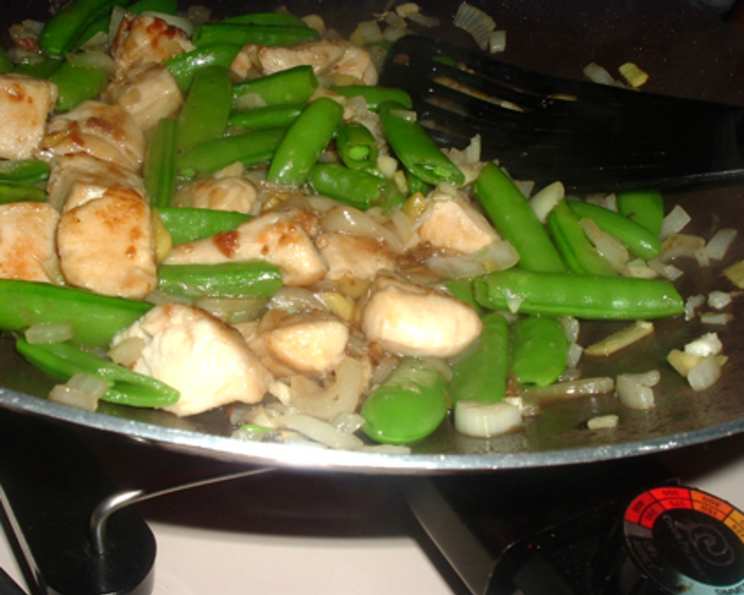
Snow Peas and Chicken: A Stir-Fry Classic
I remember the first time I had snow peas and chicken stir-fry. It was a weeknight, and my mom, usually a purveyor of traditional Italian dishes, decided to branch out. The vibrant green of the snow peas against the tender chicken, the aromatic ginger and garlic filling the kitchen – it was an explosion of flavor and color that instantly captivated me. Even now, the scent of this dish cooking takes me right back to that cozy kitchen, filled with the warmth of family and the promise of a delicious meal.
Recipe Overview
- Prep Time: 15 minutes
- Cook Time: 11 minutes
- Total Time: 1 hour 26 minutes
- Servings: 4
- Dietary Type: Adaptable (see variations)
Ingredients
- 1 lb boneless skinless chicken breast
- 3 tablespoons dry sherry
- 4 teaspoons cornstarch
- 2 tablespoons low sodium soy sauce
- 1 teaspoon sugar
- 2 tablespoons olive oil
- 5 garlic cloves, chopped
- 2 teaspoons grated fresh ginger (1 tsp dried)
- 2 onions, chopped
- 1/2 lb snow peas
- 1/2 cup water
Equipment Needed
- Cutting board
- Knife
- Mixing bowls
- Heavy cast iron frypan or wok
- Measuring spoons and cups
Instructions
- Begin by preparing the chicken. Cut the chicken breast into 1-inch cubes. This ensures even cooking and a pleasant bite-sized texture.
- In a medium mixing bowl, combine 2 tablespoons of the dry sherry and 3 teaspoons of the cornstarch. Mix well until the cornstarch is fully dissolved, creating a smooth slurry. This mixture will help to tenderize the chicken and create a luscious sauce later on.
- Add the cubed chicken to the sherry and cornstarch mixture. Stir to ensure the chicken is evenly coated.
- Cover the bowl tightly with plastic wrap or a lid and refrigerate for at least 1 hour. This marinating period allows the flavors to penetrate the chicken and results in a more tender and flavorful dish.
- While the chicken is marinating, prepare the sauce. In a small bowl, combine the low sodium soy sauce, the remaining 1 tablespoon of dry sherry, the remaining 1 teaspoon of cornstarch, and the sugar. Whisk until the sugar and cornstarch are completely dissolved. Set aside.
- Once the chicken has marinated, heat the olive oil in a heavy cast iron frypan or wok over high heat. It’s crucial that the pan is very hot before adding the chicken – almost smoking – to achieve that characteristic stir-fry sear.
- Add the marinated chicken to the hot pan and stir-fry for 2 minutes. The chicken should be lightly browned on all sides. Remove the chicken from the pan and set aside.
- Add the chopped garlic and grated fresh ginger to the pan. Stir well to release their aromatic oils. Be careful not to burn the garlic; it should just become fragrant.
- Add the chopped onions and snow peas to the pan. Stir-fry for 2 minutes, until the onions are slightly softened and the snow peas are bright green and crisp-tender.
- Pour the water into the pan, stirring to deglaze any browned bits from the bottom. This adds depth of flavor to the sauce.
- Return the cooked chicken to the pan. Pour the soy sauce mixture over the chicken and vegetables.
- Stir quickly over high heat until the sauce thickens and becomes glossy, about 1-2 minutes. Ensure the chicken is heated through.
- Serve hot over rice or noodles.
Expert Tips & Tricks
- For an even more tender chicken, try velveting it. This involves marinating the chicken with egg white, cornstarch, and a touch of oil before stir-frying.
- If you prefer a spicier dish, add a pinch of red pepper flakes or a dash of chili oil to the sauce.
- Don’t overcrowd the pan! Stir-frying in batches ensures that the ingredients sear properly and don’t steam.
- Prep all your ingredients before you start cooking. This ensures that the stir-fry process is quick and efficient.
- Toasting the dry spices slightly before adding them to the pan can enhance their flavor.
- Make sure your wok or pan is screaming hot before adding the chicken. This is essential for getting that perfect sear and preventing the chicken from sticking.
Serving & Storage Suggestions
This Snow Peas and Chicken is best served immediately, while the chicken is tender and the snow peas are crisp. Serve it over a bed of steaming white rice or your favorite noodles. A sprinkle of sesame seeds or chopped scallions adds a nice visual appeal.
Leftovers can be stored in an airtight container in the refrigerator for up to 3 days. To reheat, microwave until heated through or stir-fry in a pan with a little oil until warmed through. The snow peas may lose some of their crispness upon reheating, but the flavor will still be delicious. Freezing is not recommended as the texture of the snow peas and sauce will be affected.
Nutritional Information
| Nutrient | Amount per Serving | % Daily Value |
|---|---|---|
| Calories | 303.5 kcal | N/A |
| Calories from Fat | 75 g | 25% |
| Total Fat | 8.3 g | 12% |
| Saturated Fat | 1.4 g | 6% |
| Cholesterol | 65.8 mg | 21% |
| Sodium | 382.2 mg | 15% |
| Total Carbohydrate | 17 g | 5% |
| Dietary Fiber | 2.4 g | 9% |
| Sugars | 6.3 g | N/A |
| Protein | 29.1 g | 58% |
Note: Nutritional information is an estimate and may vary depending on specific ingredients and portion sizes.
Variations & Substitutions
- Vegetarian/Vegan: Substitute the chicken with firm tofu or tempeh. Press the tofu to remove excess water before marinating and stir-frying. Use vegetable broth instead of water.
- Gluten-Free: Ensure you use gluten-free soy sauce (tamari) and double-check that your cornstarch is certified gluten-free.
- Different Vegetables: Feel free to add other vegetables like broccoli florets, sliced bell peppers, or mushrooms to the stir-fry.
- Protein Swap: Use shrimp, beef, or pork instead of chicken. Adjust cooking times accordingly.
- Nut Allergy: If you have a nut allergy, ensure the soy sauce is produced in a nut-free facility, or opt for coconut aminos.
FAQs (Frequently Asked Questions)
Q: Can I use dried ginger instead of fresh?
A: Yes, you can substitute 1 teaspoon of dried ginger for the 2 teaspoons of fresh ginger. However, fresh ginger will provide a brighter, more intense flavor.
Q: How can I prevent the snow peas from becoming soggy?
A: Avoid overcooking the snow peas. They should be bright green and crisp-tender. Add them towards the end of the cooking process and stir-fry for only a couple of minutes.
Q: Can I use chicken thighs instead of chicken breast?
A: Yes, you can use boneless, skinless chicken thighs. They tend to be more flavorful and remain more tender than chicken breast. Adjust the cooking time as needed to ensure they are cooked through.
Q: What is the best way to reheat leftovers?
A: The best way to reheat leftovers is in a skillet or wok over medium heat. Add a little water or broth to prevent the chicken and vegetables from drying out. You can also microwave it, but the texture may not be as good.
Q: Can I make this ahead of time?
A: You can prep the ingredients ahead of time by chopping the vegetables, marinating the chicken, and mixing the sauce. However, it is best to cook the stir-fry just before serving for the best texture and flavor.
Final Thoughts
This Snow Peas and Chicken recipe is a fantastic weeknight meal that’s both quick and satisfying. Don’t be afraid to experiment with different vegetables and sauces to create your own unique version. I encourage you to try this recipe and share your feedback! Pair it with a crisp Sauvignon Blanc or a light-bodied Riesling for a complete culinary experience. Happy cooking!