
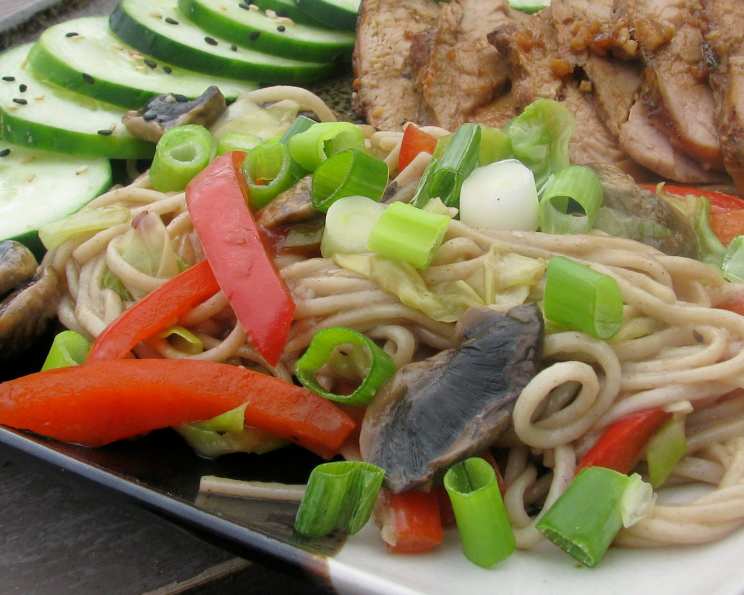
Soba Stir-Fry: A Symphony of Flavors
The first time I tasted soba noodles was at a tiny, bustling ramen shop in Tokyo. It wasn’t the ramen I expected, but a cold, glistening bowl of soba, lightly dressed with soy and topped with crisp scallions. The earthiness of the buckwheat, the delicate sauce, and the vibrant atmosphere – it was an instant love affair. Since then, I’ve experimented with countless ways to enjoy these delightful noodles, and this soba stir-fry is a regular in my rotation; it’s a quick, healthy, and intensely flavorful weeknight meal that never fails to satisfy.
Recipe Overview
- Prep Time: 15 minutes
- Cook Time: 15 minutes
- Total Time: 30 minutes
- Servings: 4
- Dietary Type: Vegetarian
Ingredients
- 8 ounces soba noodles, uncooked
- 1 tablespoon light olive oil
- 2 cups fresh shiitake mushrooms, sliced
- 1 medium red bell pepper, cut into thin strips
- 2 whole dried red chilies or 1/4 teaspoon red pepper flakes
- 1 garlic clove, minced
- 2 cups napa cabbage, shredded
- 1⁄2 cup reduced-sodium fat-free chicken broth
- 2 tablespoons reduced-sodium tamari soy sauce (can also use soy sauce)
- 1 tablespoon rice wine or 1 tablespoon dry sherry
- 2 teaspoons cornstarch
- 1 (14 ounce) package firm tofu, drained and cut into 1-inch cubes
- 2 green onions, thinly sliced
Equipment Needed
- Large pot or Dutch oven
- Large nonstick skillet or wok
- Small bowl
Instructions
- Begin by cooking the soba noodles. In a large pot or Dutch oven, follow the package directions for cooking time. Once cooked, drain the noodles thoroughly and set aside. It’s crucial not to overcook the noodles, as they will become mushy in the stir-fry. Aim for al dente.
- Prepare the stir-fry. Heat light olive oil in a large nonstick skillet or wok over medium heat. The nonstick surface is important to prevent the tofu from sticking and breaking apart.
- Add the vegetables. Introduce the sliced shiitake mushrooms, red bell pepper strips, dried red chilies (or red pepper flakes), and minced garlic to the heated oil. Cook for approximately 3 minutes, or until the mushrooms have softened and become tender. The chilies will infuse the oil with a pleasant heat. If you’re sensitive to spice, start with fewer chilies or just a pinch of flakes.
- Incorporate the shredded napa cabbage. Cover the skillet or wok and cook for another 2 minutes, or until the cabbage wilts. Covering helps to steam the cabbage, speeding up the process.
- Prepare the sauce. In a small bowl, whisk together the reduced-sodium fat-free chicken broth, reduced-sodium tamari soy sauce, rice wine (or dry sherry), and cornstarch. The cornstarch will act as a thickening agent for the sauce. Ensure there are no lumps.
- Pour the sauce over the vegetable mixture in the skillet or wok. Cook for 2 minutes, stirring constantly, until the sauce thickens and begins to bubble. This step is crucial for creating a glossy and flavorful sauce that coats the noodles and tofu.
- Add the cooked soba noodles and drained tofu cubes to the skillet or wok. Gently toss the mixture until everything is evenly coated in the sauce and heated through. Be careful not to break the tofu while tossing. A light touch is key.
- Garnish with thinly sliced green onions and serve immediately.
Expert Tips & Tricks
- Noodle Prep is Key: Don’t overcook the soba! Undercooking slightly is better, as they’ll continue to cook in the stir-fry. After draining, toss the noodles with a teaspoon of sesame oil to prevent them from sticking together.
- Tofu Tips: Press the tofu well before cubing it to remove excess water. This will allow it to brown more effectively and absorb more flavor from the sauce. For extra crispy tofu, consider pan-frying or baking the cubes before adding them to the stir-fry.
- Spice Level Control: If you’re using dried red chilies, you can control the spice level by removing the seeds before adding them to the oil. Alternatively, use a pinch of red pepper flakes for a milder heat.
- Vegetable Variations: Feel free to substitute or add other vegetables to the stir-fry. Broccoli florets, snow peas, carrots, and bean sprouts all work well.
- Make-Ahead Prep: You can chop the vegetables and prepare the sauce ahead of time. Store them separately in the refrigerator until you’re ready to cook.
Serving & Storage Suggestions
Serve the soba stir-fry immediately for the best flavor and texture. Garnish generously with fresh green onions for a pop of color and freshness. A sprinkle of sesame seeds adds a nutty flavor and visual appeal.
Leftovers can be stored in an airtight container in the refrigerator for up to 2 days. Reheat gently in a skillet or microwave, adding a splash of water or broth if needed to prevent the noodles from drying out. Note that the tofu may become slightly softer upon reheating.
I don’t recommend freezing this dish, as the texture of the soba noodles and tofu may change significantly.
Nutritional Information
| Nutrient | Amount per Serving | % Daily Value |
|---|---|---|
| Calories | 369 kcal | N/A |
| Calories from Fat | N/A | N/A |
| Total Fat | 8.4 g | 12% |
| Saturated Fat | 1.5 g | 7% |
| Cholesterol | 0 mg | 0% |
| Sodium | 474.5 mg | 19% |
| Total Carbohydrate | 61.8 g | 20% |
| Dietary Fiber | 4.1 g | 16% |
| Sugars | 6.5 g | 26% |
| Protein | 18.8 g | 37% |
Note: Nutritional information is an estimate and may vary based on specific ingredients and cooking methods.
Variations & Substitutions
- Gluten-Free: Ensure that the soba noodles are 100% buckwheat, as some brands may contain wheat flour. Use gluten-free tamari instead of regular soy sauce.
- Vegan: This recipe is already vegetarian. To make it vegan, substitute the reduced-sodium fat-free chicken broth with vegetable broth.
- Protein Boost: Add grilled chicken, shrimp, or edamame for extra protein.
- Nutty Twist: Stir in a tablespoon of peanut butter or sesame paste to the sauce for a richer, nuttier flavor.
- Spicy Kick: Increase the amount of red pepper flakes or add a drizzle of sriracha for a fiery kick.
FAQs (Frequently Asked Questions)
Q: Can I use other types of noodles besides soba?
A: While soba noodles are the star of this dish, you can experiment with other types of Asian noodles such as udon or ramen. Keep in mind that the cooking time may need to be adjusted depending on the type of noodle you use.
Q: Can I add more vegetables to the stir-fry?
A: Absolutely! Feel free to add any of your favorite vegetables. Broccoli florets, snap peas, carrots, and bean sprouts all work well.
Q: How can I make the tofu crispier?
A: For extra crispy tofu, press the tofu well to remove excess water. Then, pan-fry or bake the tofu cubes before adding them to the stir-fry.
Q: Can I use regular soy sauce instead of reduced-sodium tamari?
A: Yes, you can use regular soy sauce, but keep in mind that it will be saltier. You may want to reduce the amount of soy sauce slightly to avoid an overly salty dish.
Q: Can I make this dish ahead of time?
A: While it’s best served immediately, you can prepare the vegetables and sauce ahead of time and store them separately in the refrigerator. Cook the noodles just before serving to prevent them from becoming mushy.
Final Thoughts
I hope this soba stir-fry becomes a beloved staple in your kitchen, as it has in mine. It’s a dish that’s both satisfying and nourishing, perfect for a quick weeknight meal or a light weekend lunch. Feel free to experiment with different vegetables, proteins, and sauces to create your own unique version. Don’t hesitate to share your creations and feedback – I’d love to hear how you make it your own! And why not pair this with a chilled glass of sake for the perfect Asian-inspired meal? Happy cooking!