
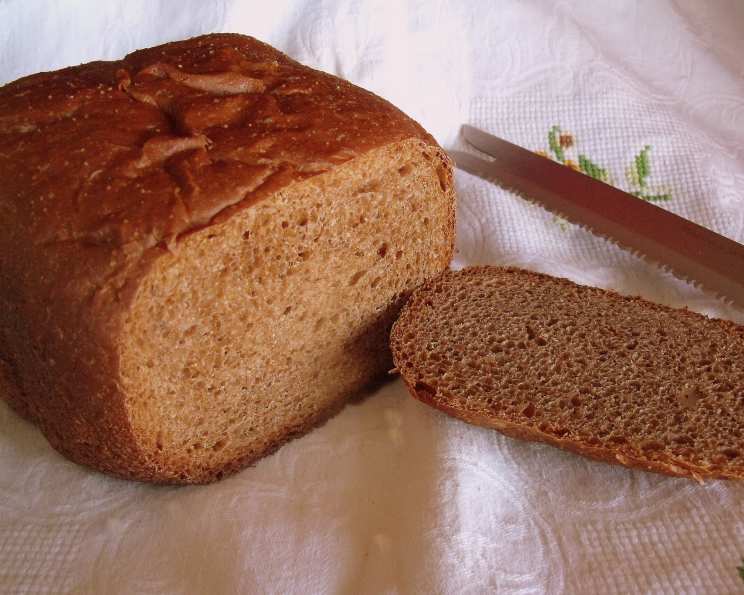
The Hearty Comfort of Homemade Soft Pumpernickel Bread (ABM)
I still remember the scent of my grandmother’s kitchen, a comforting blend of cinnamon, vanilla, and always, always, the unmistakable tang of rye. She wasn’t a fancy baker, but her pumpernickel was legendary. Its dark crust and soft, slightly sweet interior were the perfect canvas for butter and a steaming cup of coffee. While she used a traditional method, I’ve adapted a recipe for the bread machine, bringing that same warmth and flavor to your kitchen with ease.
Recipe Overview
- Prep Time: 10 minutes
- Cook Time: 25-30 minutes + 30 minutes rising
- Total Time: 1 hour – 1 hour 10 minutes
- Yields: 1 loaf
- Dietary Type: Vegetarian
Ingredients
- 1 cup lukewarm water
- 3 tablespoons honey
- 1 1/2 tablespoons molasses
- 1 tablespoon butter
- 2 teaspoons salt
- 3/4 cup rye flour
- 1 1/2 cups bread flour
- 3/4 cup whole wheat flour
- 2 teaspoons active dry yeast
Equipment Needed
- Bread Machine
- Greased Loaf Pan
- Wire Rack
Instructions
- Begin by adding all the ingredients to your bread machine pan, strictly following the order specified by your bread machine’s manufacturer. This is crucial to ensure proper gluten development and yeast activation. Typically, liquids go in first, followed by dry ingredients, with the yeast added last, often in a small well on top of the flour.
- Select the dough setting on your bread machine. This setting will mix the ingredients, knead the dough, and allow it to rise for a set period. Once the cycle is complete, carefully remove the dough from the bread machine pan.
- Lightly grease a loaf pan. Gently shape the dough into a loaf and place it into the prepared pan. Cover the pan with a clean kitchen towel or plastic wrap and let it rise for 30 minutes in a warm place. This second rise is essential for creating a light and airy texture.
- While the dough is rising, preheat your oven to 375°F (190°C). Once the dough has risen, carefully place the loaf pan in the preheated oven and bake for 25 to 30 minutes, or until the crust is a deep, rich brown color.
- To check for doneness, insert a wooden skewer or toothpick into the center of the loaf. If it comes out clean, the bread is ready. If not, continue baking for a few more minutes, checking frequently.
- Once the bread is baked, remove it from the oven and immediately turn it out onto a wire rack to cool completely. This prevents the bottom of the loaf from becoming soggy. Resist the temptation to slice into it while it’s still warm – allowing it to cool properly will improve the texture.
Expert Tips & Tricks
- Water Temperature: The lukewarm water is crucial for activating the yeast. Too hot, and you’ll kill the yeast; too cold, and it won’t activate properly. Aim for a temperature between 105°F and 115°F (40°C and 46°C).
- Molasses Matters: Don’t skip the molasses! It contributes significantly to the pumpernickel’s characteristic flavor and dark color. If you only have light molasses on hand, use it, but the flavor will be slightly different. Blackstrap molasses will give an even stronger flavour.
- Flour Power: The combination of rye, bread, and whole wheat flour creates a complex flavor profile and desirable texture. If you don’t have whole wheat flour, you can substitute additional bread flour, but the texture and flavor will be slightly different.
- Humidity Help: If your kitchen is particularly humid, you may need to add a tablespoon or two of extra bread flour to achieve the right dough consistency. The dough should be slightly sticky but not overly wet.
- Oven Variations: All ovens bake differently. Keep a close eye on the bread during the last 10 minutes of baking to prevent over-browning. If the crust is browning too quickly, tent it loosely with foil.
- Dough Enhancers: For an even softer crumb, consider adding 1-2 teaspoons of vital wheat gluten to the dough. This helps improve the elasticity of the dough and results in a lighter, more tender loaf. Add this with the flours.
Serving & Storage Suggestions
This soft pumpernickel bread is delicious served warm or at room temperature. Slice it thickly and spread it with butter, cream cheese, or your favorite jam. It’s also excellent for sandwiches, especially with savory fillings like corned beef, pastrami, or smoked turkey.
To store, wrap the cooled loaf tightly in plastic wrap or place it in an airtight container. At room temperature, it will stay fresh for 2-3 days. For longer storage, you can freeze the loaf for up to 2 months. To freeze, slice the bread before freezing so you can easily thaw only what you need. Thaw frozen bread at room temperature or in the microwave.
To refresh slightly stale bread, wrap it in a damp paper towel and microwave for 15-20 seconds. You can also lightly toast it to restore its crispness.
Nutritional Information
Please note that these values are estimates and can vary based on specific ingredients and portion sizes.
| Nutrient | Amount per Serving | % Daily Value |
|---|---|---|
| Calories | 208 kcal | 10% |
| Total Fat | 2.2g | 3% |
| Saturated Fat | 1.3g | 6% |
| Cholesterol | 4mg | 1% |
| Sodium | 435mg | 18% |
| Total Carbohydrate | 40.4g | 14% |
| Dietary Fiber | 3.6g | 14% |
| Sugars | 7.8g | – |
| Protein | 5.3g | 11% |
Variations & Substitutions
- Darker Pumpernickel: For a darker, more intense flavor, add 1-2 tablespoons of unsweetened cocoa powder to the dough.
- Seed Power: Add 1/4 cup of caraway seeds, sunflower seeds, or pumpkin seeds to the dough for added texture and flavor.
- Sweet & Savory: Incorporate dried cranberries or raisins for a touch of sweetness.
- Gluten-Free Pumpernickel: While difficult to replicate the exact texture, a blend of gluten-free flours (such as sorghum, brown rice, and tapioca starch) with added xanthan gum can be used. You may need to adjust the liquid content. Use a gluten-free bread machine setting if available.
- Vegan Pumpernickel: Substitute the butter with a plant-based butter alternative or 1 tablespoon of vegetable oil. Ensure that the honey is replaced with a vegan alternative, such as maple syrup or agave nectar.
FAQs (Frequently Asked Questions)
Q: Why is my pumpernickel bread dense and heavy?
A: Several factors can contribute to a dense loaf, including using too much flour, not using enough yeast, or not allowing the dough to rise sufficiently. Make sure to measure the ingredients accurately, check the expiration date on your yeast, and give the dough ample time to rise in a warm place.
Q: Can I make this recipe without a bread machine?
A: Yes, you can. Combine all ingredients in a bowl, knead for 8-10 minutes until smooth and elastic, let rise in a warm place for 1-1.5 hours, shape into a loaf, let rise again for 30 minutes, and bake at 375°F (190°C) for 30-35 minutes.
Q: How can I make the crust softer?
A: Brushing the top of the loaf with melted butter immediately after baking will soften the crust. Alternatively, you can tent the loaf with foil during the last 10 minutes of baking.
Q: What’s the best way to slice pumpernickel bread?
A: Use a serrated bread knife and a gentle sawing motion to avoid crushing the loaf.
Q: Can I freeze the dough instead of the baked loaf?
A: Yes, you can freeze the dough after the first rise. Punch down the dough, shape it into a loaf, wrap it tightly in plastic wrap, and freeze for up to 2 months. Thaw the dough overnight in the refrigerator, then let it rise again for 30 minutes before baking.
Final Thoughts
I hope this recipe allows you to capture some of the comforting warmth of a truly special pumpernickel loaf. There’s nothing quite like the smell of freshly baked bread wafting through the house, and this recipe, adapted for the convenience of a bread machine, makes it easier than ever to experience that simple joy. So, go ahead, give it a try. I’m eager to hear how it turns out for you. Serve it alongside a hearty bowl of soup, or simply enjoy a slice with a smear of butter and a cup of hot coffee. Happy baking!