
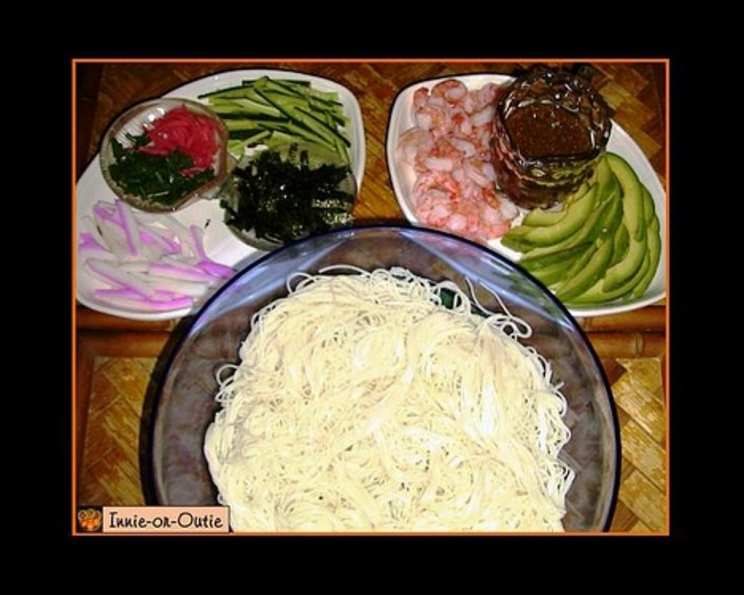
Somen for Two: A Refreshing Island Escape
There’s something magical about the first bite of cold noodles on a sweltering summer day. I remember visiting my auntie’s house on Oahu, where the air hung thick and heavy with the scent of plumeria. After a morning spent swimming in the turquoise water, she’d always have a platter of somen waiting, a vibrant mosaic of colors and textures promising instant relief. Each slurp was a cool, savory explosion, the perfect antidote to the island heat. That memory, and that feeling, are precisely what I aim to recreate with this recipe.
Recipe Overview
- Prep Time: 15 minutes
- Cook Time: 5 minutes
- Total Time: 20 minutes
- Servings: 2
- Yield: 2 bowls
- Dietary Type: Varies (can be gluten-free with GF somen)
Ingredients
For the Dipping Sauce:
- 2 tablespoons sesame oil
- 1 tablespoon soy sauce
- 2 Asian red peppers, minced
- 3 tablespoons dashi (or tsuyu, a cold noodle dipping sauce)
- 1 cup lime juice, freshly squeezed (ideally from a local citrus like shikwasa, if available)
For the Dip Items:
- 1 avocado, sliced
- ½ cucumber, julienned
- 1 cup frozen shrimp, shells removed
- ¾ cup kamaboko, julienned
- 2 tablespoons pickled ginger
- 2 tablespoons scallions, chopped
- 5 sheets nori (dried seaweed sheets), julienned
- 140 g somen pasta
Additional Items:
- 4 cups ice
Equipment Needed
- Small bowls or glasses for dipping sauce
- Large bowl
- Strainer
- Steamer
- Platter
Instructions
- First, prepare the dipping sauce. In a bowl, combine the sesame oil, soy sauce, minced red peppers, dashi (or tsuyu), and lime juice.
- Mix the dipping sauce ingredients well to ensure everything is incorporated.
- Refrigerate the dipping sauce while you prepare the other components. Chilling the sauce helps to enhance the flavors and keeps everything refreshingly cold.
- Now, prepare the dipping items. Chop the avocado into slices, julienne the cucumber and kamaboko, chop the pickled ginger and scallions, and julienne the nori sheets.
- Arrange all the dipping items attractively on a platter. The presentation adds to the overall experience.
- Steam the shrimp until they are pink and cooked through. This usually takes just a few minutes. Be careful not to overcook them, as they will become rubbery.
- Next, prepare the somen pasta according to the package directions. Somen typically cooks very quickly, usually about 3 minutes once the water is boiling.
- Once the somen is cooked, immediately rinse it under cold water in a strainer. This stops the cooking process and removes excess starch, preventing the noodles from sticking together.
- In a large bowl, place the ice.
- Transfer the rinsed somen to the bowl of ice. This is essential for keeping the noodles cold and refreshing. Make sure the noodles are submerged in the ice water.
- Serve the iced somen with the platter of dipping items and the chilled dipping sauce.
- To eat, simply place a small quantity (about 1/5 cup) of the dipping sauce in a small bowl or medium-sized glass.
- Add the noodles and your desired dipping ingredients to the sauce.
- Reserve some of the dipping sauce for occasionally refreshing the dipping vessel fluid, which becomes slightly diluted from the noodle liquid. This keeps the flavor consistent throughout the meal.
Expert Tips & Tricks
- Make-ahead dipping sauce: The dipping sauce can be made a day in advance. This allows the flavors to meld together even more.
- Spice level adjustment: Adjust the amount of minced red peppers in the dipping sauce to your preferred spice level.
- Kamaboko substitute: If you can’t find kamaboko, you can substitute it with crab sticks or imitation crab meat.
- Noodle doneness: Be careful not to overcook the somen. Overcooked somen will be mushy. They should be slightly firm to the bite.
- Tsuyu vs. Dashi: If you are using dashi (Japanese soup stock) rather than tsuyu (concentrated noodle sauce), be sure to adjust the quantity of soy sauce and lime juice accordingly. Tsuyu already contains soy sauce and other flavorings.
Serving & Storage Suggestions
Serve the somen immediately after preparation. The cold noodles and dipping sauce are best enjoyed fresh.
If you have leftovers, store the somen separately from the dipping items and the sauce. Store the somen in an airtight container in the refrigerator. It is best consumed within 1 day, as it can become sticky over time. The dipping sauce can also be stored in an airtight container in the refrigerator for up to 3 days. The dipping items are best consumed fresh, but some, like the kamaboko, can be stored in the refrigerator for a day. I would not recommend freezing the cooked somen, as it will affect the texture.
Nutritional Information
| Nutrient | Amount per Serving | % Daily Value |
|---|---|---|
| Calories | 621 kcal | 31% |
| Total Fat | 30g | 46% |
| Saturated Fat | 4g | 20% |
| Cholesterol | 0mg | 0% |
| Sodium | 530mg | 22% |
| Total Carbohydrate | 82g | 27% |
| Dietary Fiber | 12g | 48% |
| Sugars | 11g | N/A |
| Protein | 14g | 28% |
Nutritional information is an estimate and may vary based on specific ingredients and portion sizes.
Variations & Substitutions
- Gluten-free: Use gluten-free somen noodles made from rice flour or other gluten-free alternatives.
- Vegan: Omit the kamaboko and shrimp. Add tofu or other plant-based protein alternatives. Ensure your dashi is vegan (made from kombu seaweed).
- Spicy Version: Increase the amount of minced Asian red peppers or add a dash of chili oil to the dipping sauce.
- Vegetarian: Omit the shrimp.
- Seasonal variations: Add seasonal vegetables like edamame, snow peas, or cherry tomatoes to the platter.
- Herbs: Experiment with fresh herbs like mint or cilantro for added flavor and aroma.
FAQs (Frequently Asked Questions)
Q: Can I use regular soy sauce instead of Japanese soy sauce?
A: While you can use regular soy sauce, Japanese soy sauce (like Kikkoman) has a milder and slightly sweeter flavor that complements the other ingredients better.
Q: Can I make this ahead of time?
A: You can prepare the dipping sauce and chop the ingredients ahead of time. However, it’s best to cook the somen and assemble the dish just before serving to prevent the noodles from becoming sticky.
Q: What is kamaboko?
A: Kamaboko is a type of Japanese fish cake made from pureed white fish. It has a slightly chewy texture and a mild flavor.
Q: Where can I find dashi or tsuyu?
A: You can find dashi or tsuyu at most Asian grocery stores or online retailers. Dashi comes in powdered or liquid form, while tsuyu is a concentrated sauce that needs to be diluted.
Q: Can I use a different type of citrus juice?
A: Yes, you can use other citrus juices like yuzu or lemon if you don’t have access to lime or shikwasa. The flavor will be slightly different, but still delicious.
Final Thoughts
This somen recipe is more than just a meal; it’s an invitation to savor the simple pleasures of life, to take a moment to appreciate the vibrant flavors and textures, and to share a refreshing experience with someone special. Don’t be afraid to experiment with the dipping ingredients and find your own favorite combinations. I encourage you to try this recipe and share your feedback. Pair it with a crisp, dry sake or a light, fruity white wine for the ultimate summer feast. Enjoy!