
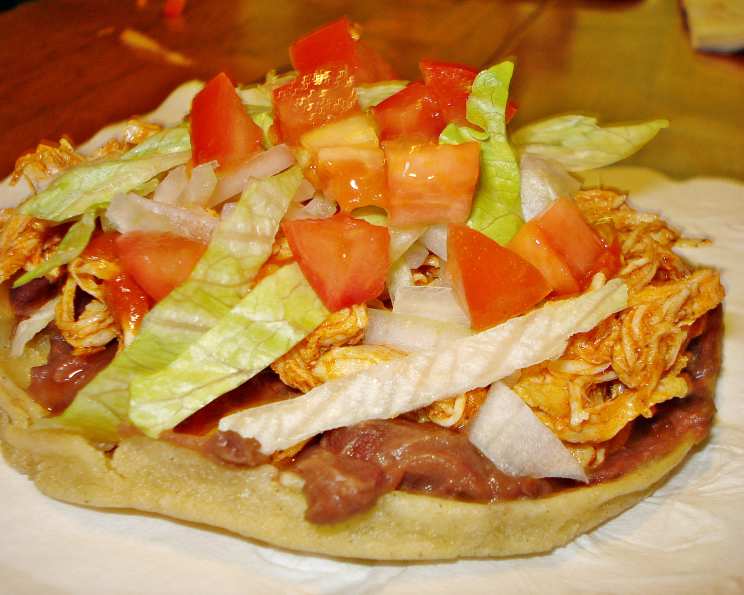
Sopes: A Taste of Home
My earliest memories are filled with the aroma of masa cooking on a hot comal. Every Sunday, my abuela would transform her tiny kitchen into a sope-making factory. The rhythmic pat-pat-pat of her hands shaping the masa, the sizzle of the frying, and the explosion of flavors as we piled on our favorite toppings—it was pure magic. Sopes weren’t just food; they were a symbol of family, love, and tradition, a delicious reminder of my Mexican heritage.
Recipe Overview: Sopes
- Prep Time: 20 minutes
- Cook Time: 20 minutes
- Total Time: 40 minutes
- Servings: 6
- Yield: 6 sopes
- Dietary Type: Vegetarian (easily adaptable to vegan)
Ingredients
- 2 cups masa corn flour
- Water (as needed)
- ¼ teaspoon salt
- Oil (for frying)
Equipment Needed
- Large bowl
- Tortilla press (or flat plate/bottom of a skillet)
- Plastic wrap (or small ziploc bag cut into two pieces)
- Comal or griddle
- Large pan or deep fryer
- Paper towels
Instructions
- In a large bowl, combine the masa corn flour and salt. Gradually add water, mixing with your hands, until the masa is moistened. The consistency should be slightly sticky to the touch, like playdough. Don’t add too much water at once, or the masa will become too wet.
- Divide the masa into balls, each about the size of a large egg. This recipe makes about 6 sopes. As you form the balls, cover them with a damp towel to prevent them from drying out.
- Prepare your tortilla press (or your alternative pressing surface). Place a piece of plastic wrap on the bottom plate of the press. Place one ball of masa in the center, then cover with the other piece of plastic wrap. This prevents the masa from sticking.
- Press down firmly on the tortilla press (or use a flat-bottomed plate or skillet to press down on the masa through the plastic wrap) until the tortilla is formed. Aim for a thickness of about ¼ inch. Don’t press too thin, or the sopes will be fragile and difficult to work with.
- Heat a comal or griddle over medium-high heat. Once hot, carefully place each sope onto the comal and cook for approximately 1 minute.
- Flip the sope and cook for another 30 seconds. The sope should be lightly browned but still pliable.
- Remove the sope from the comal and immediately place it on a dry towel. While the sope is still warm and pliable, use your fingers to pinch the edge of the sope upwards, creating a raised rim all the way around. Pinch from the inside edge to form a little wall, as if you’re making a mini tostada with a raised edge. This rim will hold all the delicious toppings. Work quickly, as the sope will become less pliable as it cools.
- Repeat steps 3-7 for the remaining masa balls. Once all sopes are cooked and formed, cover them with a dry towel to keep them warm and prevent them from drying out.
- Heat oil in a large pan or deep fryer to 350 degrees Fahrenheit. The oil should be deep enough to submerge the sopes.
- Carefully lower each sope into the hot oil and fry for about 3 minutes on each side, or until golden brown and slightly crispy. Avoid overcrowding the pan, as this will lower the oil temperature and result in greasy sopes.
- Remove the fried sopes from the oil and place them on paper towels to drain excess oil.
- Serve immediately. Top with your favorite ingredients! Traditional toppings include refried beans, shredded chicken or beef, picadillo, guacamole, shredded lettuce, diced tomatoes, salsa, crumbled cheese (such as cotija), and Mexican crema.
Expert Tips & Tricks
- Masa Hydration is Key: The right amount of water is crucial for good masa. Add it gradually until the dough is pliable but not sticky. If it’s too wet, add a little more masa flour. If it’s too dry, add more water, a teaspoon at a time.
- Warm Sopes are Easier to Pinch: Shaping the rim is much easier while the sopes are still warm. If they cool down too much, they become brittle and prone to cracking.
- Don’t Overcrowd the Fryer: Frying too many sopes at once will lower the oil temperature, resulting in greasy, less-crisp sopes. Fry in batches, ensuring the oil temperature remains consistent.
- Make Ahead: The sopes can be made ahead of time up to the point of frying. Cook and shape them, then store them covered in the refrigerator for up to 24 hours. Fry them just before serving.
- Vegan Option: For vegan sopes, simply omit the cheese and crema, or substitute with plant-based alternatives.
Serving & Storage Suggestions
Serve sopes immediately while they are still warm and crispy. Arrange the sopes on a platter and let everyone customize their own toppings.
Leftover sopes (un-topped) can be stored in an airtight container at room temperature for up to 2 days, or in the refrigerator for up to 5 days. To reheat, bake them in a preheated oven at 350°F (175°C) for a few minutes until warmed through and crispy, or pan-fry them in a little oil. Keep in mind that reheated sopes will not be quite as crispy as freshly fried ones. Toppings should be stored separately and added just before serving.
Nutritional Information
| Nutrient | Amount per Serving | % Daily Value |
|---|---|---|
| Calories | 138.7 kcal | N/A |
| Calories from Fat | 13 g | N/A |
| Total Fat | 1.5 g | 2% |
| Saturated Fat | 0.2 g | 1% |
| Cholesterol | 0 mg | 0% |
| Sodium | 98.8 mg | 4% |
| Total Carbohydrate | 29 g | 9% |
| Dietary Fiber | 2.4 g | 9% |
| Sugars | 0.6 g | 2% |
| Protein | 3.5 g | 7% |
Nutritional information is an estimate and may vary based on specific ingredients and portion sizes.
Variations & Substitutions
- Gluten-Free Sopes: While masa harina is naturally gluten-free, always check the packaging to ensure it was processed in a gluten-free facility.
- Spicy Sopes: Add a pinch of chili powder or finely chopped jalapeño to the masa dough for a spicy kick.
- Sweet Potato Sopes: Mix in some cooked and mashed sweet potato into the masa for a sweeter, more nutritious sope.
- Topping Variations: The possibilities are endless! Experiment with different meats, vegetables, cheeses, and salsas to create your own signature sope. Try black beans instead of refried beans, or roasted corn and zucchini for a vegetarian option.
FAQs (Frequently Asked Questions)
Q: Can I use regular corn flour instead of masa harina?
A: No, you must use masa harina (corn flour treated with lime) to make sopes. Regular corn flour will not bind together properly and will result in a crumbly sope.
Q: Why are my sopes cracking when I try to pinch the edges?
A: This is usually because the sopes have cooled down too much. Pinch the edges immediately after removing them from the comal while they are still warm and pliable.
Q: Can I bake the sopes instead of frying them?
A: While frying gives them the most authentic texture, you can bake them. Brush the sopes with oil and bake at 375°F (190°C) for about 10-15 minutes, flipping halfway through, until golden brown and slightly crispy.
Q: How can I keep the sopes warm while I’m preparing the toppings?
A: Place the cooked sopes on a baking sheet in a preheated oven at a low temperature (around 200°F or 95°C) to keep them warm until you’re ready to serve.
Q: What are some other traditional toppings for sopes?
A: Besides the ones mentioned in the recipe, you can also try carnitas (braised pork), chorizo, huitlacoche (corn fungus), or rajas poblanas (roasted poblano peppers with cream).
Final Thoughts
Now it’s your turn to bring a taste of Mexico to your kitchen. Don’t be intimidated by the process; sope-making is a labor of love, and even imperfect sopes are delicious! Gather your family and friends, experiment with different toppings, and create your own sope-making traditions. And if you have any questions or feedback, please share it – I’d love to hear about your culinary adventures! Perhaps pair these with a refreshing agua fresca or a crisp Mexican beer for the full experience. ¡Buen provecho!