
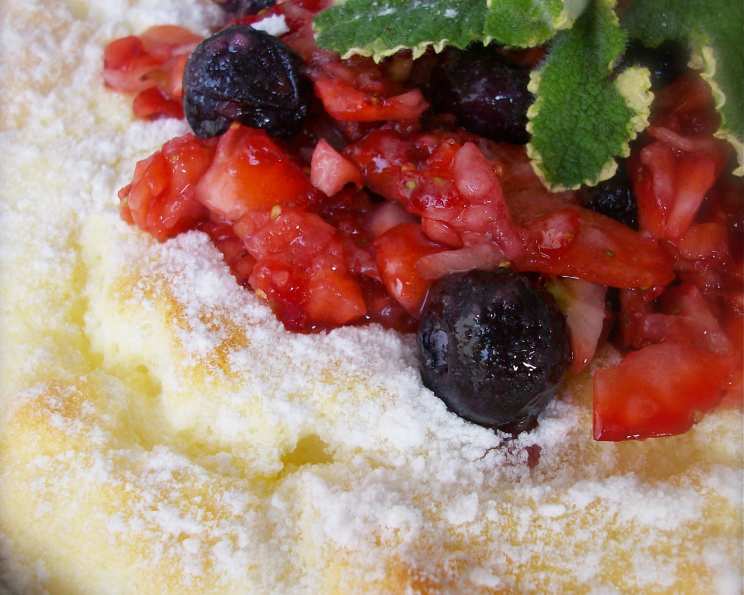
Sour Cream Dessert Omelet: A Taste of Norwegian Summer
My grandmother, Inga, used to make this omelet every summer, when the lingonberries were ripe for picking in the forests behind her house. The aroma of the warm, custardy omelet baking mingled with the sweet, tart scent of the berries simmering on the stove. We’d sit on her porch, the midnight sun casting long shadows, and devour it with powdered sugar dusting our faces, feeling like we had captured the very essence of a Norwegian summer on our plates.
Recipe Overview
- Prep Time: 15 minutes
- Cook Time: 15-20 minutes
- Total Time: 30-35 minutes
- Servings: 4-6
- Yield: 1 omelet
- Dietary Type: Not Gluten-Free
Ingredients
- 1 cup whipping cream
- 1 cup sour cream
- 2 tablespoons sugar, divided
- 6 eggs, separated
- 2/3 cup flour
- 1 cup fresh berries (such as strawberries, blueberries, raspberries, or a mix)
- Powdered sugar, for dusting
Equipment Needed
- Whisk
- Mixing bowls
- Electric mixer (optional, for whipping egg whites)
- 8 or 9-inch ovenproof dish (cast iron skillet recommended)
Instructions
-
Preheat your oven to 350 degrees Fahrenheit (175 degrees Celsius). Ensuring the oven is fully preheated is crucial for the omelet to puff up beautifully.
-
In a medium bowl, whisk together the whipping cream and sour cream with 1 tablespoon of the sugar. This mixture will form the creamy base of the omelet. Don’t over-whisk at this stage; just ensure the ingredients are well combined.
-
In a separate bowl, beat the egg yolks with the remaining 1 tablespoon of sugar until the mixture becomes light and lemon-colored. This step is important for creating a rich and airy texture. Use an electric mixer or whisk vigorously by hand. The mixture should ribbon when the whisk is lifted.
-
Gently fold the egg yolk mixture into the cream mixture. Use a rubber spatula and a light hand to avoid deflating the cream.
-
Sift the flour into the batter and gently fold it in. Be careful not to overmix, as this can develop the gluten and make the omelet tough. A few streaks of flour are okay at this stage.
-
In a clean, dry bowl, beat the egg whites until stiff but not dry. This is a crucial step for creating the light and airy texture of the omelet. The whites should form firm peaks that hold their shape when the beater is lifted. Be careful not to overwhip, as this can make the whites dry and difficult to fold in.
-
Gently fold the beaten egg whites into the cream and flour mixture in two or three additions. Use a rubber spatula and a light hand, cutting down into the mixture and folding it over from the bottom. Be careful not to deflate the egg whites. The batter should be light and airy.
-
Pour the batter into a greased ovenproof dish (an 8 or 9-inch cast iron skillet works exceptionally well). The greasing prevents the omelet from sticking and helps it release easily after baking.
-
Bake in the preheated oven for 15 to 20 minutes, or until the omelet is puffed, golden brown, and set. The center should be just slightly jiggly. Keep a close eye on it, as baking times can vary depending on your oven.
-
Remove from the oven and let cool slightly. Top with fresh berries and a dusting of powdered sugar. Serve immediately for the best texture and flavor.
Expert Tips & Tricks
- Whipping the Egg Whites: The key to a light and airy omelet lies in perfectly whipped egg whites. Make sure your bowl and whisk are clean and free of any grease, as this can prevent the whites from whipping properly.
- Gentle Folding: When folding in the egg whites, be gentle and patient. Avoid overmixing, as this will deflate the whites and result in a flat omelet.
- Cast Iron Advantage: A cast iron skillet provides even heat distribution, resulting in a perfectly cooked omelet with a slightly crisp exterior.
- Preventing Sticking: Thoroughly greasing your baking dish is essential to prevent the omelet from sticking. You can use butter, cooking spray, or even line the dish with parchment paper.
- Checking for Doneness: The omelet is done when it is puffed, golden brown, and the center is mostly set. A slight jiggle in the very center is okay, as it will continue to set as it cools.
Serving & Storage Suggestions
This Sour Cream Dessert Omelet is best served warm, straight from the oven, topped with a generous amount of fresh berries and a dusting of powdered sugar. The contrast of the warm, custardy omelet with the cool, tart berries is simply divine.
Leftovers can be stored in the refrigerator in an airtight container for up to 2 days. However, the texture will change as the omelet deflates. To reheat, gently warm in a low oven or microwave. Note that reheating may further compromise the texture. Freezing is not recommended as it significantly alters the texture.
Nutritional Information
| Nutrient | Amount per Serving | % Daily Value |
|---|---|---|
| Calories | 523.8 kcal | N/A |
| Calories from Fat | N/A | 70% |
| Total Fat | 40.7 g | 62% |
| Saturated Fat | 22.7 g | 113% |
| Cholesterol | 390.4 mg | 130% |
| Sodium | 175.6 mg | 7% |
| Total Carbohydrate | 26.1 g | 8% |
| Dietary Fiber | 0.6 g | 2% |
| Sugars | 8.7 g | N/A |
| Protein | 14 g | 27% |
Note: Nutritional information is an estimate and may vary based on specific ingredients and preparation methods.
Variations & Substitutions
- Gluten-Free: Substitute the all-purpose flour with a gluten-free flour blend for a gluten-free version. Ensure the blend contains xanthan gum or a similar binder.
- Dairy-Free: This is a difficult recipe to make dairy-free due to the reliance on sour cream and whipping cream. However, you can try using coconut cream (the thick part from a refrigerated can) and a vegan sour cream alternative, but be aware that the flavor and texture will be significantly different.
- Berry Variations: Feel free to experiment with different types of berries depending on what’s in season. Blackberries, raspberries, or even sliced peaches or nectarines would work well.
- Citrus Zest: Add a teaspoon of lemon or orange zest to the cream mixture for a bright, citrusy flavor.
- Spice Infusion: A pinch of cardamom or nutmeg in the batter can add a warm and cozy element to the omelet.
- Savory Twist: For a savory version, omit the sugar and berries and add chopped herbs, grated cheese, and cooked bacon or sausage to the batter.
FAQs (Frequently Asked Questions)
Q: Why is it important to separate the eggs?
A: Separating the eggs allows you to whip the whites to stiff peaks, which creates a light and airy texture that wouldn’t be possible with whole eggs.
Q: Can I use frozen berries instead of fresh?
A: Yes, you can use frozen berries. Thaw them slightly and pat them dry before adding them to the omelet to prevent excess moisture.
Q: How do I prevent the omelet from sticking to the pan?
A: Make sure to grease the baking dish thoroughly with butter or cooking spray. You can also line the dish with parchment paper for extra insurance.
Q: The omelet puffed up beautifully in the oven but then deflated when I took it out. What happened?
A: This is normal! Omelets tend to deflate slightly as they cool. To minimize deflation, avoid opening the oven door during baking and serve the omelet immediately after removing it from the oven.
Q: Can I prepare the batter ahead of time?
A: It’s best to prepare the batter just before baking, as the whipped egg whites will deflate over time. If you must prepare it ahead, whip the egg whites just before baking and gently fold them into the rest of the batter.
Final Thoughts
This Sour Cream Dessert Omelet is more than just a recipe; it’s a taste of tradition, a slice of comfort, and a reminder of simpler times. I urge you to try this recipe and experience the delightful combination of creamy custard and fresh berries for yourself. Feel free to experiment with different variations and substitutions to make it your own. Share your creations with loved ones and savor the moment, just as my grandmother Inga would have wanted. Enjoy!