
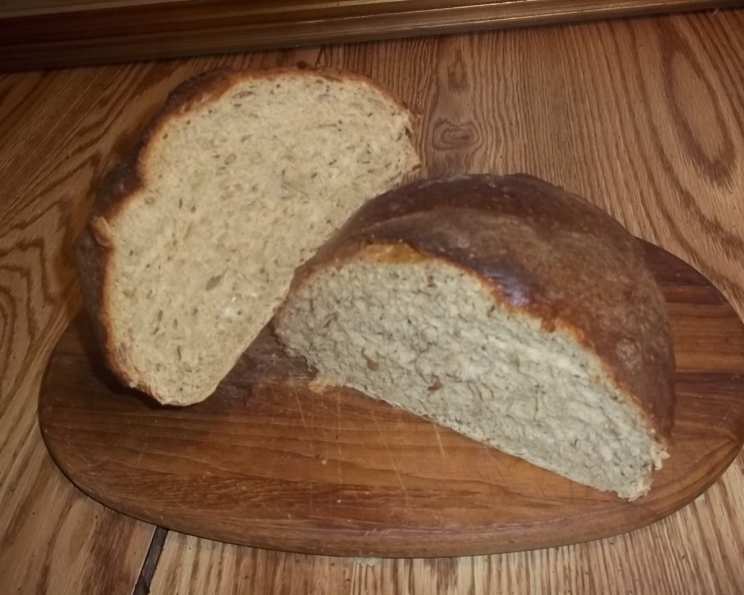
Sourdough Rye: A Bread Machine to Oven Adventure
The scent of rye bread baking always transports me back to my grandmother’s kitchen. She had a knack for coaxing the most incredible flavors from simple ingredients, and her rye was legendary. I remember watching her, mesmerized, as she kneaded the dough with strong, practiced hands. While I don’t have her exact recipe, this sourdough rye, with its deep flavor and satisfying chew, is my attempt to capture a bit of that magic – a reminder of warm kitchens and even warmer welcomes. I’ve adapted it from a bread machine recipe to be baked in the oven, so that I can shape it as I please.
Recipe Overview
- Prep Time: 20 minutes
- Rise Time: 2 hours
- Cook Time: 30 minutes
- Total Time: 3 hours 30 minutes
- Yields: 1 loaf
- Dietary Type: Vegetarian
Ingredients
- 2 tablespoons oil
- 1 1/2 teaspoons molasses
- 1 1/2 tablespoons honey
- 1 large egg
- 1/3 cup water
- 1 cup sourdough starter
- 2 1/4 cups all-purpose flour, unbleached
- 3/4 cup rye flour
- 1 1/2 teaspoons salt (or 2 teaspoons kosher salt)
- 2 tablespoons caraway seeds
- 1 1/2 teaspoons instant yeast
- 4 teaspoons vital wheat gluten
Equipment Needed
- Bread machine (optional, for mixing and initial rise)
- Mixing bowl (if not using a bread machine)
- Measuring cups and spoons
- Baking sheet
- Parchment paper (optional)
- Sharp knife or lame
- Instant-read thermometer
Instructions
-
Combine Ingredients: Place all ingredients into your bread machine pan in the order recommended by your bread machine manufacturer. If you’re mixing by hand or with a stand mixer, combine the wet ingredients first, then add the dry ingredients.
-
Bread Machine Cycle (Optional): Set your bread machine to the dough cycle. Allow the machine to mix and knead the dough. After about 10 minutes, check the dough’s consistency. If it seems too wet, add a tablespoon of all-purpose flour at a time until it forms a smooth, slightly sticky ball. If it’s too dry, add a teaspoon of water at a time until the desired consistency is reached. Allow the dough cycle to complete. This will include the first rise.
-
First Rise (Alternative Method): If you’re not using a bread machine, knead the dough by hand for 8-10 minutes on a lightly floured surface or use a stand mixer with a dough hook for 5-7 minutes until the dough is smooth and elastic. Place the dough in a lightly oiled bowl, turning to coat. Cover with plastic wrap or a damp towel and let rise in a warm place for about 1 to 1 1/2 hours, or until doubled in size.
-
Shape the Loaf: Once the dough has completed its first rise (either in the bread machine or by hand), gently punch it down to release the air. Turn the dough out onto a lightly floured surface. Shape the dough into your desired loaf shape – a round boule, an oblong loaf, or even rolls.
-
Second Rise: Place the shaped loaf on a baking sheet lined with parchment paper (optional, but recommended for easy cleanup). Cover loosely with plastic wrap or a damp towel and let rise again for about 45 minutes to 1 hour, or until the loaf has noticeably increased in size.
-
Preheat Oven: While the loaf is rising for the second time, preheat your oven to 350°F (175°C).
-
Score the Loaf: Just before baking, use a sharp knife or lame to slash the top of the loaf. This allows the bread to expand properly in the oven and prevents it from cracking unevenly. A single long slash down the center or a cross pattern are both good options.
-
Bake: Place the baking sheet with the loaf in the preheated oven. Bake for 15 minutes, then turn the baking sheet around for even baking and bake for another 15 minutes.
-
Check for Doneness: After 30 minutes, check the bread for doneness. The crust should be a deep golden brown. To be absolutely sure, insert an instant-read thermometer into the center of the loaf. The internal temperature should be between 195°F and 200°F (90°C and 93°C).
-
Cool Completely: Remove the loaf from the oven and transfer it to a wire rack to cool completely before slicing. This is crucial for the texture of the bread. Slicing it while it’s still warm will result in a gummy texture.
Expert Tips & Tricks
- Sourdough Starter Activity: Ensure your sourdough starter is active and bubbly for optimal rise and flavor. Feed it 4-12 hours before using it in the recipe. The starter should have at least doubled in size after feeding.
- Humidity: If your kitchen is very dry, you may need to add a little extra water to the dough. Conversely, if it’s very humid, you may need to add a bit more flour.
- Oven Temperature: Ovens can vary in temperature. If your bread is browning too quickly, reduce the oven temperature by 25°F (14°C).
- Steam: For a crispier crust, create steam in your oven during the first 10 minutes of baking. You can do this by placing a pan of hot water on the bottom rack of the oven or by spraying the inside of the oven with water a few times.
- Flavor Boost: Toast the caraway seeds lightly in a dry pan before adding them to the dough for a more intense flavor.
Serving & Storage Suggestions
This sourdough rye bread is delicious served warm with butter, cream cheese, or your favorite spread. It also makes excellent sandwiches. For storing, wrap the cooled loaf tightly in plastic wrap or place it in a bread bag. It will keep at room temperature for 2-3 days. For longer storage, slice the bread and freeze it in a freezer bag. You can reheat frozen slices in a toaster or oven.
Nutritional Information
Note: Nutritional information is an estimate and may vary based on specific ingredients and portion sizes.
| Nutrient | Amount per Serving | % Daily Value |
|---|---|---|
| Calories | 200 kcal | 10% |
| Total Fat | 5g | 8% |
| Saturated Fat | 1g | 5% |
| Cholesterol | 25mg | 8% |
| Sodium | 300mg | 13% |
| Total Carbohydrate | 35g | 12% |
| Dietary Fiber | 3g | 12% |
| Sugars | 4g | – |
| Protein | 7g | 14% |
Variations & Substitutions
- Darker Rye: For a more intense rye flavor, use dark rye flour instead of light rye flour.
- Seeded Crust: Brush the loaf with an egg wash before baking and sprinkle with sesame seeds, poppy seeds, or sunflower seeds.
- Sweetness: Adjust the amount of molasses and honey to your preference. You can also substitute maple syrup for honey.
- Vegan Version: Substitute the egg with 1/4 cup of applesauce or mashed banana. Ensure your sourdough starter is vegan-friendly (fed with flour and water only).
FAQs (Frequently Asked Questions)
Q: Can I use active dry yeast instead of instant yeast?
A: Yes, you can. Use the same amount (1 1/2 teaspoons) but dissolve it in 1/4 cup of warm water before adding it to the other ingredients. Let it sit for 5-10 minutes until foamy.
Q: My bread is too dense. What went wrong?
A: This could be due to several factors: your sourdough starter may not have been active enough, you may have over-proofed or under-proofed the dough, or you may have used too much flour.
Q: Can I make this bread without a bread machine?
A: Absolutely! The recipe provides instructions for mixing and kneading the dough by hand or with a stand mixer.
Q: How do I know when the bread is done baking?
A: The best way to check for doneness is to use an instant-read thermometer. The internal temperature should be between 195°F and 200°F (90°C and 93°C).
Q: Can I freeze this bread?
A: Yes, this bread freezes well. Slice it before freezing for easier portioning, and wrap it tightly in plastic wrap or place it in a freezer bag.
Final Thoughts
I truly hope you give this sourdough rye bread recipe a try. The combination of tangy sourdough, earthy rye, and aromatic caraway seeds is simply irresistible. Don’t be intimidated by the process – bread baking is a rewarding experience, and even if your first loaf isn’t perfect, it will still be delicious. Experiment with different shapes and toppings, and most importantly, enjoy the process! Share your baking adventures with friends and family, and let me know how your loaf turns out! Perhaps pair it with a hearty bowl of potato soup or a smear of homemade liver pate.