
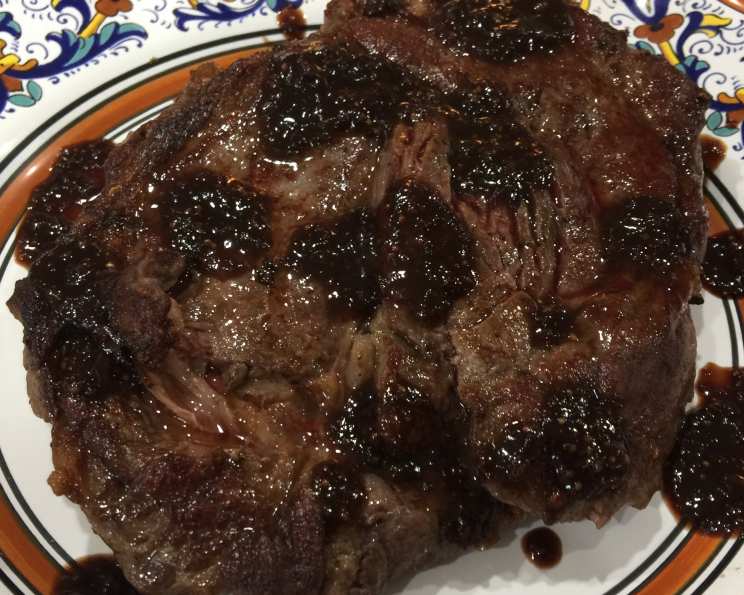
Sous Vide Ribeye With Fig Reduction: An Unforgettable Culinary Experience
The scent of rich, seared beef mingling with the sweet and tangy aroma of figs simmering in red wine instantly transports me back to a small trattoria nestled in the Tuscan hills. I remember the warm evening air, the laughter of friends, and the sheer joy of experiencing simple ingredients elevated to something extraordinary. That meal, featuring a perfectly cooked steak with a vibrant fig reduction, ignited a passion for creating memorable culinary moments. I’ve been chasing that flavor ever since, and this sous vide ribeye with fig reduction is my way of sharing that experience with you.
Recipe Overview
- Prep Time: 20 minutes
- Cook Time: 1 hour 30 minutes
- Total Time: 1 hour 50 minutes
- Servings: 2
- Dietary Type: Gluten-Free
Ingredients
- 1 lb ribeye
- 1/2 cup balsamic vinegar
- 1 cup Chianti wine
- 1 lb fresh figs
- 1 tablespoon butter
- 1 garlic clove
Equipment Needed
- Sous vide immersion circulator
- Large pot or container for water bath
- Vacuum sealer or zip-top bag
- Cast iron skillet or heavy-bottomed pan
Instructions
-
Begin by preparing your sous vide setup. Fill a large pot or container with water and attach your sous vide immersion circulator. Set the temperature to 135 degrees Fahrenheit for a medium steak. Ensure the water has reached the target temperature before proceeding.
-
While the water is heating, prepare the ribeye. Season the ribeye generously with salt and pepper. You can add other herbs or spices if you prefer, such as a sprig of thyme or rosemary, but simple seasoning allows the quality of the beef to shine.
-
Place the seasoned ribeye in a vacuum seal bag. If you don’t have a vacuum sealer, you can use a zip-top bag, employing the water displacement method to remove as much air as possible. Gently lower the bag into the water, allowing the pressure to force the air out, then seal the bag tightly.
-
Submerge the sealed bag in the 135-degree Fahrenheit water bath. Ensure the ribeye is fully submerged and that the bag is not touching the heating element. Cook for a minimum of 1 hour and a maximum of 4 hours. One hour will be sufficient for a 1-inch steak. Thicker cuts benefit from longer cook times to ensure even cooking throughout.
-
While the ribeye is cooking, prepare the fig reduction. Wash and stem the fresh figs. Cut the figs into quarters or smaller pieces. This will help them break down and release their flavors during the reduction process.
-
Mince the garlic clove. In a saucepan, melt the butter over medium heat. Add the minced garlic and cook until fragrant, about 30 seconds. Be careful not to burn the garlic, as this will impart a bitter taste to the reduction.
-
Add the quartered figs to the saucepan and cook for about 5 minutes, stirring occasionally, until the figs begin to soften and release their juices.
-
Pour in the Chianti wine and balsamic vinegar. Bring the mixture to a simmer, then reduce the heat to low. Allow the sauce to simmer gently for about 30-45 minutes, or until it has thickened to a syrupy consistency. Stir occasionally to prevent sticking.
-
Once the ribeye has finished cooking in the sous vide, remove it from the water bath and the bag. Pat the steak dry with paper towels. This is crucial for achieving a good sear.
-
Heat a cast iron skillet or heavy-bottomed pan over high heat until it is smoking hot. Add a small amount of oil with a high smoke point, such as grapeseed or avocado oil.
-
Sear the ribeye for 1-2 minutes per side, until a deep brown crust forms. Be sure to sear the edges as well for maximum flavor. A good sear is essential for adding texture and a depth of flavor that complements the tender interior.
-
Remove the ribeye from the skillet and let it rest for 5-10 minutes before slicing against the grain. Resting allows the juices to redistribute, resulting in a more tender and flavorful steak.
-
To serve, slice the ribeye and drizzle generously with the fig reduction. Garnish with fresh herbs, such as thyme or rosemary, if desired.
Expert Tips & Tricks
- Don’t overcrowd the pan when searing: This will lower the temperature and prevent a good sear. Sear the steak in batches if necessary.
- For a richer reduction, add a tablespoon of honey or brown sugar to the fig mixture during the simmering process.
- If the fig reduction becomes too thick, add a splash of water or red wine to thin it out.
- To enhance the sear, pat the ribeye completely dry before placing it in the hot pan. Moisture is the enemy of a good sear.
- Consider adding a pinch of red pepper flakes to the fig reduction for a touch of heat to balance the sweetness.
Serving & Storage Suggestions
Serve the sliced ribeye immediately, drizzled with the fig reduction. This dish pairs well with roasted vegetables, mashed potatoes, or a simple green salad.
Leftover ribeye can be stored in an airtight container in the refrigerator for up to 3 days. The fig reduction can also be stored in an airtight container in the refrigerator for up to 5 days.
To reheat the ribeye, gently warm it in a skillet over low heat or in a preheated oven at 250 degrees Fahrenheit. Avoid microwaving, as this can make the steak tough. Reheat the fig reduction gently in a saucepan over low heat.
Nutritional Information
| Nutrient | Amount per Serving | % Daily Value |
|---|---|---|
| Calories | 998.6 kcal | N/A |
| Calories from Fat | 508 g | 51% |
| Total Fat | 56.5 g | 86% |
| Saturated Fat | 24.2 g | 121% |
| Cholesterol | 169.5 mg | 56% |
| Sodium | 199.6 mg | 8% |
| Total Carbohydrate | 58 g | 19% |
| Dietary Fiber | 6.6 g | 26% |
| Sugars | 47.2 g | 188% |
| Protein | 42 g | 83% |
Variations & Substitutions
- For a different flavor profile, try using port wine instead of Chianti in the fig reduction.
- If you don’t have fresh figs, you can use dried figs, but be sure to rehydrate them in warm water before adding them to the reduction.
- For a dairy-free option, use olive oil instead of butter to sauté the garlic.
- To make this dish vegetarian, substitute the ribeye with grilled portobello mushrooms.
- Consider adding a splash of balsamic glaze at the end for an extra touch of sweetness and acidity.
FAQs (Frequently Asked Questions)
Q: Can I use a different cut of steak for this recipe?
A: While ribeye is ideal due to its marbling and flavor, you can use other cuts like New York strip or sirloin. Adjust the cooking time according to the thickness of the steak.
Q: Can I make the fig reduction ahead of time?
A: Absolutely! The fig reduction can be made up to 3 days in advance and stored in the refrigerator. Reheat gently before serving.
Q: What temperature should I set my sous vide for a different level of doneness?
A: For medium-rare, set the sous vide to 130 degrees Fahrenheit. For medium-well, set it to 140 degrees Fahrenheit. For well-done, which is not recommended for ribeye, set it to 150 degrees Fahrenheit.
Q: Can I freeze the leftover fig reduction?
A: Yes, you can freeze the fig reduction in an airtight container for up to 2 months. Thaw it in the refrigerator overnight before reheating.
Q: What wine pairs well with this dish?
A: A Chianti Classico or a Cabernet Sauvignon would be excellent choices. The acidity and tannins in these wines will complement the richness of the ribeye and the sweetness of the fig reduction.
Final Thoughts
This Sous Vide Ribeye with Fig Reduction is more than just a recipe; it’s an invitation to create a culinary experience that will linger in your memory. The combination of perfectly cooked, tender ribeye and the sweet and savory fig reduction is a symphony of flavors that will delight your palate. Don’t be intimidated by the sous vide technique – it’s surprisingly easy and guarantees a perfectly cooked steak every time. So, gather your ingredients, embrace the process, and prepare to impress yourself and your loved ones with this unforgettable dish. I encourage you to experiment with variations, share your feedback, and most importantly, savor every bite! Perhaps pair it with a side of creamy polenta and a robust red wine for the ultimate indulgent meal.