
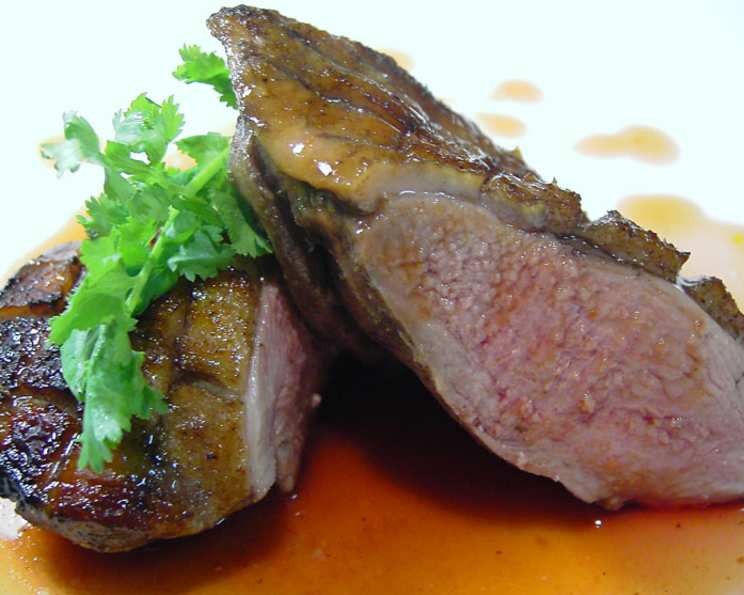
Soy Roast Duck with Hoisin Gravy: A Culinary Masterpiece
The first time I tasted duck prepared this way was at a tiny restaurant tucked away in Hong Kong’s bustling Mong Kok district. The aroma alone, a symphony of sweet honey, pungent five-spice, and savory soy, pulled me in from the street. Each bite was an explosion of flavor – the crispy skin giving way to succulent, tender meat, all bathed in a luscious, umami-rich gravy. It was an experience I knew I had to recreate, and after countless attempts, I’m thrilled to share this recipe that captures that magic.
Recipe Overview
- Prep Time: 20 minutes + refrigeration time
- Cook Time: 20-30 minutes
- Total Time: 40-50 minutes + refrigeration time
- Servings: 6
- Yield: 6 duck breasts with gravy
- Dietary Type: Not specified
Ingredients
- 6 boneless duck breasts, each about 6 oz
- 4 tablespoons soy sauce (Kikkoman is recommended)
- 1 1/2 teaspoons five-spice powder
- 2 tablespoons clear honey
For the Gravy:
- 600 g fresh chicken stock
- 4 tablespoons hoisin sauce
- 4 slices thin fresh ginger (no need to peel)
- 1 dash sesame oil
Equipment Needed
- Large bowl
- Roasting tin
- Rack
- Saucepan
- Fork
Instructions
-
Begin by preparing the duck breasts. Using a fork, prick the skin all over. This crucial step allows the marinade to penetrate the meat and helps render the fat during roasting, resulting in crispy skin. Don’t be shy – the more pricks, the better!
-
In a large bowl, combine the soy sauce, five-spice powder, and honey. Whisk until well blended. This forms the flavorful marinade that will transform the duck.
-
Add the duck breasts to the bowl and coat them thoroughly with the marinade, ensuring every surface is covered.
-
Cover the bowl tightly with plastic wrap or transfer the duck to a resealable bag and refrigerate for at least 2 hours, or preferably overnight. The longer the duck marinates, the deeper the flavor will be.
-
Now, let’s prepare the hoisin gravy. In a saucepan, pour in the chicken stock. Add the hoisin sauce and ginger slices.
-
Bring the mixture to a boil over medium-high heat, then reduce the heat and simmer for a few minutes, stirring occasionally. This allows the flavors to meld together, creating a smooth and savory gravy. The ginger infuses a subtle warmth that complements the richness of the duck.
-
Remove the saucepan from the heat and stir in the sesame oil. Set the gravy aside.
-
Preheat your oven to 200°C (425°F). This high temperature is essential for achieving crispy skin.
-
Pour 1 litre of water into the base of a roasting tin. Place a rack over the top. The water bath helps to prevent the duck fat from splattering and smoking in the oven, keeping your kitchen clean and ensuring a more even cooking environment.
-
Lift the duck breasts from the marinade and arrange them on the rack, skin side up. Discard the marinade after removing the duck.
-
Roast for 20 minutes for medium or 30 minutes for well done. Use a meat thermometer to ensure the duck reaches your desired level of doneness. The internal temperature should be 160°F (71°C) for medium and 170°F (77°C) for well-done.
-
Once the duck is cooked, remove it from the oven and let it rest for a few minutes before slicing.
-
Slice each duck breast in half diagonally.
-
Add any meat juices from the duck to the hoisin gravy and stir. This adds an extra layer of richness and flavor to the gravy.
-
Pour a spoonful or two of the hoisin gravy over the sliced duck breasts and serve immediately.
Expert Tips & Tricks
- For extra crispy skin, you can briefly broil the duck breasts skin-side up for the last few minutes of cooking, but watch carefully to prevent burning.
- If you don’t have fresh chicken stock, you can use chicken bouillon cubes or powder mixed with water, but fresh stock provides the best flavor.
- The marinade can be made a day in advance and stored in the refrigerator.
- If the gravy is too thick, add a little more chicken stock until you reach your desired consistency.
- To get the criss-cross sear marks, sear the duck on a hot pan skin-side down for a few minutes before roasting.
Serving & Storage Suggestions
Serve the Soy Roast Duck with Hoisin Gravy immediately while it’s hot and the skin is crispy. It pairs beautifully with steamed rice, stir-fried vegetables, or a simple green salad. For a truly authentic experience, serve it with egg fried rice as originally suggested.
Leftover duck can be stored in an airtight container in the refrigerator for up to 3 days. Reheat gently in a pan or microwave until warmed through. You can also freeze leftover duck for up to 2 months. Thaw overnight in the refrigerator before reheating. It can be reheated in the oven at 350°F until heated through.
Nutritional Information
| Nutrient | Amount per Serving | % Daily Value |
|---|---|---|
| Calories | 336.9 kcal | N/A |
| Calories from Fat | N/A | 41% |
| Total Fat | 15.2 g | 23% |
| Saturated Fat | 4 g | 19% |
| Cholesterol | 166.5 mg | 55% |
| Sodium | 1086.9 mg | 45% |
| Total Carbohydrate | 14.9 g | 4% |
| Dietary Fiber | 0.4 g | 1% |
| Sugars | 10.5 g | N/A |
| Protein | 33.6 g | 67% |
Variations & Substitutions
- For a gluten-free version, use tamari instead of soy sauce.
- If you don’t have five-spice powder, you can create your own blend using equal parts of ground cinnamon, cloves, fennel seeds, star anise, and Szechuan peppercorns.
- For a spicier kick, add a pinch of red pepper flakes to the marinade or gravy.
- You can also use duck legs instead of breasts, but you may need to adjust the cooking time accordingly.
FAQs (Frequently Asked Questions)
Q: Can I use frozen duck breasts for this recipe?
A: Yes, you can use frozen duck breasts. Make sure to thaw them completely in the refrigerator before marinating.
Q: How do I know when the duck is cooked properly?
A: Use a meat thermometer to check the internal temperature. For medium, the internal temperature should be 160°F (71°C), and for well-done, it should be 170°F (77°C).
Q: Can I make the gravy ahead of time?
A: Yes, you can make the gravy a day in advance and store it in the refrigerator. Reheat gently before serving.
Q: What if I don’t have a roasting rack?
A: You can use a vegetable trivet or even create a makeshift rack using crumpled aluminum foil. The goal is to elevate the duck above the water in the roasting tin.
Q: Can I use a different type of stock for the gravy?
A: While chicken stock is recommended, you can also use duck stock or vegetable stock as a substitute.
Final Thoughts
This Soy Roast Duck with Hoisin Gravy is more than just a recipe; it’s an experience. The combination of flavors and textures is truly unforgettable. Don’t be intimidated by the seemingly complex ingredients – this dish is surprisingly easy to prepare, and the results are well worth the effort. I encourage you to try it, share it with your loved ones, and let me know what you think. Consider pairing it with a crisp Riesling or a light-bodied Pinot Noir for a truly exceptional meal. Happy cooking!