
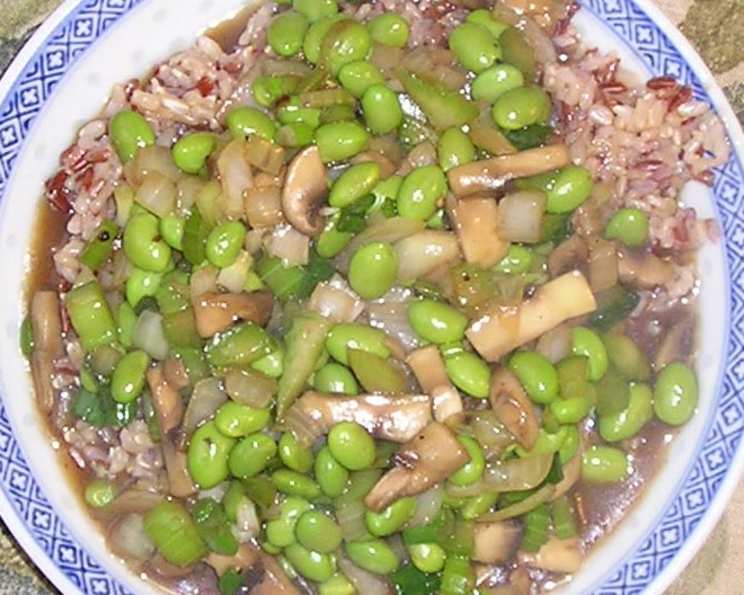
Soybean Yum-Yum: A Taste of Home
I can still picture my mother in our tiny kitchen, humming a Cantonese opera tune as she chopped vegetables with lightning speed. We didn’t have much money, but she always made sure we had a delicious, filling meal. “Soybeans are the poor man’s steak,” she’d say, stirring a pot of something that smelled intensely savory. And while I might have dreamed of steak, one bite of this “Soybean Yum-Yum,” as we affectionately called it, would always silence my cravings. It wasn’t just good for you; it was simply, undeniably good.
Recipe Overview
- Prep Time: 20 minutes
- Cook Time: 30 minutes
- Total Time: 50 minutes
- Servings: 6-8
- Yield: 1 Large Pot
- Dietary Type: Vegetarian, adaptable to Vegan
Ingredients
- 1 cup onion, chopped finely
- 3-4 tablespoons oil (vegetable, canola, or peanut oil work well)
- 1 cup celery, chopped finely
- 1 cup mushroom, sliced up fine
- 1 cup cooked soybeans (soak overnight, then boil in water for 10 minutes)
- 1 cup green onion, chopped
- ½ cup soy sauce (low-sodium is recommended for health-conscious cooks)
- 1 ½ cups vegetable broth or chicken broth (for a vegan option, ensure vegetable broth is used)
- 2 tablespoons brown sugar
- Black pepper, to taste
- White pepper, to taste (optional, but adds a subtle depth)
Equipment Needed
- Large pot or wok
- Cutting board
- Sharp knife
- Measuring cups and spoons
- Mixing bowl
Instructions
-
Begin by prepping your ingredients. Finely chop the onion, celery, and green onion. Slice the mushrooms into thin pieces. Ensure your soybeans are cooked: soak them in water overnight, then drain and boil them in fresh water for 10 minutes, or until tender. This step is crucial for digestibility and texture.
-
Heat a large pot or wok over medium-high heat. Add the oil. Allow the oil to heat up until it shimmers, but do not let it smoke.
-
Add the chopped onion to the hot oil. Sauté the onion, stirring frequently, until it becomes translucent and fragrant. This should take about 5-7 minutes. Watch carefully to prevent burning; adjust the heat if necessary. You’ll know it’s ready when you can smell the distinct sweetness of the caramelized onions.
-
Add the chopped celery and sliced mushroom to the pot. Sauté all the vegetables together for another 2 minutes, stirring frequently. The celery should begin to soften, and the mushrooms will release some of their moisture.
-
Add the cooked soybeans and chopped green onion to the pot. Stir well to combine all the ingredients.
-
In a separate mixing bowl, prepare the sauce. Combine the soy sauce, vegetable broth (or chicken broth), and brown sugar. Add a generous pinch of black pepper and a smaller pinch of white pepper (if using). Whisk the ingredients together until the brown sugar is dissolved.
-
Pour the prepared sauce over the vegetables in the pot. Stir to ensure all the ingredients are evenly coated.
-
Bring the mixture to a simmer. Reduce the heat to low, cover the pot, and let it cook until the vegetables are tender. This should take about 15-20 minutes. Stir occasionally to prevent sticking. The sauce will thicken slightly as it cooks.
-
Taste and adjust the seasoning as needed. You may want to add a little more soy sauce for saltiness, brown sugar for sweetness, or pepper for a spicier kick.
-
Serve hot over lo-mein noodles or rice. Garnish with extra chopped green onion for a pop of color and freshness.
Expert Tips & Tricks
- Soybean Preparation: Soaking and pre-cooking the soybeans is essential. It reduces the phytic acid content, making them easier to digest and improving nutrient absorption.
- Mushroom Variety: Feel free to experiment with different types of mushrooms. Shiitake or cremini mushrooms will add a richer, more umami flavor.
- Sauce Consistency: If the sauce is too thin, you can thicken it by simmering it uncovered for a few minutes longer. Alternatively, you can mix a teaspoon of cornstarch with a tablespoon of cold water and stir it into the sauce towards the end of cooking.
- Make-Ahead Tip: This dish can be made a day or two in advance. The flavors will meld and deepen overnight. Store it in an airtight container in the refrigerator.
- Vegan Variation: To ensure a completely vegan dish, double-check that your vegetable broth is truly vegan and that your brown sugar is processed without bone char (some brands are).
Serving & Storage Suggestions
Soybean Yum-Yum is best served hot over a bed of fluffy white rice or a pile of chewy lo-mein noodles. A side of steamed broccoli or bok choy complements the dish beautifully.
Leftovers can be stored in an airtight container in the refrigerator for up to 3-4 days. To reheat, gently warm on the stovetop over medium heat, adding a splash of broth or water if needed to prevent drying. You can also microwave it in short intervals, stirring in between.
While not ideal, this dish can be frozen for up to 2 months. Thaw overnight in the refrigerator before reheating. Be aware that the texture of the vegetables may change slightly after freezing.
Nutritional Information
| Nutrient | Amount per Serving | % Daily Value |
|---|---|---|
| Calories | 325 kcal | 16% |
| Total Fat | 18g | 28% |
| Saturated Fat | 2g | 10% |
| Cholesterol | 0 mg | 0% |
| Sodium | 1200 mg | 50% |
| Total Carbohydrate | 30g | 10% |
| Dietary Fiber | 8g | 32% |
| Sugars | 10g | – |
| Protein | 15g | 30% |
Note: Nutritional information is an estimate and may vary based on specific ingredients and portion sizes.
Variations & Substitutions
- Spicy Kick: Add a pinch of red pepper flakes or a drizzle of chili oil for a spicy version.
- Vegetable Medley: Incorporate other vegetables like bell peppers, snap peas, or carrots for added nutrients and texture.
- Tofu Addition: For extra protein, add cubed and pan-fried tofu to the dish.
- Gluten-Free: Use tamari instead of soy sauce for a gluten-free option.
- Sweet & Sour: Add a tablespoon of rice vinegar for a tangy sweet-and-sour flavor profile.
- Peanut Sauce Variation: Replace the soy sauce-based sauce with a peanut sauce for a different flavor profile. Use peanut butter, soy sauce, rice vinegar, honey, and a bit of chili garlic sauce.
FAQs (Frequently Asked Questions)
Q: Do I have to soak the soybeans overnight?
A: Soaking is highly recommended as it significantly improves digestibility and reduces cooking time. If you’re short on time, you can try a quick soak method: boil the soybeans for 2 minutes, then let them soak for an hour.
Q: Can I use canned soybeans?
A: Yes, you can use canned soybeans as a shortcut. Be sure to rinse and drain them well before adding them to the recipe.
Q: Can I use dried mushrooms instead of fresh ones?
A: Absolutely! Rehydrate dried mushrooms in hot water for about 30 minutes before slicing and adding them to the recipe. Be sure to reserve the soaking liquid – it can be added to the sauce for extra flavor!
Q: What if I don’t have brown sugar?
A: You can substitute with white sugar or honey, but brown sugar adds a richer, more molasses-like flavor that complements the soy sauce well.
Q: Can I add meat to this dish?
A: While this recipe is traditionally vegetarian, you can certainly add cooked chicken, pork, or beef to it. Simply add the cooked meat along with the soybeans.
Final Thoughts
I hope this recipe for Soybean Yum-Yum brings as much joy to your table as it has to mine. It’s a simple, comforting dish that proves that delicious food doesn’t have to be complicated or expensive. Don’t be afraid to experiment with different vegetables and seasonings to create your own unique version. I encourage you to try this recipe and share your feedback. Serve it with a side of hot green tea for a truly authentic experience. Happy cooking!