
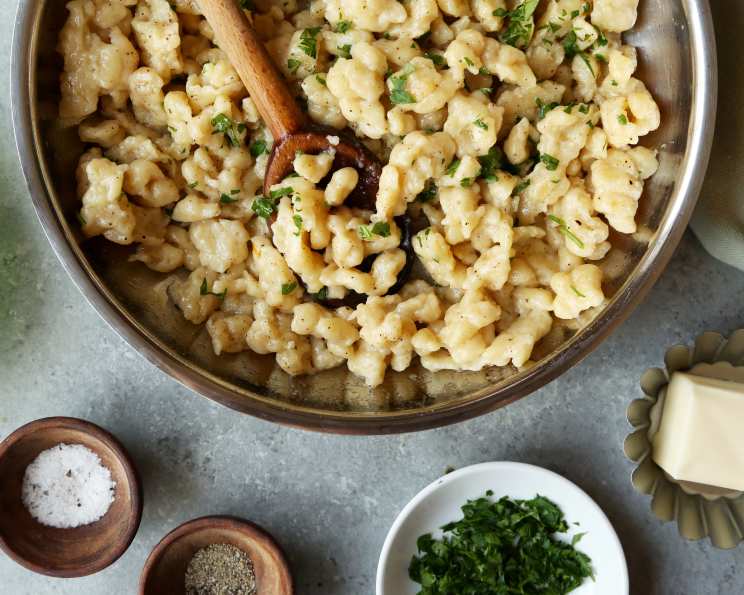
Hungarian Spaetzle: A Taste of Home
The scent of simmering spaetzle always takes me back to my grandmother’s kitchen. A whirlwind of flour, eggs, and gentle hands, she would transform simple ingredients into these delicate, comforting dumplings. I can almost feel the warmth of the kitchen, hear the clatter of pots, and taste the slightly chewy, perfectly imperfect spaetzle, always served alongside a hearty, paprika-rich stew. It’s more than just a side dish; it’s a culinary hug from my heritage.
Recipe Overview
- Prep Time: 10 minutes
- Cook Time: 7 minutes
- Total Time: 17 minutes
- Servings: 6
- Yield: 1 batch
- Dietary Type: Vegetarian
Ingredients
- 750 g flour
- 3 eggs
- Salt (to taste)
- ½ liter water
Equipment Needed
- Large pot
- Slotted spoon or strainer
- Spaetzle maker or coarse grater (optional)
Instructions
-
In a large bowl, combine the flour, eggs, and a pinch of salt.
-
Gradually add the water, mixing until you form a thick paste. Do not overmix; the batter should be somewhat lumpy. The consistency should be thick enough to hold its shape momentarily but loose enough to be pushed through a spaetzle maker or dropped into boiling water.
-
Bring a large pot of salted water to a rolling boil. The more water, the better, as it helps prevent the spaetzle from sticking together.
-
Now, you have two options for forming the spaetzle:
- (a) Spoon Method: Using a scant teaspoon, carefully drop small portions of the paste into the boiling water. The spaetzle will separate from the spoon and begin to cook. Work in batches to avoid overcrowding the pot.
- (b) Spaetzle Maker/Grater Method: If you have a spaetzle maker, follow the manufacturer’s instructions to press the paste through the holes into the boiling water. Alternatively, you can use a coarse grater. Hold the grater over the pot and use a spatula or spoon to push the paste through the large holes. This method creates a more uniform shape.
-
Cook the spaetzle for 1-2 minutes, or until they float to the surface. Once they float, they are generally done, but taste one to be sure it’s cooked through.
-
Use a slotted spoon or strainer to remove the cooked spaetzle from the boiling water.
-
(Optional) Rinse the spaetzle with cold water to stop the cooking process and prevent them from sticking together. This is particularly helpful if you are not serving them immediately.
Expert Tips & Tricks
- Batter Consistency is Key: The batter should be thick but still pourable. If it’s too thick, add a tablespoon of water at a time until you reach the desired consistency. If it’s too thin, add a tablespoon of flour at a time.
- Don’t Overmix: Overmixing the batter will develop the gluten in the flour, resulting in tougher spaetzle. Mix just until the ingredients are combined.
- Test Batch: Before cooking all the spaetzle, cook a small test batch to ensure the batter consistency and cooking time are correct.
- Prevent Sticking: To prevent the cooked spaetzle from sticking together, toss them with a little melted butter or oil after draining.
- Browning for Extra Flavor: For an extra layer of flavor, pan-fry the cooked spaetzle in a little butter until golden brown.
- Make Ahead: You can make the spaetzle batter ahead of time and store it in the refrigerator for up to 24 hours. Bring it to room temperature before cooking.
- Freezing Spaetzle: Cooked spaetzle can be frozen for later use. Spread them out on a baking sheet to freeze individually, then transfer them to a freezer bag. Reheat by boiling for a minute or two, or pan-frying.
Serving & Storage Suggestions
Hungarian spaetzle is best served hot and fresh. It’s the quintessential accompaniment to rich, flavorful dishes like Chicken Paprikash, Beef Goulash, or any stew with a generous amount of Hungarian paprika. Serve it immediately after cooking, drizzled with a little melted butter or a dollop of sour cream (tejföl in Hungarian).
Leftover spaetzle can be stored in an airtight container in the refrigerator for up to 3 days. Reheat by pan-frying with butter, boiling for a minute or two, or microwaving. Freezing cooked spaetzle is a good option for longer storage, lasting up to 2 months when properly stored.
Nutritional Information
| Nutrient | Amount per Serving | % Daily Value |
|---|---|---|
| Calories | 490 kcal | 25% |
| Total Fat | 3.6 g | 6% |
| Saturated Fat | 1.0 g | 5% |
| Cholesterol | 93 mg | 31% |
| Sodium | 41 mg | 2% |
| Total Carbohydrate | 95.6 g | 32% |
| Dietary Fiber | 3.4 g | 14% |
| Sugars | 0.4 g | 0% |
| Protein | 16.1 g | 32% |
Note: Nutritional information is an estimate and may vary based on specific ingredients and preparation methods.
Variations & Substitutions
- Gluten-Free Spaetzle: Substitute all-purpose flour with a gluten-free blend. You may need to adjust the amount of water to achieve the correct batter consistency.
- Whole Wheat Spaetzle: Replace half of the all-purpose flour with whole wheat flour for a nuttier flavor and added fiber.
- Herb Spaetzle: Add chopped fresh herbs like parsley, chives, or dill to the batter for extra flavor and color.
- Cheese Spaetzle (Käsespätzle): After cooking the spaetzle, toss them with grated cheese (such as Gruyere, Emmental, or Cheddar) and fried onions for a hearty and comforting dish.
- Spinach Spaetzle: Add pureed spinach to the batter for a vibrant green color and added nutrients.
- Vegan Spaetzle: Substitute the eggs with flax eggs (1 tablespoon of ground flaxseed mixed with 3 tablespoons of water per egg) and ensure your chosen flour is vegan-friendly.
FAQs (Frequently Asked Questions)
Q: What is the ideal consistency of the spaetzle batter?
A: The batter should be thick enough to hold its shape momentarily, but loose enough to be easily pushed through a spaetzle maker or dropped from a spoon. It should resemble a thick pancake batter.
Q: Why are my spaetzle sticking together?
A: Make sure you’re using enough boiling water and that the water is well-salted. Avoid overcrowding the pot and rinse the cooked spaetzle with cold water if you’re not serving them immediately.
Q: Can I use a different type of flour?
A: Yes, you can experiment with different types of flour, such as whole wheat or gluten-free blends, but you may need to adjust the amount of water to achieve the correct batter consistency.
Q: How do I know when the spaetzle are cooked?
A: The spaetzle are cooked when they float to the surface of the boiling water. You can also taste one to be sure it’s cooked through.
Q: Can I freeze cooked spaetzle?
A: Yes, cooked spaetzle can be frozen for later use. Spread them out on a baking sheet to freeze individually, then transfer them to a freezer bag. Reheat by boiling for a minute or two, or pan-frying.
Final Thoughts
Making Hungarian spaetzle is a rewarding experience that connects you to culinary traditions and delivers a truly comforting dish. Don’t be intimidated by the process; with a little practice, you’ll be whipping up perfect spaetzle in no time. Experiment with different variations and serve it with your favorite stew or gravy for a truly satisfying meal. I encourage you to try this recipe, share it with loved ones, and let me know how it turns out. Jó étvágyat! (Bon appétit!)