
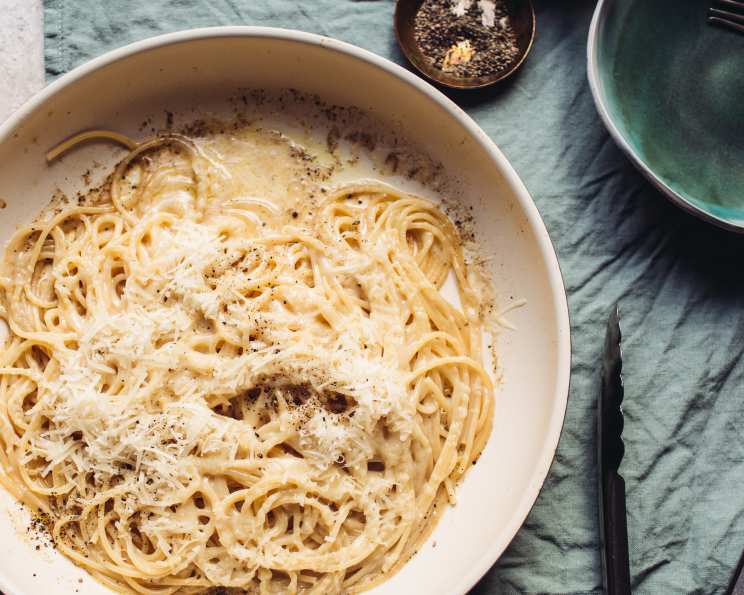
Spaghetti Cacio e Pepe: A Timeless Roman Classic
There’s something magical about simplicity, and no dish embodies that more perfectly than Cacio e Pepe. I remember being a young cook, intimidated by complex sauces with endless ingredients. Then, an Italian nonna showed me how to make this dish. With just a handful of ingredients, she transformed humble pasta into an explosion of flavor. The creamy, cheesy sauce clung to the spaghetti, each strand singing with peppery warmth. It was a revelation, a reminder that the best food often comes from the heart, not from complicated techniques.
Recipe Overview
- Prep Time: 5 minutes
- Cook Time: 15 minutes
- Total Time: 20 minutes
- Servings: 4-6
- Yield: 4-6 servings
- Dietary Type: Vegetarian
Ingredients
- 1 1⁄4 lbs spaghetti
- 3⁄4 cup pecorino romano cheese, freshly grated
- 1⁄4 cup parmigiano-reggiano cheese, freshly grated
- 2 tablespoons fresh coarse ground black pepper
- Kosher salt
Equipment Needed
- Large pot
- Colander
- Large mixing bowl or serving bowl
- Tongs
Instructions
-
Bring a large pot of water to a rolling boil. Generously salt the water. This is crucial for flavoring the pasta from the inside out. The water should taste like the sea!
-
Add the spaghetti to the boiling water and cook according to package directions until al dente. This means the pasta should be firm to the bite, not mushy. Start tasting a strand or two a minute or two before the suggested cooking time, until it is just right.
-
While the pasta is cooking, prepare the cheese and pepper mixture. In a large mixing bowl, combine the pecorino romano cheese, the parmigiano-reggiano cheese, and the fresh coarse ground black pepper. Ensure the cheese is freshly grated for the best texture and flavor.
-
Before draining the pasta, reserve about 1/2 cup of the cooking water. This starchy water is the secret to creating the creamy sauce.
-
Drain the spaghetti quickly, but do not rinse it. Immediately transfer the hot pasta to the bowl with the cheese and pepper mixture.
-
Working quickly, add the reserved cooking water to the bowl, 2 tablespoons at a time, while simultaneously tossing the pasta vigorously with the cheese mixture. The heat from the pasta and the starchy water will melt the cheese and create a creamy, emulsified sauce. The key is to toss continuously to prevent the cheese from clumping.
-
Continue adding cooking water and tossing until you achieve a saucy consistency. You may not need all the water, or you may need a bit more. The sauce should coat the pasta evenly and be slightly loose, as it will thicken as it cools.
-
Taste and adjust seasoning as needed. Add more black pepper for a spicier flavor or a pinch of salt if necessary. Keep in mind that the cheeses are already quite salty.
-
Serve immediately in warmed bowls. Garnish with additional grated cheese and freshly ground black pepper, if desired.
Expert Tips & Tricks
- Temperature is key: The success of Cacio e Pepe hinges on the temperature of the pasta and the cooking water. Make sure the pasta is very hot when it’s added to the cheese mixture.
- Grate your own cheese: Pre-grated cheese often contains cellulose, which can prevent it from melting smoothly. Freshly grated cheese melts beautifully and has a superior flavor.
- Black pepper matters: Use good quality, coarsely ground black pepper. The pepper should be freshly ground for the most aromatic and flavorful experience. Toasting the pepper corns lightly before grinding enhances the flavor as well.
- Don’t overcrowd the pot: Use a large pot and plenty of water to cook the pasta properly. Overcrowding the pot can lower the water temperature and cause the pasta to cook unevenly.
- Emulsification is the goal: The goal is to create a smooth, emulsified sauce. This is achieved by vigorously tossing the hot pasta with the cheese, pepper, and starchy water. Don’t be afraid to put some elbow grease into it!
- Saltiness Alert: Pecorino Romano is a very salty cheese. Taste the pasta before adding any additional salt, and add cautiously if needed.
Serving & Storage Suggestions
Cacio e Pepe is best served immediately while the sauce is creamy and the pasta is hot. Serve in warmed bowls for a more enjoyable experience. This dish is not ideal for making ahead of time, as the sauce can dry out. However, leftovers can be stored in an airtight container in the refrigerator for up to 24 hours. To reheat, add a splash of water or milk to the pasta and microwave on low power, stirring occasionally, until heated through. The texture may not be as creamy as when it was freshly made, but it will still be delicious.
Nutritional Information
| Nutrient | Amount per Serving | % Daily Value |
|---|---|---|
| Calories | 553.9 kcal | N/A |
| Calories from Fat | N/A | N/A |
| Total Fat | 30 g | 5% |
| Saturated Fat | 3.4 g | 5% |
| Cholesterol | 1.1 mg | 5% |
| Sodium | 2.9 mg | 0% |
| Total Carbohydrate | 77.1 g | 3% |
| Dietary Fiber | 108.8 g | 36% |
| Sugars | 5.4 g | 21% |
| Protein | 3.9 g | 15% |
Note: Nutritional information is an estimate and may vary based on specific ingredients and portion sizes.
Variations & Substitutions
- Gluten-free: Use gluten-free spaghetti for a gluten-free version.
- Vegan: While traditionally made with dairy cheese, you could experiment with nutritional yeast and plant-based cheeses, though the flavor profile will be significantly different.
- Spice it up: Add a pinch of red pepper flakes for an extra kick.
- Herbs: Add a sprinkle of fresh parsley or chives for a pop of color and freshness.
- Garlic: Some people like to add a clove of minced garlic to the cooking water for a subtle garlic flavor.
- Cheese variation: Experiment with different types of hard, aged cheeses, such as Grana Padano. However, be mindful of the salt content.
FAQs (Frequently Asked Questions)
Q: Why is my Cacio e Pepe sauce clumpy?
A: Clumpy sauce is usually caused by the cheese not melting properly. Ensure the pasta is very hot, and toss vigorously with the cheese and starchy water to emulsify the sauce.
Q: Can I use pre-grated cheese?
A: It’s best to avoid pre-grated cheese, as it often contains cellulose, which can prevent it from melting smoothly. Freshly grated cheese is always recommended.
Q: How do I prevent the sauce from drying out?
A: Serve the Cacio e Pepe immediately after making it. If you need to wait a few minutes, add a splash of cooking water to the pasta and toss to keep it moist.
Q: Can I add butter to Cacio e Pepe?
A: Traditionally, Cacio e Pepe does not include butter. The creaminess comes from the emulsification of the cheese and starchy water. However, some modern variations may add a small amount of butter for extra richness.
Q: What is the best type of black pepper to use?
A: Freshly ground, coarse black pepper is essential for Cacio e Pepe. Using pre-ground pepper will result in a less flavorful dish.
Final Thoughts
Spaghetti Cacio e Pepe is more than just a pasta dish; it’s a testament to the power of simplicity and quality ingredients. It’s an invitation to slow down, savor each bite, and appreciate the beauty of Italian cuisine. Don’t be intimidated by its minimalist nature. Embrace the challenge, experiment with the techniques, and most importantly, have fun in the kitchen. Gather your loved ones, pour a glass of crisp white wine, and enjoy this timeless Roman classic. Buon appetito!