
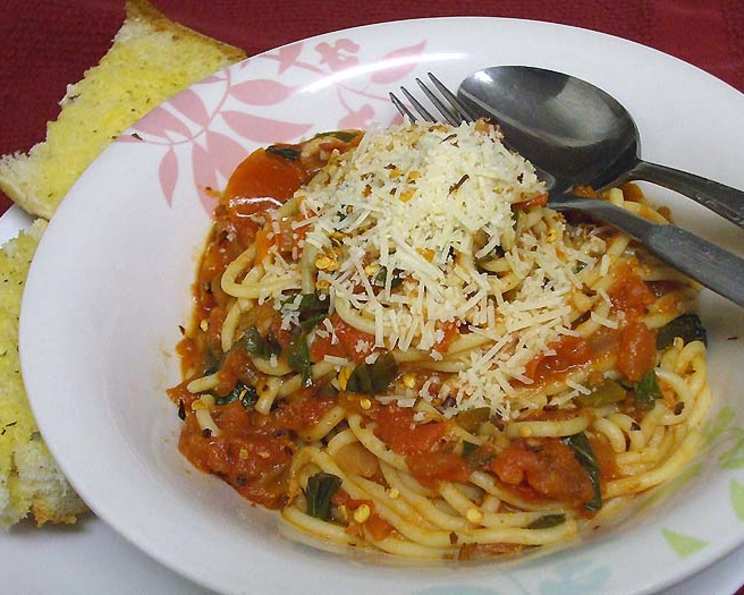
Spaghetti With Fresh Tomato and Basil Sauce: A Taste of Summer
The scent of fresh basil always transports me back to my grandmother’s garden. As a child, I’d spend hours amongst the tomato vines, the warm sun on my face, eagerly awaiting the moment she’d pluck a handful of fragrant basil leaves and whisk them inside to create her legendary tomato sauce. This recipe is a humble ode to those sun-drenched days, a simple yet deeply satisfying celebration of summer’s bounty. It’s a dish that feels like a warm hug, a taste of home, and a reminder of the love that goes into every homemade meal.
Recipe Overview
- Prep Time: 10 minutes
- Cook Time: 15 minutes
- Total Time: 25 minutes
- Servings: 4-6
- Dietary Type: Vegetarian
Ingredients
- 1 (450 g) package spaghetti
- ¼ cup butter
- 3 garlic cloves, minced
- 4 cups tomatoes, chopped
- ¼ cup fresh basil leaves, chopped
- 2 tablespoons balsamic vinegar
- ¼ cup Parmesan cheese, grated
- Hot pepper flakes (optional)
- Salt and pepper to taste
Equipment Needed
- Large pot
- Large skillet or saucepan
- Colander
Instructions
-
Begin by cooking the spaghetti according to the package directions. Be sure to generously salt the water – this is your primary opportunity to season the pasta itself! Aim for al dente – the pasta should be firm to the bite, not mushy.
-
While the pasta is cooking, prepare the sauce. In a large skillet or saucepan, melt the butter over medium-high heat until it becomes foamy and fragrant. Watch carefully, as butter can burn quickly at this temperature.
-
Add the minced garlic to the melted butter. Cook and stir for about 2 minutes, until the garlic is fragrant and lightly golden. Be careful not to burn the garlic, as this will make it bitter. Reduce the heat slightly if necessary.
-
Stir in the chopped tomatoes and bring the mixture to a boil. The tomatoes will release their juices, creating the base of the sauce.
-
Once boiling, reduce the heat to low, cover the skillet or saucepan, and simmer for 5 minutes. This allows the tomatoes to soften and the flavors to meld together beautifully.
-
Remove the pan from the heat. Stir in the fresh basil (I often use a generous amount, sometimes closer to ½ cup, for an extra burst of flavor) and the balsamic vinegar. The heat will wilt the basil slightly, releasing its aromatic oils.
-
Season the sauce with salt and pepper to taste. Don’t be afraid to be generous with the seasoning, as this will bring out the natural sweetness of the tomatoes.
-
Once the pasta is cooked al dente, drain it well in a colander.
-
Return the drained pasta to the pot. Pour the tomato mixture over the pasta and toss gently to combine, ensuring that every strand is coated in the flavorful sauce.
-
Sprinkle with grated Parmesan cheese and hot pepper flakes, if desired, before serving. The Parmesan adds a salty, umami richness, while the hot pepper flakes provide a touch of heat to balance the sweetness of the tomatoes.
Expert Tips & Tricks
- For a richer, more intense tomato flavor, consider using roasted tomatoes. Simply toss halved tomatoes with olive oil, salt, and pepper, and roast them in a 400°F oven for about 30-40 minutes, or until they are softened and slightly caramelized.
- If you prefer a smoother sauce, you can use an immersion blender to partially or fully puree the tomato mixture before adding the basil and vinegar.
- Don’t overcrowd the pan when cooking the garlic. Overcrowding lowers the temperature and can lead to the garlic steaming instead of sautéing, resulting in a less flavorful sauce.
- If your tomatoes are not very sweet, you can add a pinch of sugar to the sauce to balance the acidity.
- To make the sauce ahead of time, simply prepare it up to the point of adding the basil and vinegar. Store it in the refrigerator for up to 3 days. When ready to serve, reheat the sauce gently and then stir in the basil and vinegar.
Serving & Storage Suggestions
Serve the spaghetti immediately after tossing it with the sauce, while it’s still hot and the Parmesan cheese is melted and gooey. Garnish with extra fresh basil leaves for a pop of color and aroma. This dish pairs well with a simple green salad and a crusty loaf of bread for soaking up the delicious sauce.
Leftovers can be stored in an airtight container in the refrigerator for up to 3 days. To reheat, simply microwave or gently warm in a saucepan over low heat, adding a splash of water or broth if necessary to prevent the pasta from drying out. The sauce can also be frozen for up to 2 months. Thaw overnight in the refrigerator before reheating.
Nutritional Information
| Nutrient | Amount per Serving | % Daily Value |
|---|---|---|
| Calories | 640.9 kcal | N/A |
| Calories from Fat | 140 g | 22% |
| Total Fat | 15.6 g | 24% |
| Saturated Fat | 8.8 g | 44% |
| Cholesterol | 36 mg | 12% |
| Sodium | 193.2 mg | 8% |
| Total Carbohydrate | 103.9 g | 34% |
| Dietary Fiber | 6.4 g | 25% |
| Sugars | 7.1 g | 28% |
| Protein | 21 g | 42% |
Note: Nutritional information is an estimate and may vary based on specific ingredients and portion sizes.
Variations & Substitutions
- For a vegan version, substitute the butter with olive oil and omit the Parmesan cheese or use a vegan alternative.
- Add protein by incorporating cooked chicken, shrimp, or Italian sausage into the sauce.
- For a spicier dish, add more hot pepper flakes or a pinch of cayenne pepper.
- In the winter, when fresh tomatoes are not at their peak, you can use canned crushed tomatoes or diced tomatoes as a substitute. Be sure to drain them well before adding them to the sauce.
- Experiment with different types of pasta, such as penne, farfalle, or linguine.
FAQs (Frequently Asked Questions)
Q: Can I use dried basil instead of fresh basil?
A: While fresh basil is preferred for its vibrant flavor, you can use dried basil as a substitute. Use about 1 teaspoon of dried basil for every ¼ cup of fresh basil. Add the dried basil to the sauce along with the tomatoes.
Q: How do I prevent the pasta from sticking together?
A: Make sure to use plenty of water when cooking the pasta and salt the water generously. After draining the pasta, toss it with a little olive oil or butter to prevent it from sticking.
Q: Can I add other vegetables to the sauce?
A: Absolutely! Feel free to add other vegetables such as onions, peppers, zucchini, or mushrooms to the sauce. Sauté them along with the garlic before adding the tomatoes.
Q: How can I thicken the sauce if it’s too watery?
A: If the sauce is too watery, you can simmer it for a longer period of time, uncovered, to allow some of the liquid to evaporate. Alternatively, you can stir in a small amount of tomato paste or cornstarch slurry (cornstarch mixed with cold water) to thicken it.
Q: Can I make this recipe gluten-free?
A: Yes, simply use gluten-free spaghetti instead of regular spaghetti. All other ingredients in the recipe are naturally gluten-free.
Final Thoughts
This Spaghetti with Fresh Tomato and Basil Sauce is more than just a recipe; it’s an invitation to savor the simple pleasures of life. The vibrant flavors of fresh tomatoes and basil, combined with the comforting warmth of pasta, create a dish that is both satisfying and nourishing. I encourage you to try this recipe and make it your own, experimenting with different ingredients and variations to suit your taste. Share it with your loved ones, and let it bring joy and connection to your table. Buon appetito!