
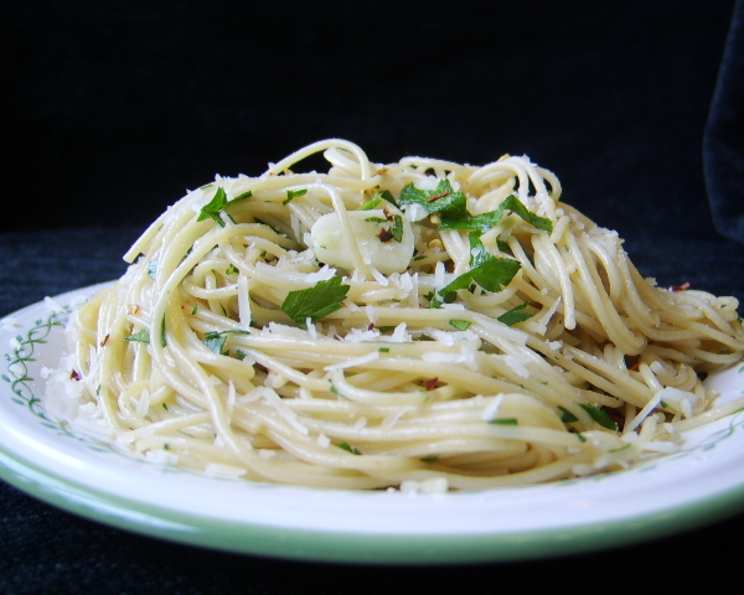
Spaghetti With Garlic, Olive Oil, and Chile Pepper: Simple Perfection
The memory is etched in my mind: a tiny trattoria in Rome, the air thick with the aroma of garlic and anticipation. My first taste of spaghetti aglio e olio was a revelation. Simple, yet utterly profound, each strand was coated in a shimmering emulsion of olive oil, punctuated by the sharp bite of garlic and the subtle warmth of chili. It was a dish that spoke of Italian summers, sun-drenched ingredients, and the joy of uncomplicated pleasure. I’ve been chasing that flavor ever since, and this recipe is my faithful rendition of that magic.
Recipe Overview
- Prep Time: 10 minutes
- Cook Time: 15 minutes
- Total Time: 25 minutes
- Servings: 4-6
- Dietary Type: Vegetarian
Ingredients
- 1 lb spaghetti
- Salt, for pasta water
- 6 tablespoons olive oil
- 10 garlic cloves, peeled and thinly sliced
- 1/2 teaspoon crushed red chili pepper (adjust to taste)
- 1/2 cup minced parsley
- Parmigiano-Reggiano cheese, for serving (optional)
Equipment Needed
- Large pot
- Large skillet
- Colander
- Tongs or pasta fork
Instructions
- Begin by bringing a large pot of water to a rolling boil. Generously salt the water; this is crucial for flavoring the pasta from the inside out. The water should taste like the sea.
- Add the spaghetti to the boiling water and cook according to package directions, until al dente. It’s vital to avoid overcooking the pasta. Al dente means “to the tooth” – the pasta should have a slight resistance when you bite into it.
- While the pasta is cooking, prepare the sauce. In a large skillet, heat the olive oil over medium-low heat. The key here is gentle cooking. You want the garlic to infuse the oil without burning.
- Add the thinly sliced garlic to the skillet. Cook gently, stirring frequently, until the garlic is softened and just beginning to turn golden. This should take about 5-7 minutes. Watch it closely, as burned garlic will ruin the dish. The goal is a sweet, mellow, and aromatic garlic.
- Remove the skillet from the heat and stir in the crushed red chili pepper. The residual heat of the oil will release the pepper’s flavor without scorching it.
- Just before the pasta is perfectly al dente, reserve about 1 cup of the pasta cooking water. This starchy water is the secret ingredient for creating a luscious sauce that clings to the pasta.
- Drain the pasta in a colander, being careful not to shake off all the water (a little residual water is fine!).
- Immediately add the drained pasta to the skillet with the garlic and oil.
- Toss the pasta with the oil and garlic until well mixed. If the pasta seems too dry, gradually add some of the reserved pasta cooking water, a little at a time, until you achieve a light, emulsified sauce that coats the pasta evenly. The starch in the water helps bind the oil and water together, creating a silky texture.
- Add the minced parsley and toss again to combine.
- Taste and correct the seasoning with salt and pepper, if needed. Remember that the pasta water was already salted, so be mindful of that.
- Serve immediately, garnished with freshly grated Parmigiano-Reggiano cheese, if desired.
Expert Tips & Tricks
- Garlic is King: The quality of your garlic matters. Use fresh, firm cloves and slice them thinly and evenly for even cooking. Avoid using pre-minced garlic, as it often lacks flavor and can burn easily.
- Low and Slow: Don’t rush the garlic. Cooking it gently over low heat allows its sweetness to develop without becoming bitter.
- Pasta Water is Liquid Gold: Don’t discard the pasta water! Its starchiness is essential for creating a creamy, emulsified sauce.
- Spice it Up (or Down): Adjust the amount of crushed red chili pepper to your liking. If you’re sensitive to spice, start with a smaller amount and taste as you go. For extra heat, use a pinch of cayenne pepper.
- Emulsification is Key: The goal is to create a creamy sauce that clings to the pasta. If the sauce seems oily or separate, add more pasta water and toss vigorously until it emulsifies.
- Fresh Herbs are Best: Use fresh parsley for the most vibrant flavor. Flat-leaf parsley (Italian parsley) is preferred for its bolder taste.
- Don’t Overcrowd the Pan: If you’re making a large batch, cook the pasta in smaller batches to ensure it cooks evenly.
- Warm Plates: Serving the pasta on warm plates will help keep it hot and prevent the sauce from solidifying.
Serving & Storage Suggestions
Serve the spaghetti immediately for the best flavor and texture. Garnish with freshly grated Parmigiano-Reggiano cheese and a drizzle of extra virgin olive oil, if desired. A side of crusty French bread is perfect for soaking up the delicious sauce.
Leftovers can be stored in an airtight container in the refrigerator for up to 2 days. To reheat, gently warm the pasta in a skillet over low heat, adding a splash of water or olive oil to prevent it from drying out. Microwaving is not recommended, as it can make the pasta rubbery. This dish is best enjoyed fresh, as the garlic flavor can intensify over time. Freezing is not recommended.
Nutritional Information
| Nutrient | Amount per Serving | % Daily Value |
|---|---|---|
| Calories | 450 kcal | 23% |
| Total Fat | 18g | 28% |
| Saturated Fat | 3g | 15% |
| Cholesterol | 0mg | 0% |
| Sodium | 10mg | 0% |
| Total Carbohydrate | 65g | 22% |
| Dietary Fiber | 3g | 12% |
| Sugars | 2g | – |
| Protein | 12g | 24% |
Note: Nutritional information is an estimate and may vary based on specific ingredients and portion sizes.
Variations & Substitutions
- Gluten-Free: Use gluten-free spaghetti. There are many excellent gluten-free pasta options available today.
- Vegan: Omit the Parmigiano-Reggiano cheese or substitute with a vegan parmesan alternative. Nutritional yeast can also add a cheesy flavor.
- Spicy Aglio e Olio with Shrimp: Add peeled and deveined shrimp to the skillet during the last few minutes of cooking.
- Aglio e Olio with Broccoli Rabe: Sauté chopped broccoli rabe with the garlic for a slightly bitter and earthy flavor.
- Lemon Aglio e Olio: Add a squeeze of fresh lemon juice and some lemon zest to the sauce for a bright and zesty twist.
- Add Some Breadcrumbs: Toast breadcrumbs in a separate pan with olive oil and garlic, and sprinkle them over the finished pasta for added texture.
- Use Different Herbs: Experiment with other fresh herbs, such as basil, oregano, or thyme.
FAQs (Frequently Asked Questions)
Q: Can I use pre-minced garlic?
A: While convenient, pre-minced garlic lacks the flavor and aroma of fresh garlic and tends to burn more easily. Freshly sliced garlic is highly recommended for the best results.
Q: How do I prevent the garlic from burning?
A: Cook the garlic over medium-low heat and stir frequently. If it starts to brown too quickly, remove the skillet from the heat temporarily.
Q: Can I use dried parsley instead of fresh?
A: Fresh parsley is preferred for its vibrant flavor, but if you only have dried parsley on hand, use about 1 tablespoon. Add it to the skillet with the chili pepper to allow its flavor to infuse the oil.
Q: How much salt should I add to the pasta water?
A: The pasta water should be generously salted, tasting like the sea. A general guideline is about 1-2 tablespoons of salt per gallon of water.
Q: What if I don’t have Parmigiano-Reggiano cheese?
A: Pecorino Romano cheese is a good substitute. You can also omit the cheese entirely, as the dish is delicious on its own.
Final Thoughts
Spaghetti with garlic, olive oil, and chile pepper is more than just a recipe; it’s an experience, a taste of simple Italian elegance. I urge you to try this recipe and savor the exquisite balance of flavors. Don’t be afraid to experiment and adjust it to your own preferences. Share it with friends and family, and let it transport you to a sun-drenched Italian piazza. Pair it with a crisp, dry white wine like Pinot Grigio, and enjoy the magic of effortless cooking. Buon appetito!