
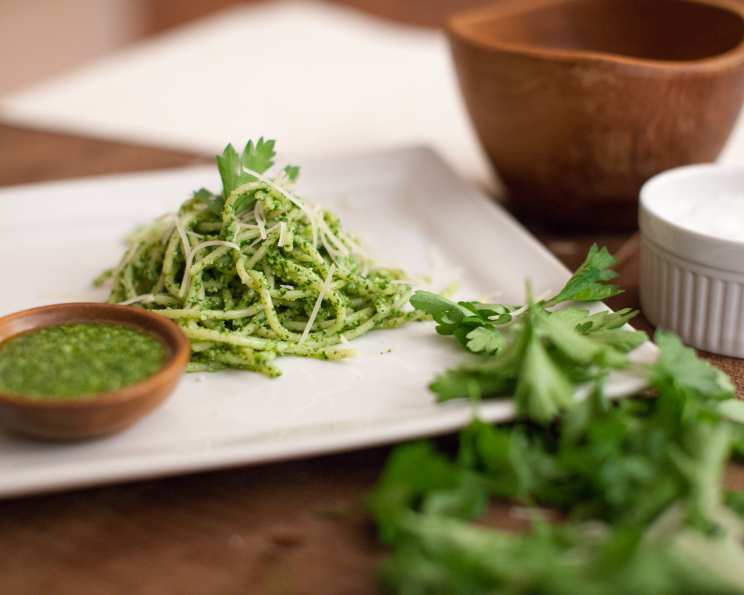
Spaghetti With Mint & Parsley Pesto: A Symphony of Freshness
I’ll never forget the first time I tasted pesto that wasn’t from a jar. It was a sweltering summer evening in Liguria, Italy, and I was fortunate enough to be dining al fresco at a tiny trattoria overlooking the shimmering Mediterranean. The air hummed with cicadas, the scent of lemon trees hung heavy, and then, the pasta arrived. Emerald green strands coated perfectly cooked spaghetti, a vibrant explosion of flavor that instantly transported me. That simple dish, bursting with fresh herbs and sunshine, ignited a lifelong passion for creating pesto at home. This spaghetti with mint and parsley pesto is my ode to that unforgettable culinary moment.
Recipe Overview
- Prep Time: 10 minutes
- Cook Time: 10 minutes
- Total Time: 20 minutes
- Servings: 6
- Dietary Type: Vegetarian
Ingredients
- 2 large bunches mint
- 2 large bunches parsley
- ¾ cup extra virgin olive oil
- Juice of 1 lemon
- 4 garlic cloves
- ½ cup pecorino cheese or ½ cup Grana Padano (or nutritional yeast for a vegan option)
- 1 teaspoon salt
- 1 lb spaghetti
Equipment Needed
- Blender or Food Processor
- Large Pot
- Colander
Instructions
- Begin by prepping your ingredients. Thoroughly wash both bunches of mint and parsley. Remove any thick stems, as they can make the pesto bitter.
- Peel your garlic cloves. Juice the lemon, ensuring you remove any seeds.
- In a blender or food processor, combine the mint, parsley, extra virgin olive oil, lemon juice, garlic cloves, pecorino cheese (or Grana Padano or nutritional yeast), and salt.
- Blend the ingredients until smooth, or until you reach your desired consistency. Some people prefer a slightly chunkier pesto, while others prefer it completely smooth. You may need to scrape down the sides of the blender or food processor a few times to ensure even blending.
- While the pesto is blending, bring a large pot of salted water to a rolling boil. Add the spaghetti and cook according to package directions, until al dente. Be sure to stir the spaghetti occasionally to prevent it from sticking together.
- Once the spaghetti is cooked, reserve about ½ cup of pasta water before draining it in a colander.
- Return the drained spaghetti to the pot. Add the pesto and toss well to coat. If the pesto seems too thick, add a little of the reserved pasta water at a time until the sauce reaches your desired consistency. This will also help the pesto cling to the spaghetti.
- Serve immediately.
Expert Tips & Tricks
- Blanch the herbs: For an even brighter green pesto, quickly blanch the mint and parsley in boiling water for about 30 seconds, then immediately plunge them into an ice bath. This helps to preserve their color and prevent oxidation. Be sure to thoroughly dry the herbs before blending.
- Adjust the garlic: The amount of garlic is a matter of personal preference. If you’re sensitive to garlic, start with two cloves and add more to taste.
- Toast the cheese: If you’re using pecorino or Grana Padano, try lightly toasting it in a dry pan before adding it to the pesto. This will bring out its nutty flavor.
- Add nuts: For a richer pesto, add ¼ cup of toasted pine nuts or walnuts to the blender along with the other ingredients.
- Don’t overcook the pasta: Al dente pasta is key for this dish. It should be firm to the bite, not mushy.
- Make it ahead: The pesto can be made ahead of time and stored in the refrigerator for up to 3 days. Cover the surface of the pesto with a thin layer of olive oil to prevent it from oxidizing.
- Warm the serving bowls: For a restaurant-worthy presentation, warm the serving bowls before adding the spaghetti.
Serving & Storage Suggestions
Serve the spaghetti with mint and parsley pesto immediately after tossing. Garnish with a sprinkle of extra pecorino or Grana Padano, or a drizzle of extra virgin olive oil. A squeeze of fresh lemon juice just before serving can also brighten the flavors.
Leftover spaghetti can be stored in an airtight container in the refrigerator for up to 2 days. Reheat gently in a pan over low heat, adding a splash of water or broth to prevent it from drying out. It is not recommended to freeze the pesto, as the texture and color may change.
Nutritional Information
| Nutrient | Amount per Serving | % Daily Value |
|---|---|---|
| Calories | 561.3 kcal | N/A |
| Calories from Fat | 275 g | 49% |
| Total Fat | 30.6 g | 47% |
| Saturated Fat | 5.4 g | 26% |
| Cholesterol | 7.3 mg | 2% |
| Sodium | 520.5 mg | 21% |
| Total Carbohydrate | 58.3 g | 19% |
| Dietary Fiber | 2.5 g | 10% |
| Sugars | 2.3 g | N/A |
| Protein | 13.3 g | 26% |
Note: Nutritional information is an estimate and may vary based on specific ingredients and portion sizes.
Variations & Substitutions
- Vegan Pesto: Substitute the pecorino cheese or Grana Padano with ½ cup of nutritional yeast. You can also add a handful of toasted pine nuts or walnuts for added richness.
- Gluten-Free: Use gluten-free spaghetti instead of regular spaghetti.
- Spicy Pesto: Add a pinch of red pepper flakes to the pesto for a little heat.
- Lemon Zest: Add the zest of one lemon to the pesto for an extra burst of citrus flavor.
- Seasonal Herbs: Feel free to experiment with other fresh herbs, such as basil, oregano, or chives, to create your own unique pesto blend.
- Cherry Tomato Pesto: Roast halved cherry tomatoes with garlic and olive oil, then blend with the mint, parsley, and other pesto ingredients for a sweeter, more complex flavor.
FAQs (Frequently Asked Questions)
Q: Can I use a different type of cheese?
A: Absolutely! While the recipe calls for pecorino or Grana Padano, you can substitute with Parmesan cheese or even a blend of cheeses. Just be sure to adjust the salt accordingly, as some cheeses are saltier than others.
Q: How long does the pesto last in the refrigerator?
A: The pesto will last for up to 3 days in the refrigerator if stored in an airtight container. To prevent oxidation, cover the surface of the pesto with a thin layer of olive oil.
Q: Can I freeze the pesto?
A: While you can freeze pesto, the texture and color may change slightly. For best results, freeze the pesto in small portions (such as ice cube trays) and thaw it in the refrigerator before using.
Q: What if my pesto is too bitter?
A: Bitterness in pesto can be caused by using too many stems from the herbs or over-processing the ingredients. To counteract bitterness, add a little more lemon juice or olive oil.
Q: Can I add other vegetables to the spaghetti?
A: Definitely! Sautéed vegetables such as zucchini, bell peppers, or spinach would be delicious additions to this dish. Just be sure to cook them before tossing them with the spaghetti and pesto.
Final Thoughts
This spaghetti with mint and parsley pesto is a celebration of simple, fresh ingredients. It’s a dish that’s perfect for a quick weeknight meal or a light summer lunch. I encourage you to experiment with the recipe, adding your own personal touch and using whatever herbs and vegetables are in season. Don’t be afraid to play with the flavors and make it your own! Pair this delightful pasta with a crisp glass of white wine, such as a Sauvignon Blanc or Pinot Grigio, and a simple side salad for a complete and satisfying meal. Happy cooking!