
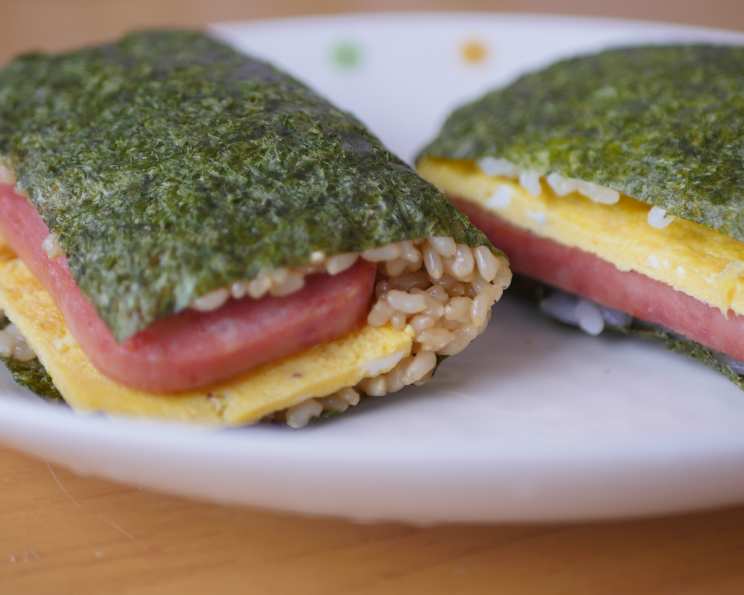
Spam and Egg Onigiri: A Taste of Okinawa in Your Kitchen
My first encounter with Spam and Egg Onigiri wasn’t in a fancy restaurant, but at a bustling convenience store during a sweltering summer trip to Okinawa. The vibrant colors of the packaged rice ball, the savory aroma of fried Spam mingling with the subtle scent of seaweed, and the promise of a quick, satisfying bite—it was an instant attraction. Biting into it, the warm, fluffy rice, the salty Spam, and the sweet egg omelet created a surprisingly harmonious blend of flavors and textures that transported me to a tropical paradise. It was a simple, humble dish, yet it held a unique charm that captivated my taste buds and left a lasting impression of the beautiful island.
Recipe Overview
- Prep Time: 15 minutes
- Cook Time: 35 minutes
- Total Time: 50 minutes
- Servings: 4
- Yield: 4 rice balls
- Dietary Type: Not Vegetarian
Ingredients
- 100 g pork luncheon meat (such as SPAM or TULIP)
- 2 eggs
- 1 pinch salt
- 1 pinch pepper
- 1 tablespoon vegetable oil
- 2 nori sheets
- 2 cups steamed rice
Equipment Needed
- Frying pan
- Cutting board
- Knife
- Cling wrap
Instructions
-
Begin by preparing the pork luncheon meat. Slice it into pieces approximately 1-2 centimeters thick. The number of slices should correspond to the desired number of rice balls.
-
In a bowl, whisk the two eggs. Season with a pinch of salt and a pinch of pepper. Ensure the seasoning is evenly distributed.
-
Place a frying pan on the stove and heat it over medium-high heat. Add the vegetable oil to the hot pan.
-
Carefully place the sliced pork luncheon meat into the hot oil. Fry the Spam for about 1-2 minutes on each side, or until it begins to brown and develop a slightly crispy texture. This step is crucial for enhancing the savory flavor of the Spam. Remove the fried Spam from the pan and place it on a paper towel-lined plate to absorb any excess oil.
-
Clean the frying pan thoroughly to remove any remaining Spam residue. Place the clean pan back on the stove and heat it over medium heat. Add a small amount of vegetable oil.
-
Once the oil is heated, pour the whisked eggs into the pan. Cook the eggs like an omelet.
-
Once the bottom side of the omelet starts to firm up, carefully flip it over. Fry the other side for about one minute, or until it is fully cooked. Remove the omelet from the pan.
-
Using a knife, cut the omelet into slices that are roughly the same size and shape as the Spam slices. Ensure you have the same number of omelet slices as you have fried Spam slices.
-
Tear off a large piece of cling wrap and lay it flat on a cutting board.
-
Cut one whole sheet of nori in half. Place one half-sheet of nori on top of the cling wrap, ensuring the shiny side of the nori is facing down. The nori sheet should be large enough to wrap the rice ball.
-
Take approximately two spoonfuls of steamed rice and gently spread it evenly on top of the nori sheet. Wet your hands with clean water to prevent the rice from sticking to them.
-
Place a slice of the fried pork luncheon meat near one edge of the nori sheet covered with rice. Then, position a slice of the cooked egg omelet on top of the Spam.
-
Carefully fold the nori sheet with the rice over the Spam and egg, completely encasing the filling. Use the cling wrap to help shape and mold the rice ball into a rectangular shape.
-
Wrap the entire rice ball tightly with the cling wrap. Keep the rice ball wrapped for about 5 minutes, or until the nori has softened and slightly wilted. This allows the nori to adhere to the rice, ensuring the onigiri holds its shape.
-
Before serving, remove the cling wrap. Serve the Spam and Egg Onigiri immediately.
Expert Tips & Tricks
- For a richer flavor, consider marinating the Spam slices in a mixture of soy sauce, mirin, and a touch of sugar before frying.
- Adding a thin layer of Japanese mayonnaise to the rice before adding the Spam and egg can provide extra moisture and flavor.
- Toast the nori sheet lightly over a gas flame before assembling for a crispier texture and more intense seaweed flavor.
Serving & Storage Suggestions
Serve the Spam and Egg Onigiri immediately after assembly for the best flavor and texture. You can also pack them for a convenient lunch or snack.
Leftover onigiri can be stored in an airtight container in the refrigerator for up to 24 hours. However, the nori may become soggy over time. Reheat gently in the microwave for a few seconds, but be mindful that the texture of the rice may change slightly. I would not recommend freezing these.
Nutritional Information
Nutritional information is an estimate and can vary based on specific ingredients and portion sizes.
| Nutrient | Amount per Serving | % Daily Value |
|---|---|---|
| Calories | 250 kcal | 13% |
| Total Fat | 12g | 15% |
| Saturated Fat | 4g | 20% |
| Cholesterol | 100mg | 33% |
| Sodium | 600mg | 26% |
| Total Carbohydrate | 25g | 9% |
| Dietary Fiber | 1g | 4% |
| Sugars | 2g | – |
| Protein | 10g | 20% |
Variations & Substitutions
- For a vegetarian option, substitute the Spam with grilled firm tofu or marinated mushrooms.
- Add a sprinkle of sesame seeds or furikake (Japanese rice seasoning) to the rice for added flavor and texture.
- Spice it up by adding a dash of sriracha or a pinch of gochugaru (Korean chili powder) to the egg mixture.
- Use brown rice instead of white rice for a healthier and nuttier alternative.
FAQs (Frequently Asked Questions)
Q: Can I make these ahead of time?
A: While best enjoyed fresh, you can assemble the onigiri a few hours in advance and store them in the refrigerator. The nori might soften slightly, but the flavor will remain delicious.
Q: How do I prevent the rice from sticking to my hands?
A: Simply dampen your hands with clean water before handling the steamed rice. This will prevent the rice from sticking and make it easier to shape the onigiri.
Q: Can I use different types of seaweed?
A: While nori is the traditional choice, you can experiment with other types of seaweed, such as wakame or kombu, for a different flavor profile.
Q: What if I don’t have cling wrap?
A: You can use parchment paper or even a clean tea towel to wrap the onigiri. The key is to keep the rice ball tightly wrapped to help it hold its shape.
Q: Is it necessary to fry the Spam?
A: While you can use the Spam straight from the can, frying it enhances its flavor and adds a desirable crispy texture to the onigiri. It’s a highly recommended step for optimal taste.
Final Thoughts
Spam and Egg Onigiri is more than just a recipe; it’s a delightful fusion of cultures, a celebration of simple ingredients, and a reminder that the most memorable culinary experiences often come from the most unexpected places. I urge you to try this recipe and discover the unique flavors of Okinawa in your own kitchen. Feel free to experiment with different variations and share your creations with friends and family. Pair it with a refreshing glass of iced green tea for a truly authentic experience. Bon appétit!