
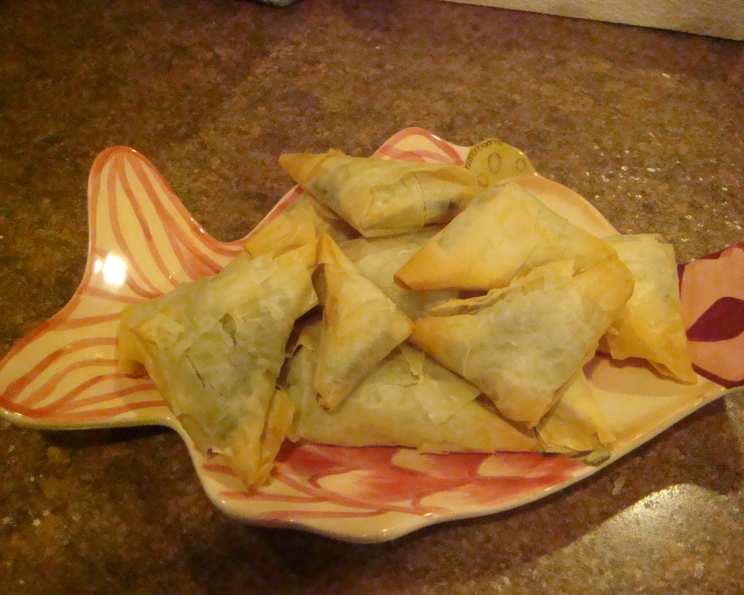
Spanakopetes: A Taste of Greece
The first time I tasted spanakopetes, I was wandering through a bustling Athens marketplace, the air thick with the scent of olives and the sound of vendors hawking their wares. An old woman with kind eyes offered me a small, golden triangle still warm from her portable oven. The flaky pastry shattered in my mouth, giving way to a savory, earthy filling of spinach and herbs. That single bite transported me, and I’ve been chasing that perfect spanakopeta ever since, tweaking and perfecting my own recipe to capture the magic of that Athenian afternoon.
Recipe Overview
- Prep Time: 30 minutes
- Cook Time: 20 minutes
- Total Time: 50 minutes
- Yields: 12 triangles
- Dietary Type: Vegetarian
Ingredients
- 1 lb fresh spinach
- 1 1/2 tablespoons olive oil
- 2 tablespoons unsalted butter
- 2 cups chopped onions
- 1 teaspoon finely chopped garlic
- 1 cup chopped scallion
- 1 cup crumbled feta (about 4 ounces)
- 1/4 cup freshly grated parmesan cheese
- 1/4 cup finely chopped dill
- 1/3 cup finely chopped flat leaf parsley
- 1 large egg
- 1 large egg yolk
- Salt & freshly ground black pepper
- 1/4 cup pine nuts
- 12 sheets phyllo pastry
- 6 tablespoons unsalted butter, melted
Equipment Needed
- Large skillet
- Colander
- Mixing bowl
- Sharp knife
- Baking sheet
- Pastry brush
Instructions
- Preheat your oven to 350 degrees F (175 degrees C).
- Prepare the spinach: Discard any tough stems, thoroughly wash the spinach, and drain well. Coarsely chop the spinach.
- Sauté the spinach: Heat the olive oil in a large skillet over medium-high heat. Add the spinach and cook until it wilts, approximately 5-7 minutes.
- Drain the spinach: Transfer the wilted spinach to a colander. Use the back of a large spoon to press out any excess moisture. This step is crucial to prevent soggy spanakopetes. Set the skillet aside; you’ll use it again.
- Sauté the aromatics: Melt the butter in the same skillet over medium heat. Add the chopped onions, finely chopped garlic, and chopped scallions. Cook until the mixture is softened and fragrant, stirring frequently, about 8-10 minutes. Be patient and allow the onions to develop some color, but don’t let them burn. When the mixture starts to lightly brown, transfer it to a mixing bowl.
- Cool the onion mixture: Allow the onion mixture to cool slightly before proceeding. This prevents the egg from cooking prematurely when added.
- Combine the filling ingredients: Add the drained spinach, crumbled feta, grated Parmesan cheese, finely chopped dill, and finely chopped flat leaf parsley to the mixing bowl with the cooled onion mixture.
- Incorporate the egg: In a separate small bowl, lightly beat the egg and egg yolk together. Add this egg mixture to the spinach mixture. Season very lightly with salt and generously with black pepper. Remember that feta is already salty, so taste before adding more salt.
- Add pine nuts: Gently stir in the pine nuts. Be careful not to overmix the filling; you want the ingredients to remain distinct and the texture to be slightly chunky. Overmixing can result in a gluey filling.
- Prepare the phyllo: Use 1 sheet of phyllo pastry for each 2 spanakopeta triangles. Brush a smooth work surface (or a sheet of plastic wrap) generously with melted butter. This prevents the phyllo from sticking. Keep the remaining phyllo sheets covered with a slightly dampened cloth, or they will dry out and become brittle.
- Assemble the triangles: Spread out one sheet of phyllo on the buttered surface and brush it with melted butter. Using a sharp knife or pizza cutter, cut the sheet lengthwise in half, creating two long rectangles.
- Fold and fill: Fold each rectangle lengthwise in half to make a smaller rectangle. Place about 1 1/2 tablespoons of the spinach mixture at the bottom of one of the rectangles.
- Create the triangle shape: Fold one corner of the rectangle over the spinach filling to create a triangle. Continue folding this triangle over itself towards the top, as you would fold a flag. The goal is to enclose the filling completely within layers of phyllo.
- Brush and bake: Brush the finished triangle all over with melted butter and place it on the prepared baking sheet. Repeat the process to create more triangles until all of the spinach filling is used.
- Bake: Bake the spanakopetes in the preheated oven for about 20 minutes, or until they are puffed and golden brown. Keep a close eye on them; the phyllo can burn quickly.
- Cool and serve: Let the spanakopetes cool slightly on the baking sheet before serving. This allows the filling to set a little and prevents you from burning your mouth.
Expert Tips & Tricks
- Prevent soggy filling: Ensure the spinach is thoroughly drained. Excess moisture is the enemy of flaky spanakopetes.
- Work quickly with phyllo: Phyllo dries out rapidly, so keep the stack covered with a damp cloth and work efficiently.
- Butter is your friend: Don’t be shy with the melted butter. It’s what gives the phyllo its signature crispness and flavor.
- Toast the pine nuts: For enhanced flavor, toast the pine nuts in a dry skillet over medium heat until lightly golden before adding them to the filling. Watch them carefully, as they can burn quickly.
- Make ahead: The filling can be prepared a day in advance and stored in the refrigerator. This allows the flavors to meld together.
Serving & Storage Suggestions
Spanakopetes are best served warm, straight from the oven. They make a delicious appetizer, snack, or light meal. Pair them with a dollop of Greek yogurt or tzatziki sauce for dipping.
- Room Temperature: Spanakopetes can be stored at room temperature for up to 2 hours.
- Refrigeration: Store leftover spanakopetes in an airtight container in the refrigerator for up to 3 days.
- Freezing: For longer storage, freeze the baked spanakopetes in a single layer on a baking sheet. Once frozen, transfer them to a freezer-safe bag or container. They can be stored in the freezer for up to 2 months. Reheat in a preheated oven at 350°F (175°C) until warmed through and crisp, about 10-15 minutes.
Nutritional Information
| Nutrient | Amount per Serving | % Daily Value |
|---|---|---|
| Calories | 156 kcal | N/A |
| Calories from Fat | 99 kcal | N/A |
| Total Fat | 11.1 g | 17% |
| Saturated Fat | 5.4 g | 26% |
| Cholesterol | 42.8 mg | 14% |
| Sodium | 202.8 mg | 8% |
| Total Carbohydrate | 10.5 g | 3% |
| Dietary Fiber | 1.4 g | 5% |
| Sugars | 1.5 g | N/A |
| Protein | 4.5 g | 8% |
Variations & Substitutions
- Gluten-Free: Use gluten-free phyllo pastry for a gluten-free version.
- Vegan: Omit the feta and Parmesan cheese or substitute with a vegan feta alternative. Use melted vegan butter or olive oil for brushing the phyllo. Replace the egg and egg yolk with 2 tablespoons of cornstarch mixed with 4 tablespoons of water.
- Different Greens: Try using a combination of spinach, kale, and chard for a more complex flavor.
- Herbs: Experiment with different herbs such as mint or oregano.
- Cheese: Add ricotta cheese to the filling for a creamier texture.
FAQs (Frequently Asked Questions)
Q: Why is it important to drain the spinach thoroughly?
A: Excess moisture in the spinach will make the phyllo pastry soggy, preventing it from becoming crisp and flaky. Draining the spinach well is crucial for achieving the desired texture.
Q: Can I use frozen spinach instead of fresh spinach?
A: Yes, you can use frozen spinach. Thaw it completely and squeeze out as much moisture as possible before adding it to the filling.
Q: How do I prevent the phyllo pastry from drying out?
A: Keep the stack of phyllo pastry covered with a slightly damp cloth while you’re working. This will prevent it from drying out and becoming brittle.
Q: Can I make spanakopetes ahead of time and freeze them?
A: Yes, you can freeze baked spanakopetes. Freeze them in a single layer on a baking sheet before transferring them to a freezer-safe bag or container. Reheat in a preheated oven until warmed through and crisp.
Q: What should I serve with spanakopetes?
A: Spanakopetes pair well with Greek yogurt, tzatziki sauce, a Greek salad, or a light soup. They can be served as an appetizer, snack, or light meal.
Final Thoughts
I hope this recipe inspires you to try your hand at making spanakopetes. It’s a rewarding culinary experience that will transport you to the sun-drenched shores of Greece. Don’t be intimidated by the phyllo pastry; with a little practice, you’ll be creating these golden triangles of deliciousness in no time. Feel free to experiment with different variations and flavor combinations to make this recipe your own. And please, share your feedback – I’m always eager to hear about your culinary adventures! Pair these spanakopetes with a crisp glass of Assyrtiko wine for a truly authentic Greek experience.