
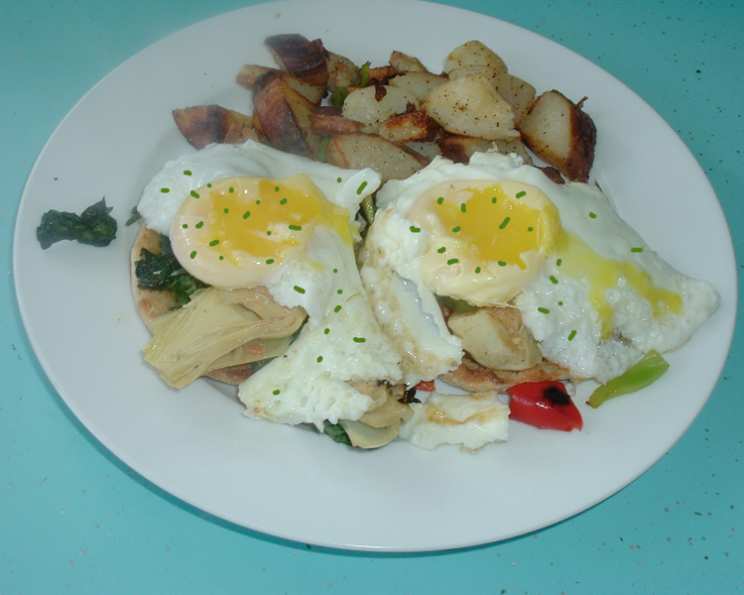
Spanish Breakfast Eggs: A Sunny Start to Your Day
The memory still makes me smile: a tiny, sun-drenched kitchen in Barcelona, the scent of sizzling garlic and ripe tomatoes filling the air. My host, a whirlwind of energy named Isabella, was expertly flipping eggs while regaling me with tales of her family’s history. These weren’t just any eggs; they were golden yolks nestled atop a bed of vibrant spinach and artichokes, served on crusty, toasted muffins. That simple breakfast, bursting with Mediterranean flavors, captured the essence of Spanish hospitality and remains one of my most cherished culinary memories.
Recipe Overview
- Prep Time: 10 minutes
- Cook Time: 15 minutes
- Total Time: 25 minutes
- Servings: 6
- Dietary Type: Vegetarian
Ingredients
- 1 small red pepper, chopped
- 2 tablespoons butter, divided
- 1 (12 ounce) bag Baby Spinach
- 1 (14 ounce) can artichokes, quarters drained
- 3 English muffins, halved and toasted
- ¼ cup shredded romano cheese
- 6 eggs
- 1 tablespoon chopped fresh chives
- ¼ teaspoon salt
- ¼ teaspoon fresh ground pepper
Equipment Needed
- Large skillet
- Non-stick skillet
- Spatula
Instructions
-
Begin by prepping your vegetables. Chop the red pepper into small, even pieces. Drain the artichoke hearts and roughly chop them into smaller, manageable pieces. Have the baby spinach ready to go.
-
In a large skillet, melt 1 tablespoon of butter over medium heat. Add the chopped red pepper and cook, stirring frequently, for about 3 minutes, until the pepper begins to soften.
-
Add the baby spinach and drained artichoke hearts to the skillet with the peppers. Cook, stirring occasionally, for approximately 4 minutes, until the spinach wilts and the artichokes are heated through. This mixture will form the base for your breakfast creation.
-
While the vegetables are cooking, prepare the English muffins. Halve them and toast them until golden brown and slightly crispy.
-
Once the spinach and artichoke mixture is ready, divide it evenly among the toasted English muffin halves. Spread it out, creating a nest for the fried egg that will follow.
-
Now, for the star of the show: the eggs. In a non-stick skillet, melt the remaining 1 tablespoon of butter over medium heat. Crack the eggs carefully into the skillet, ensuring they don’t break.
-
Fry the eggs to your desired level of doneness. For runny yolks, cook for about 3-4 minutes. If you prefer firmer yolks, cook for a few minutes longer. Season the eggs with salt and pepper while they are cooking.
-
As the eggs are frying, chop the fresh chives.
-
Once the eggs are cooked to your liking, sprinkle them with the chopped fresh chives.
-
Carefully place each fried egg on top of the spinach and artichoke mixture on the English muffins.
-
Finally, sprinkle the shredded romano cheese over the top of each breakfast creation. Serve immediately and enjoy the symphony of flavors.
Expert Tips & Tricks
- For an extra layer of flavor, consider adding a pinch of smoked paprika to the spinach and artichoke mixture while it’s cooking.
- To prevent the English muffins from getting soggy, you can lightly brush them with olive oil before toasting.
- If you prefer a richer flavor, you can use Parmesan cheese instead of Romano.
- If you are cooking for a crowd, you can prepare the spinach and artichoke mixture ahead of time and simply reheat it when you’re ready to assemble the breakfast.
- For easier egg frying, crack each egg into a small bowl before gently sliding it into the pan. This can help prevent shell fragments from getting into the pan.
Serving & Storage Suggestions
These Spanish Breakfast Eggs are best served immediately, while the eggs are still warm and the muffins are crispy. The vibrant colors of the vegetables and the golden yolk of the egg make for an appealing presentation.
If you happen to have leftovers, they can be stored in the refrigerator for up to 24 hours. However, keep in mind that the English muffins may become soggy during storage. To reheat, you can microwave the breakfast eggs for a short time or bake them in a preheated oven at 350°F (175°C) until heated through. Microwaving is quicker, but the oven will help retain some crispness. While freezing is possible, it’s not recommended as the texture of the eggs and spinach will likely change.
Nutritional Information
| Nutrient | Amount per Serving | % Daily Value |
|---|---|---|
| Calories | 232.5 kcal | N/A |
| Calories from Fat | 93 g | 40% |
| Total Fat | 10.4 g | 16% |
| Saturated Fat | 4.9 g | 24% |
| Cholesterol | 199.9 mg | 66% |
| Sodium | 455.5 mg | 18% |
| Total Carbohydrate | 23 g | 7% |
| Dietary Fiber | 6.1 g | 24% |
| Sugars | 2.6 g | N/A |
| Protein | 13.9 g | 27% |
Variations & Substitutions
- Gluten-Free: Substitute the English muffins with gluten-free English muffins or toast gluten-free bread instead.
- Dairy-Free: Omit the Romano cheese or use a dairy-free cheese alternative. You can also use olive oil instead of butter.
- Spicy Kick: Add a pinch of red pepper flakes to the spinach and artichoke mixture for a little heat.
- Mediterranean Twist: Add a few Kalamata olives, chopped sun-dried tomatoes, or crumbled feta cheese for a more pronounced Mediterranean flavor.
- Vegetable Variations: Feel free to experiment with other vegetables. Mushrooms, zucchini, or bell peppers would all work well in this recipe.
FAQs (Frequently Asked Questions)
Q: Can I use frozen spinach instead of fresh spinach?
A: Yes, you can use frozen spinach. Be sure to thaw it completely and squeeze out any excess water before adding it to the skillet.
Q: Can I make this recipe ahead of time?
A: You can prepare the spinach and artichoke mixture ahead of time and store it in the refrigerator. However, it’s best to fry the eggs and assemble the breakfast just before serving.
Q: What if I don’t have Romano cheese?
A: You can substitute Romano cheese with Parmesan cheese or any other hard, aged cheese.
Q: Can I use olive oil instead of butter?
A: Yes, you can use olive oil instead of butter. This will give the dish a slightly different flavor profile.
Q: How do I prevent the eggs from sticking to the skillet?
A: Using a non-stick skillet is crucial. Also, make sure the skillet is properly heated before adding the butter and eggs. Don’t overcrowd the pan, and use a spatula to gently loosen the edges of the eggs as they cook.
Final Thoughts
These Spanish Breakfast Eggs are more than just a meal; they’re an invitation to embrace the joy of simple, flavorful cooking. The vibrant colors, fresh ingredients, and satisfying combination of textures make this a breakfast that’s sure to brighten your day. I urge you to try this recipe and bring a little sunshine to your kitchen. Experiment with different variations, share it with loved ones, and let the flavors transport you to a sun-drenched corner of Spain. ¡Buen provecho!