
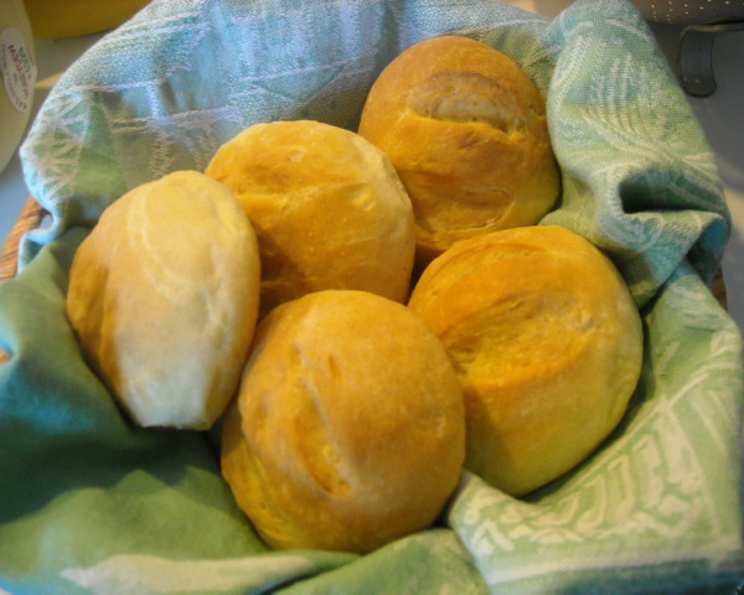
Spanish Crusty Bread Rolls: A Taste of the Iberian Sun
The memory is still so vivid. I was backpacking through Spain, a wide-eyed culinary student, utterly bewitched by the simple elegance of Spanish cuisine. Every morning, I’d wander down to the local panadería in Seville, the air thick with the intoxicating aroma of freshly baked bread. The baker, a stout man with flour dusting his apron, would hand me a warm, crusty roll, its surface glistening with olive oil. That first bite – the satisfying crunch, the soft, chewy interior, the subtle tang of fermentation – was a revelation. It was more than just bread; it was a taste of Spain, a symbol of community, a simple pleasure that I’ve been chasing ever since. I’ve worked for years to recreate those flavors, and this recipe comes closest to that perfect taste of the Iberian sun.
Recipe Overview
- Prep Time: 30 minutes
- Cook Time: 30 minutes
- Total Time: 1 hour
- Servings: 6
- Yields: 10-12 rolls
- Dietary Type: Vegetarian
Ingredients
- 1 – 1 ½ tablespoons of bread yeast
- 7 cups white bread flour
- 3 cups warm water
- 2 teaspoons salt
- ¼ cup extra virgin olive oil
Equipment Needed
- Large mixing bowl
- Measuring cups and spoons
- Baking sheet(s)
- Damp tea towel/cloth
Instructions
-
Begin by activating the yeast. In a small bowl, mix 1 to 1 ½ tablespoons of bread yeast with 3 cups of warm water. Stir gently and let it sit in a warm place for about 10 minutes. You’ll know the yeast is active when it becomes foamy on top. If it doesn’t foam, your yeast may be old and need replacing.
-
While the yeast is activating, prepare the dry ingredients. In a large mixing bowl, combine 7 cups of white bread flour and 2 teaspoons of salt. Sift the ingredients together to ensure even distribution. This also helps to aerate the flour, resulting in a lighter bread.
-
Create a well in the center of the dry ingredients. Pour in ¼ cup of extra virgin olive oil. Using your fingertips, gently mix the olive oil into the flour until it resembles coarse crumbs.
-
Slowly pour in the activated yeast mixture into the flour mixture. Begin working the dough with your hands, gradually incorporating the flour into the liquid. Continue mixing until a firm dough forms. If the dough is too sticky, add a little more flour, one tablespoon at a time. If it’s too dry, add a little more water, one tablespoon at a time.
-
Turn the dough out onto a lightly floured surface. Knead the dough for 8-10 minutes until it becomes firm and elastic. Kneading is crucial for developing the gluten, which gives the bread its structure. If the dough sticks to the surface, add a little more flour.
-
Grease a large bowl with a little olive oil. Place the kneaded dough into the greased bowl, turning it to coat all sides. Cover the bowl with a damp tea towel or cloth and set it in a warm place to rise until the dough has doubled in volume. This process usually takes about 1 to 1.5 hours, depending on the temperature of your kitchen.
-
Once the dough has doubled in size, remove it from the bowl and place it on a floured surface. Knead it again for a minute or two to knock back the air pockets, until the dough feels smooth. This helps to even out the texture of the bread.
-
Return the dough to the covered bowl and let it rest for another 10-15 minutes. This allows the gluten to relax, making it easier to shape the rolls.
-
Cut the dough as desired to form rolls or balls. The recipe makes about 10-12 rolls, depending on the size you prefer. Place the shaped rolls on greased baking sheet(s), leaving some space between them to allow for expansion during baking.
-
Using a sharp knife or razor blade, cut slits in the top of each roll as desired. This allows the bread to expand evenly during baking and also adds a decorative touch.
-
Let the bread rise on the baking sheet for about 30 minutes. This final proofing period allows the rolls to puff up and become lighter.
-
Place the baking sheet(s) in a very hot oven preheated to 450 degrees F (232 degrees C). Bake for 30 minutes, or until the tops of the rolls become a deep golden brown and sound hollow when tapped on the bottom. Keep a close eye on them during the last few minutes of baking to prevent burning.
-
Remove the bread from the baking sheet and allow it to cool on a wire rack. This prevents the bottoms of the rolls from becoming soggy.
Expert Tips & Tricks
- For an extra crispy crust, you can spray the oven with water a couple of times during the first 10 minutes of baking. This creates steam, which helps to develop a shiny, crackly crust.
- If your oven tends to bake unevenly, rotate the baking sheet halfway through the baking time to ensure even browning.
- Don’t over-knead the dough, as this can result in a tough bread.
- The rising time may vary depending on the temperature of your kitchen. In a colder environment, it may take longer for the dough to rise.
- If you don’t have bread flour, you can use all-purpose flour, but the bread may not be quite as chewy.
Serving & Storage Suggestions
Serve these crusty bread rolls warm with a drizzle of olive oil and a sprinkle of sea salt. They’re perfect for dipping in soups or stews, or for making sandwiches. In Spain, they are essential for breakfast with butter, jam, cheese or ham.
Store leftover rolls in an airtight container at room temperature for up to 2 days. For longer storage, you can freeze them for up to 2 months. To reheat, simply wrap the frozen rolls in foil and bake in a preheated oven at 350 degrees F (175 degrees C) for about 10-15 minutes, or until warmed through.
Nutritional Information
| Nutrient | Amount per Serving | % Daily Value |
|---|---|---|
| Calories | 617 kcal | N/A |
| Total Fat | 10.6g | 16% |
| Saturated Fat | 1.5g | 7% |
| Cholesterol | 0mg | 0% |
| Sodium | 783mg | 32% |
| Total Carbohydrate | 112g | 37% |
| Dietary Fiber | 4.5g | 17% |
| Sugars | 0.4g | 1% |
| Protein | 16g | 31% |
Variations & Substitutions
- For a whole wheat version, substitute half of the white bread flour with whole wheat flour.
- Add herbs such as rosemary, thyme, or oregano to the dough for extra flavor.
- For a slightly sweet bread, add a tablespoon of honey or sugar to the dough.
- Substitute the olive oil with another vegetable oil, such as sunflower oil or canola oil.
FAQs (Frequently Asked Questions)
Q: Can I use instant yeast instead of active dry yeast?
A: Yes, you can use instant yeast. You can mix instant yeast directly with the flour without proofing it first.
Q: Why is my dough not rising?
A: Several factors can prevent dough from rising, including using old or inactive yeast, not using warm enough water, or placing the dough in a cold environment.
Q: How do I know when the bread is done?
A: The bread is done when the crust is golden brown and the bottom sounds hollow when tapped. You can also use a thermometer to check the internal temperature, which should be around 200-210 degrees F (93-99 degrees C).
Q: Can I make the dough ahead of time?
A: Yes, you can make the dough ahead of time. After kneading, place the dough in a greased bowl, cover it, and refrigerate it for up to 24 hours. Let the dough come to room temperature before shaping and baking.
Q: Why are my rolls dense and heavy?
A: This could be due to not kneading the dough enough or not allowing it to rise sufficiently. Make sure to knead the dough until it becomes smooth and elastic and allow it to double in size during the first rise.
Final Thoughts
These Spanish crusty bread rolls are a simple yet satisfying taste of Spain. With their crisp crust and soft, chewy interior, they’re perfect for any occasion. So gather your ingredients, put on some Gypsy Kings, and transport yourself to the sun-drenched streets of Seville. Don’t be afraid to experiment with variations and make this recipe your own. And most importantly, share your creations with friends and family – because good bread is always best enjoyed together!