
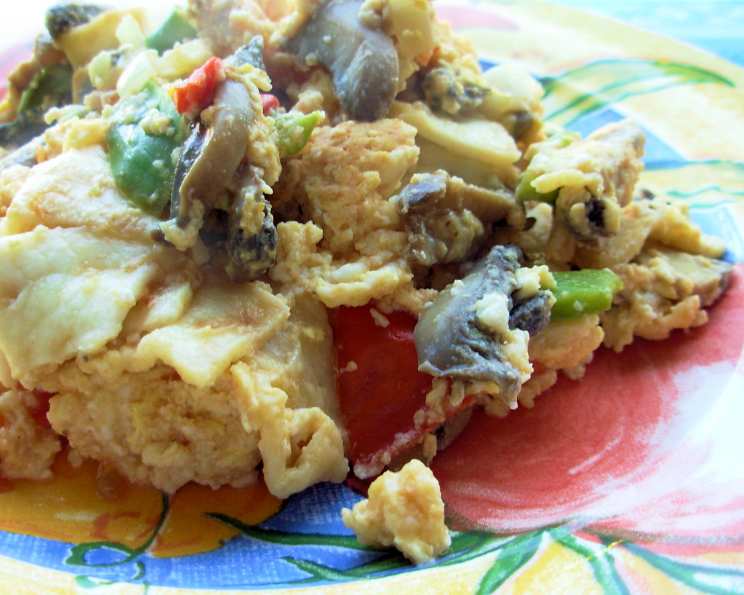
Spanish Eggs: A Savory Scramble with Sunshine
My first encounter with Spanish Eggs was at a bustling little tapas bar in Madrid, tucked away on a side street overflowing with the sounds of laughter and clinking glasses. The aroma of garlic, tomatoes, and sizzling eggs filled the air, a symphony of scents that instantly transported me to a place of pure culinary joy. I remember the vibrant colors of the dish – the deep red of the tomatoes, the bright green of the peppers, all nestled around the golden, perfectly cooked eggs. One bite, and I was hooked; a simple dish elevated by fresh ingredients and the warmth of Spanish hospitality.
Recipe Overview
- Prep Time: 15 minutes
- Cook Time: 25 minutes
- Total Time: 40 minutes
- Servings: 4
- Yield: 1 large skillet
- Dietary Type: Gluten-Free (depending on tortilla type)
Ingredients
- 2 tortillas, cut into half inch squares
- 2 tablespoons oil
- 1 garlic clove, minced
- 1 onion, chopped
- 1 green pepper, chopped
- 1 cup sliced mushrooms
- 6 eggs, beaten
- 2 large tomatoes, chopped
- 1 cup grated cheese (Monterey Jack, Cheddar, or a Mexican blend work well)
- 2 teaspoons salsa
- Salt and pepper, to taste
Equipment Needed
- Large frying pan or skillet
- Cutting board
- Knife
- Mixing bowl
- Spatula or wooden spoon
Instructions
-
Prepare the vegetables: Begin by chopping the onion and green pepper. Mince the garlic clove. Cut the tomatoes into bite-sized pieces. Slice the mushrooms. Cut the tortillas into small, half-inch squares. Having everything prepped and ready to go will make the cooking process smoother.
-
Sauté the aromatics and vegetables: Heat the oil in a large frying pan or skillet over medium heat. Add the tortilla squares, minced garlic, chopped onion, chopped green pepper, and sliced mushrooms. Sauté, stirring occasionally, until the vegetables are tender and the tortillas begin to lightly brown and crisp up. This usually takes about 8-10 minutes. The aroma at this stage is incredible!
-
Incorporate the eggs: Reduce the heat to low-medium. Pour the beaten eggs into the pan, ensuring they evenly coat the vegetables and tortillas. Stir frequently to scramble the eggs, preventing them from sticking to the bottom of the pan.
-
Add the tomatoes, salsa, and cheese: As the eggs begin to set but are still slightly moist, add the chopped tomatoes and salsa. Continue to cook, stirring gently, until the eggs are cooked through, but still soft. This prevents them from becoming rubbery.
-
Melt the cheese: Sprinkle the grated cheese evenly over the top of the egg mixture. Cover the pan with a lid or a large plate. Cook, stirring occasionally, until the cheese has melted and is bubbly. This usually takes about 2-3 minutes. Keep a close eye on it to prevent burning.
-
Season and serve: Season the Spanish eggs to taste with salt and pepper. Be mindful of the salt content in the cheese and salsa, and adjust accordingly. Remove from heat and serve immediately.
Expert Tips & Tricks
- Crispy Tortillas: For extra crispy tortilla squares, you can lightly toast them in a dry pan before adding them to the skillet. This will give them a nice crunch that holds up well in the egg mixture.
- Spice It Up: Add a pinch of red pepper flakes or a dash of hot sauce for a spicy kick.
- Vegetable Variations: Feel free to experiment with different vegetables. Diced bell peppers of various colors, zucchini, or spinach would all be delicious additions.
- Cheese Choice: Use a cheese that melts well, such as Monterey Jack, cheddar, or a Mexican blend. You can also use queso fresco for a more authentic Spanish flavor.
- Preventing Sticking: Use a non-stick skillet or add a little extra oil to prevent the eggs from sticking.
- Egg Texture: If you prefer firmer eggs, cook them a little longer. For softer eggs, remove the pan from the heat just before they appear fully cooked, as they will continue to cook from the residual heat.
- Make Ahead Tip: While best served immediately, you can chop all the vegetables ahead of time and store them in the refrigerator until ready to cook.
Serving & Storage Suggestions
Serve your Spanish Eggs immediately while they are hot and the cheese is melted and gooey. Garnish with fresh cilantro or a dollop of sour cream or Greek yogurt for added flavor and visual appeal. This dish is delicious on its own or served with a side of warm tortillas or toast.
Leftovers can be stored in an airtight container in the refrigerator for up to 3 days. To reheat, gently warm in a skillet over low heat or microwave in short intervals, stirring occasionally, until heated through. Reheating in the microwave may alter the texture of the eggs slightly.
Nutritional Information
| Nutrient | Amount per Serving | % Daily Value |
|---|---|---|
| Calories | 380 kcal | 19% |
| Total Fat | 25g | 38% |
| Saturated Fat | 10g | 50% |
| Cholesterol | 300mg | 100% |
| Sodium | 550mg | 23% |
| Total Carbohydrate | 20g | 7% |
| Dietary Fiber | 3g | 12% |
| Sugars | 5g | N/A |
| Protein | 20g | 40% |
Note: Nutritional information is an estimate and may vary based on specific ingredients and portion sizes.
Variations & Substitutions
- Vegetarian Option: This recipe is already vegetarian.
- Vegan Option: Substitute the eggs with a plant-based egg alternative and use vegan cheese.
- Gluten-Free: Use gluten-free tortillas.
- Dairy-Free: Omit the cheese or use a dairy-free cheese substitute.
- Meat Lovers: Add cooked chorizo, bacon, or ham to the skillet along with the vegetables for a heartier dish.
- Seasonal Twist: In the fall, add roasted butternut squash or sweet potatoes for a touch of sweetness. In the summer, add fresh corn kernels or zucchini.
FAQs (Frequently Asked Questions)
Q: Can I use frozen vegetables in this recipe?
A: While fresh vegetables are preferred for the best flavor and texture, you can use frozen vegetables if needed. Just make sure to thaw them completely and drain any excess water before adding them to the skillet.
Q: How do I prevent the eggs from becoming rubbery?
A: Avoid overcooking the eggs. Cook them over low-medium heat, stirring frequently, until they are just set but still slightly moist. They will continue to cook from the residual heat.
Q: Can I make this recipe ahead of time?
A: While best served immediately, you can chop all the vegetables ahead of time and store them in the refrigerator. However, the finished dish is best enjoyed fresh.
Q: What kind of cheese works best in this recipe?
A: A cheese that melts well, such as Monterey Jack, cheddar, or a Mexican blend, works best. You can also use queso fresco for a more authentic Spanish flavor.
Q: Can I add different spices to this dish?
A: Absolutely! Feel free to experiment with different spices such as smoked paprika, cumin, or chili powder to add more depth of flavor.
Final Thoughts
I hope this recipe for Spanish Eggs brings as much joy to your kitchen as it has to mine. It’s a simple, versatile dish that’s perfect for breakfast, brunch, lunch, or even a light dinner. Don’t be afraid to experiment with different ingredients and make it your own. Gather your family and friends, share this delicious creation, and create memories that will last a lifetime. ¡Buen provecho!