
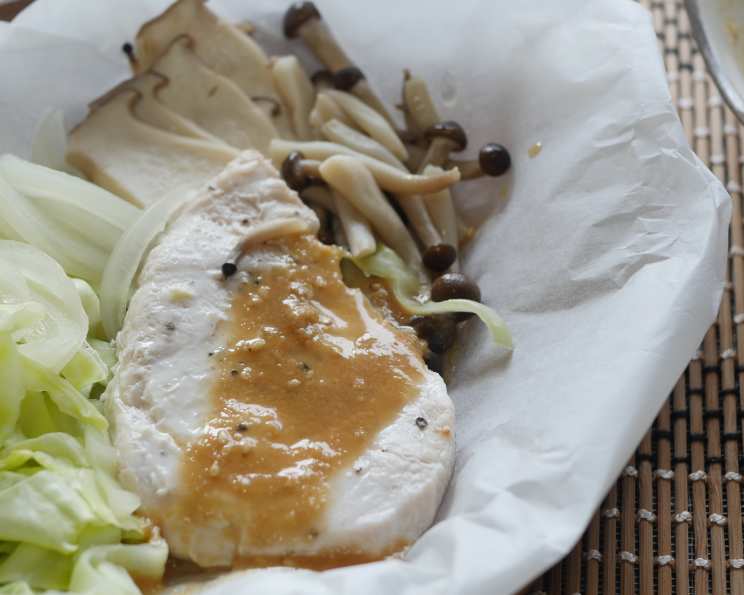
Spanish Mackerel in Japanese Sesame Sauce
The scent of toasted sesame still instantly transports me back to a tiny Tokyo eatery, tucked away in a vibrant backstreet. Rain was drumming on the awning outside as I slurped down perfectly cooked mackerel, its delicate flavor amplified by a rich, nutty sesame sauce. The warmth of the meal, the cozy atmosphere, and the genuine hospitality – it was a moment of pure culinary bliss that I’ve tried to recapture in my own kitchen ever since. This recipe is my homage to that memory, a simple yet satisfying dish that brings a touch of Tokyo to your table.
Recipe Overview
- Prep Time: 10 minutes
- Cook Time: 4 minutes
- Resting Time: 1-2 minutes
- Total Time: 15 minutes
- Servings: 2
- Dietary Type: Pescatarian
Ingredients
- 150 g Spanish mackerel fillet (sawara)
- 1 pinch salt
- 1 pinch pepper
- 1/4 yellow onion
- 2 cabbage leaves
- 50 g shimeji mushrooms
- 50 g eringi mushrooms
- 2 tablespoons sake
- 1 tablespoon ponzu sauce
- 1 tablespoon sesame oil
- 1 tablespoon mirin
- 1/2 tablespoon vinegar
- 2 tablespoons sesame paste (neri goma)
- 1 tablespoon miso
- 1 teaspoon sugar
- 1/2 teaspoon sesame seeds
Equipment Needed
- Microwave-safe dish
- Parchment paper
- Small bowl
- Knife
- Cutting board
Instructions
-
Begin by preparing the Spanish mackerel. Season the fish fillets generously with salt and pepper on both sides. This simple step is crucial for enhancing the natural flavor of the fish.
-
Now, prepare the vegetables. Remove the hard center part of the cabbage and slice the leaves into thin shreds. Thinly slice the yellow onion. Remove the root part of the shimeji mushrooms and separate them into individual pieces. Slice the eringi mushrooms lengthwise into several pieces. Varying the size and shape of the vegetables will add visual appeal and textural interest to the final dish.
-
Prepare the flavorful sesame sauce. In a small bowl, combine the sake, ponzu sauce, sesame oil, mirin, vinegar, sesame paste (neri goma), miso, sugar, and sesame seeds. Mix well until all the ingredients are thoroughly combined and the sauce is smooth. If you can’t find neri goma, you can substitute it with tahini sauce. The miso adds a deep umami flavor, while the ponzu provides a citrusy tang.
-
Cut out a piece of parchment paper approximately 30cm x 30cm. Place the parchment paper on top of a microwave-safe dish. This will create a convenient cooking pouch.
-
Arrange half of the cabbage, onion, and mushrooms on one side of the parchment paper. Place one piece of the seasoned Spanish mackerel fillet on top of the vegetables. Repeat this process with the remaining half of the vegetables and the other fillet.
-
Carefully wrap the parchment paper to enclose the fish and vegetables completely, creating a sealed pouch. This will help to steam the ingredients evenly and retain moisture.
-
Cook the pouch in the microwave for 4 minutes using a power level of 600W. The cooking time may vary depending on your microwave, so it’s important to monitor the fish for doneness. Cook the second batch of fish and vegetables in the same manner.
-
After the microwave has stopped, keep the parchment paper closed for an additional 1-2 minutes. This allows the residual steam to continue cooking the fish and vegetables, ensuring they are perfectly cooked through.
-
Gently open the parchment paper pouch, being careful to avoid the escaping steam. Pour the prepared sesame sauce generously over the fish and vegetables.
-
Serve immediately and enjoy the harmonious blend of flavors.
Expert Tips & Tricks
- For a deeper sesame flavor, lightly toast the sesame seeds in a dry pan before adding them to the sauce. This will bring out their natural aroma and nuttiness.
- To prevent the fish from overcooking in the microwave, ensure that the parchment paper pouch is tightly sealed. This will trap the steam and cook the fish evenly.
- If you prefer a richer sauce, you can add a small amount of Japanese mayonnaise to the sesame mixture.
- Feel free to experiment with other vegetables, such as bok choy, snow peas, or carrots. Adjust the cooking time accordingly.
- For a spicier kick, add a pinch of red pepper flakes to the sesame sauce.
- If you don’t have a microwave, you can cook the fish and vegetables in a steamer basket over boiling water. Steam for approximately 8-10 minutes, or until the fish is cooked through.
Serving & Storage Suggestions
Serve the Spanish mackerel in Japanese sesame sauce immediately while it’s hot and flavorful. The dish pairs perfectly with a side of steamed rice or quinoa to soak up the delicious sauce. Garnish with extra sesame seeds and a sprig of fresh cilantro or scallions for an added touch of freshness.
Leftovers can be stored in an airtight container in the refrigerator for up to 2 days. When reheating, it’s best to gently warm the fish in a pan over low heat or in the microwave. Avoid overheating, as this can dry out the fish.
This dish is not recommended for freezing, as the texture of the fish and vegetables may change upon thawing.
Nutritional Information
| Nutrient | Amount per Serving | % Daily Value |
|---|---|---|
| Calories | 237.7 kcal | – |
| Total Fat | 12.6 g | 19% |
| Saturated Fat | 2.5 g | 12% |
| Cholesterol | 57 mg | 19% |
| Sodium | 482.6 mg | 20% |
| Total Carbohydrate | 9.7 g | 3% |
| Dietary Fiber | 1.8 g | 7% |
| Sugars | 4.9 g | – |
| Protein | 17.4 g | 34% |
Variations & Substitutions
- For a gluten-free version, ensure that the ponzu sauce and miso are gluten-free. Tamari can be used as a substitute for soy sauce in some ponzu recipes.
- If you don’t have Spanish mackerel, you can substitute it with other firm-fleshed fish such as salmon, cod, or sea bass.
- For a vegetarian option, replace the fish with tofu or tempeh. Marinate the tofu or tempeh in a mixture of sake, soy sauce, and ginger before cooking.
- Experiment with different types of mushrooms, such as shiitake, maitake, or oyster mushrooms.
- Add a touch of heat by incorporating gochujang (Korean chili paste) or sriracha into the sesame sauce.
- For a richer flavor, use roasted sesame oil instead of regular sesame oil.
FAQs (Frequently Asked Questions)
Q: Can I use frozen fish for this recipe?
A: Yes, you can use frozen fish, but make sure to thaw it completely before cooking. Pat the fish dry with paper towels to remove any excess moisture.
Q: Can I prepare the sesame sauce in advance?
A: Absolutely! The sesame sauce can be prepared up to 2 days in advance and stored in an airtight container in the refrigerator. This will save you time on the day of cooking.
Q: How do I know when the fish is cooked through?
A: The fish is cooked through when it flakes easily with a fork and is no longer translucent in the center. Be careful not to overcook the fish, as it will become dry.
Q: Can I use a different type of cooking method instead of the microwave?
A: Yes, you can steam the fish in a steamer basket over boiling water for approximately 8-10 minutes, or until it is cooked through. You can also bake it in the oven at 375°F (190°C) for about 12-15 minutes.
Q: What can I serve with this dish?
A: This dish pairs well with steamed rice, quinoa, or noodles. You can also serve it with a side of pickled vegetables or a simple salad.
Final Thoughts
This recipe for Spanish Mackerel in Japanese Sesame Sauce is a testament to the fact that simple ingredients, when combined with care and attention, can create extraordinary flavors. I urge you to try this recipe and experience the delightful fusion of Japanese and Spanish culinary traditions. Feel free to adapt it to your own preferences and share your feedback – I’m always eager to hear about your culinary adventures! Consider pairing it with a chilled glass of sake or a crisp white wine for the perfect complement. Happy cooking!