
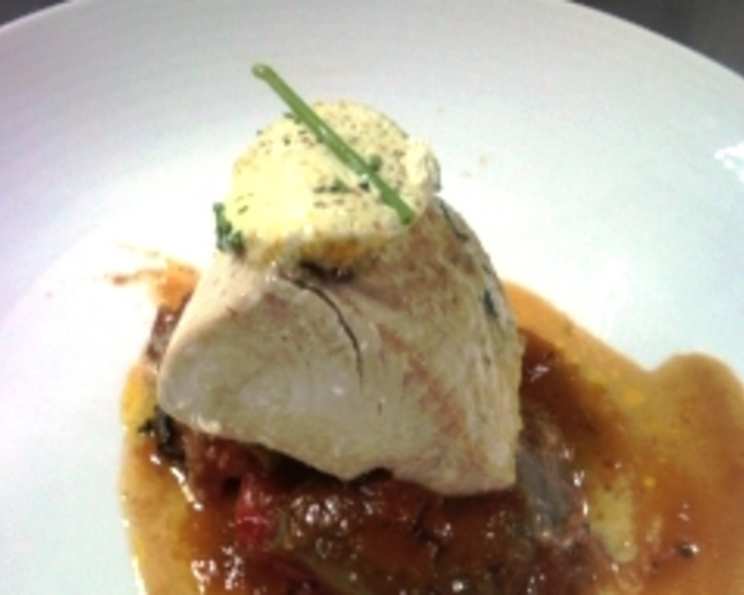
Spanish Mackerel With Almond Caper Butter: A Culinary Escape
The scent of the sea, mingled with the nutty aroma of toasted almonds and the bright zest of lemon, instantly transports me back to a sun-drenched afternoon on the Spanish coast. I was a young culinary student then, mesmerized by the simplicity and vibrancy of the local cuisine. A fisherman, with weathered hands and a kind smile, shared his family’s secret recipe for Spanish mackerel, and it became a dish I’ve cherished ever since. This recipe is my humble attempt to recreate that magical experience, bringing a taste of Spain to your table.
Recipe Overview
- Prep Time: 30 minutes
- Cook Time: 45 minutes
- Total Time: 1 hour 15 minutes
- Servings: 4
- Dietary Type: Pescatarian
Ingredients
- For the Almond Caper Butter:
- 120 g unsalted butter, softened at room temperature
- 20 g capers, drained
- 20 g almonds, shelled
- 15 ml fresh lemon juice
- 5 g fresh parsley, chopped
- For the Ratatouille:
- 60 g eggplants, sliced
- 60 g zucchini, sliced
- 60 g red bell peppers, cut into squares
- 60 g green bell peppers, cut into squares
- 3 pieces garlic cloves, finely chopped
- 80 g onions, finely chopped
- 20 g mushrooms, washed and chopped
- 30 ml olive oil
- 100 g tomatoes, peeled
- 5 g fresh basil, chopped
- 5 g fresh oregano, chopped
- For the Spanish Mackerel:
- 480 g Spanish mackerel, filleted
- 30 ml olive oil
- 1/4 lemon, juice of
- Salt, to taste
Equipment Needed
- Small sauté pan
- Food processor
- Mixing bowl
- Cling wrap
- Colander
- Sauté pan
- Sauce pan
- Small baking pan
- Parchment or wax paper
Instructions
- Toast the Almonds: In a small sauté pan, dry roast the almonds over low heat for about 3-5 minutes until golden. Watch them carefully, as they can burn quickly. Remove from heat and let cool completely.
- Pulse the Almonds: Once cooled, pulse the toasted almonds in a food processor until they reach a smaller, uniform size, almost like coarse sand. Be careful not to over-process them into almond butter.
- Whip the Butter: Place the softened butter in a mixing bowl and whip until pale and fluffy. This will incorporate air and create a lighter, more delicate butter.
- Combine the Ingredients: Chop the drained capers into a fine mince and add them to the bowl with the pulsed almonds, chopped fresh parsley, and fresh lemon juice.
- Mix Thoroughly: Stir all the ingredients together with a spatula or spoon until well combined. Season to taste with salt.
- Form the Butter Log: Roll out a sheet of cling wrap on a flat surface.
- Spoon the Butter Mixture: Spoon the almond caper butter mixture onto the cling wrap in a long line.
- Wrap and Roll: Cover the butter with the cling wrap and gently roll it into a log about an inch and a half in diameter.
- Secure the Ends: Secure the ends of the cling wrap by tying them in a knot.
- Chill the Butter Log: Refrigerate the butter log for about an hour, or until firm. This will make it easier to slice later.
- Prepare the Eggplant: In a colander, place the sliced eggplant and toss with about a tablespoon of salt. Let stand for 30 minutes to draw out excess moisture. This helps prevent the eggplant from becoming soggy when cooked. Drain thoroughly.
- Pan-fry the Vegetables: In a sauté pan, drizzle some olive oil and heat over a medium flame.
- Cook the Vegetables: Pan fry the eggplant, zucchini, red bell peppers, and green bell peppers until evenly toasted on all sides, about 3-5 minutes. Let drain over kitchen towels to remove excess oil.
- Sauté the Aromatics: In a sauce pan, add the onions and garlic and toss until tender, about 3-5 minutes.
- Simmer the Tomatoes: Add the peeled tomatoes to the saucepan and bring to a boil. Lower the heat and let simmer for 30-45 minutes, stirring occasionally. This slowly brings out the natural fruit sugars and creates a richer sauce.
- Add the Herbs: Add the fresh basil and fresh oregano when the tomatoes have reduced by half. Season to taste with salt.
- Assemble the Ratatouille: Ladle the tomato sauce into a small baking pan and spread it evenly.
- Layer the Vegetables: Now layer the pan-fried vegetables in rows over the tomato sauce.
- Bake the Ratatouille: Cover the baking pan with parchment or wax paper and bake in a preheated oven at 200°C (392°F) for 10-15 minutes.
- Prepare the Mackerel: Place the mackerel fillets in a bowl. Drizzle with olive oil and fresh lemon juice. Season with salt and pepper.
- Sear the Mackerel: Heat a sauté pan over medium heat. Add a little olive oil.
- Cook the Mackerel: Lay the fish in the pan, skin-side down if applicable, and lower the heat. Sear each side for about one minute. Spanish mackerel cooks quickly, so keep a close eye on it. Overcooking will make it tough.
- Plate the Dish: Lay the ratatouille neatly in the center of the plate. Add a bit of the tomato sauce.
- Top with Mackerel and Butter: Place the seared mackerel on top of the ratatouille. Top with a slice of the chilled almond caper butter. Garnish with a chive, if desired.
Expert Tips & Tricks
- For a more intense almond flavor, use smoked almonds in the almond caper butter.
- To prevent the ratatouille from becoming too watery, roast the vegetables in the oven instead of pan-frying.
- When searing the mackerel, pat the fillets dry with paper towels before adding them to the pan. This will help them develop a beautiful crust.
- If you don’t have fresh parsley, dried parsley can be substituted. Use about half the amount of dried parsley as fresh.
- The almond caper butter can be made ahead of time and stored in the refrigerator for up to a week.
- Don’t overcrowd the pan when pan-frying the vegetables. This will lower the temperature of the oil and cause the vegetables to steam instead of sear. Work in batches if necessary.
- If the tomato sauce is too acidic, add a pinch of sugar to balance the flavors.
Serving & Storage Suggestions
Serve this Spanish mackerel dish immediately after cooking for the best flavor and texture. The warmth of the fish melts the almond caper butter perfectly, creating a luscious sauce. Leftovers can be stored in an airtight container in the refrigerator for up to 2 days. Reheat the ratatouille in the oven or microwave, and gently pan-sear the mackerel to warm it through. Avoid overcooking the mackerel during reheating. This dish is best served warm, not hot, to fully appreciate the delicate flavors.
Nutritional Information
| Nutrient | Amount per Serving | % Daily Value |
|---|---|---|
| Calories | 561.8 kcal | N/A |
| Calories from Fat | 433 g | 77% |
| Total Fat | 48.1 g | 74% |
| Saturated Fat | 19.7 g | 98% |
| Cholesterol | 155.7 mg | 51% |
| Sodium | 247.5 mg | 10% |
| Total Carbohydrate | 8.2 g | 2% |
| Dietary Fiber | 3 g | 11% |
| Sugars | 3.8 g | 15% |
| Protein | 26 g | 52% |
Note: Nutritional information is an estimate and may vary based on specific ingredients and cooking methods.
Variations & Substitutions
- For a dairy-free version, substitute the unsalted butter with a plant-based butter alternative.
- Instead of Spanish mackerel, try using other firm-fleshed fish like tuna, swordfish, or sea bass.
- Add a pinch of red pepper flakes to the almond caper butter for a touch of heat.
- Incorporate other vegetables into the ratatouille, such as yellow squash, carrots, or fennel.
- For a gluten-free option, ensure all ingredients, especially the capers, are gluten-free.
- Use different nuts in the butter, like walnuts or pecans, for a unique flavor profile.
FAQs (Frequently Asked Questions)
Q: Can I make the almond caper butter ahead of time?
A: Yes, the almond caper butter can be made up to a week in advance and stored in the refrigerator. This is a great way to save time when preparing the dish.
Q: How do I prevent the mackerel from overcooking?
A: Mackerel cooks very quickly, so it’s important to keep a close eye on it while searing. Sear each side for about one minute, or until the fish is just cooked through. Avoid overcooking, as this will make the fish tough.
Q: Can I use canned tomatoes instead of fresh tomatoes for the ratatouille?
A: Yes, canned diced tomatoes can be used as a substitute for fresh tomatoes. Use about 400g of canned tomatoes and reduce the simmering time slightly.
Q: What is the best way to reheat the leftover ratatouille?
A: The ratatouille can be reheated in the oven, microwave, or on the stovetop. If reheating in the oven, cover the dish with foil to prevent it from drying out.
Q: Can I freeze this dish?
A: While the ratatouille freezes well, freezing the mackerel is not recommended as it can affect the texture of the fish. Therefore, it’s best to enjoy this dish fresh.
Final Thoughts
I sincerely hope this recipe inspires you to embark on a culinary adventure and savor the flavors of Spain. This dish, with its delicate balance of textures and aromas, is a testament to the beauty of simple, fresh ingredients. Don’t be afraid to experiment and personalize the recipe to your liking. And most importantly, enjoy the process of creating something delicious and memorable. Feel free to share your experience and feedback – I’m always eager to learn from fellow food enthusiasts. Consider pairing this dish with a crisp, dry white wine, such as Albariño, for a truly unforgettable meal.