
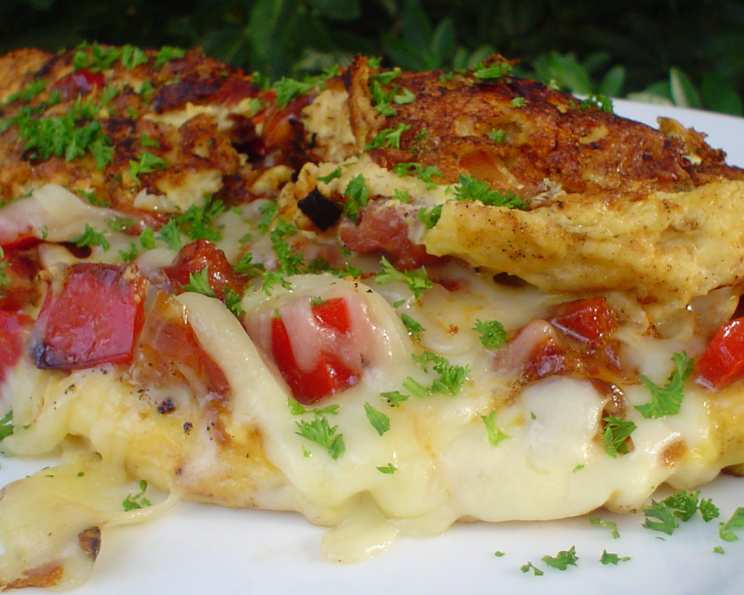
Spanish Omelette: A Taste of Spain in Every Bite
My first encounter with a true Spanish omelette, or tortilla española, wasn’t in a Michelin-starred restaurant, but in a tiny, sun-drenched tapas bar in Seville. The aroma of gently caramelized onions and perfectly cooked potatoes hung in the air, a comforting promise of the deliciousness to come. The slice I was served, a thick wedge of golden goodness, was so simple, yet so incredibly satisfying – a revelation that has stayed with me ever since. From that moment, I knew I had to master this iconic dish.
Recipe Overview
- Prep Time: 15 minutes
- Cook Time: 25 minutes
- Total Time: 40 minutes
- Servings: 2
- Dietary Type: Gluten-Free
Ingredients
- 1 chorizo sausage, diced small
- 1 tablespoon olive oil
- ½ red bell pepper, cut in ½-inch dice
- ¼ cup onion, diced
- 1 garlic clove, minced
- 2 tablespoons sun-dried tomatoes packed in oil, minced
- 3 eggs, beaten with
- 1 tablespoon milk
- ¼ cup mozzarella cheese
Equipment Needed
- Non-stick skillet
- Whisk
- Cutting board
- Knife
Instructions
-
Begin by heating a non-stick skillet over medium heat. This ensures even cooking and prevents the omelette from sticking. A well-seasoned cast iron skillet can also be used, but requires extra attention to prevent sticking.
-
Add the olive oil, bell peppers, and onion to the skillet. Cook until the vegetables have softened, stirring occasionally. This usually takes about 5-7 minutes. The goal is to gently caramelize the vegetables, releasing their natural sweetness.
-
Introduce the garlic and chorizo to the skillet. Continue cooking and stirring for another 2 minutes, allowing the garlic to become fragrant and the chorizo to render some of its flavorful fat. Be careful not to burn the garlic, as it can become bitter.
-
Incorporate the sun-dried tomatoes, stirring to combine all the ingredients. The sun-dried tomatoes add a concentrated burst of umami flavor and a pleasant chewiness to the omelette.
-
Pour the beaten eggs evenly into the skillet. Immediately rotate the pan to distribute the eggs, ensuring they coat the vegetables and chorizo mixture uniformly. This creates a consistent base for the omelette.
-
As the edges of the omelette begin to set, gently lift them with a spatula and tilt the pan, allowing the uncooked liquid egg to run underneath the cooked portions. This ensures even cooking throughout the omelette.
-
Reduce the heat to medium-low and continue to cook the omelette, without stirring, until it is mostly set. This usually takes around 8-10 minutes. The omelette should still be slightly moist in the center. Avoid the temptation to stir the eggs as this will prevent the formation of a solid omelette structure.
-
Once the omelette is mostly set, sprinkle the mozzarella cheese over one half.
-
Carefully fold the other half of the omelette over the cheese, enclosing it completely.
-
Continue cooking for another minute or two, until the cheese is melted and the omelette is heated through.
-
Gently slide the omelette onto a serving plate.
-
The omelette can be garnished with chopped cilantro and sour cream, if desired.
Expert Tips & Tricks
- Achieving the Perfect Texture: The key to a great Spanish omelette is the texture – it should be slightly runny in the center. Don’t overcook it!
- Ingredient Preparation: Dicing the vegetables uniformly ensures they cook evenly.
- Adding Extra Flavor: Consider adding a pinch of smoked paprika to the eggs for a deeper, more complex flavor.
- Make-Ahead Tip: The vegetable and chorizo mixture can be prepared ahead of time and stored in the refrigerator. This significantly reduces prep time when you’re ready to make the omelette.
- Dealing with a Sticking Omelette: If your omelette starts to stick, add a small amount of olive oil to the pan and gently loosen the edges with a spatula.
Serving & Storage Suggestions
Serve the Spanish omelette warm, either as a main course for breakfast, brunch, or lunch, or as a tapas dish. It pairs beautifully with a side of crusty bread and a simple green salad.
Leftover omelette can be stored in an airtight container in the refrigerator for up to 3 days. Reheat gently in a skillet or microwave until heated through. While it’s best enjoyed fresh, the flavors will meld together even more overnight.
The omelette is best served fresh, but it can be frozen. Wrap it tightly in plastic wrap, then aluminum foil, and freeze for up to 1 month. Thaw overnight in the refrigerator before reheating.
Nutritional Information
| Nutrient | Amount per Serving | % Daily Value |
|---|---|---|
| Calories | 420 kcal | 21% |
| Total Fat | 32g | 49% |
| Saturated Fat | 12g | 60% |
| Cholesterol | 380mg | 127% |
| Sodium | 650mg | 27% |
| Total Carbohydrate | 9g | 3% |
| Dietary Fiber | 2g | 7% |
| Sugars | 4g | |
| Protein | 24g | 48% |
Variations & Substitutions
- Vegetarian Option: Omit the chorizo and add more vegetables, such as mushrooms, spinach, or zucchini.
- Spicy Kick: Add a pinch of red pepper flakes or a finely chopped jalapeño pepper to the vegetable mixture.
- Cheese Variations: Substitute the mozzarella cheese with Manchego, Gruyere, or cheddar cheese.
- Herbs: Experiment with different herbs, such as thyme, oregano, or parsley.
- Dairy-Free: Replace the milk with almond milk or another non-dairy alternative, and omit the cheese or substitute with a dairy-free cheese alternative.
FAQs (Frequently Asked Questions)
Q: Can I use regular tomatoes instead of sun-dried tomatoes?
A: Yes, but sun-dried tomatoes add a more intense, concentrated flavor. If using regular tomatoes, dice them and cook them with the other vegetables to reduce their moisture content.
Q: Can I make this omelette ahead of time?
A: The vegetable and chorizo mixture can be prepared ahead of time. However, the omelette is best enjoyed fresh.
Q: How do I prevent the omelette from sticking to the pan?
A: Use a non-stick skillet and ensure it is properly heated before adding the ingredients. You can also add a small amount of olive oil to the pan.
Q: Can I add potatoes to this omelette?
A: Absolutely! Thinly sliced potatoes are a classic addition to Spanish omelettes. Cook them with the onions and peppers until softened before adding the other ingredients.
Q: My omelette is browning too quickly on the bottom. What should I do?
A: Reduce the heat to low and continue cooking. You can also place a lid on the skillet to help cook the top of the omelette.
Final Thoughts
I hope you’re inspired to try this delicious Spanish omelette! It’s a versatile dish that can be adapted to your own tastes and preferences. Don’t be afraid to experiment with different ingredients and flavors. And be sure to share your creations with friends and family – this omelette is best enjoyed in good company. Serve it with a crisp glass of white wine or a refreshing Spanish beer for a truly authentic experience! ¡Buen provecho!