
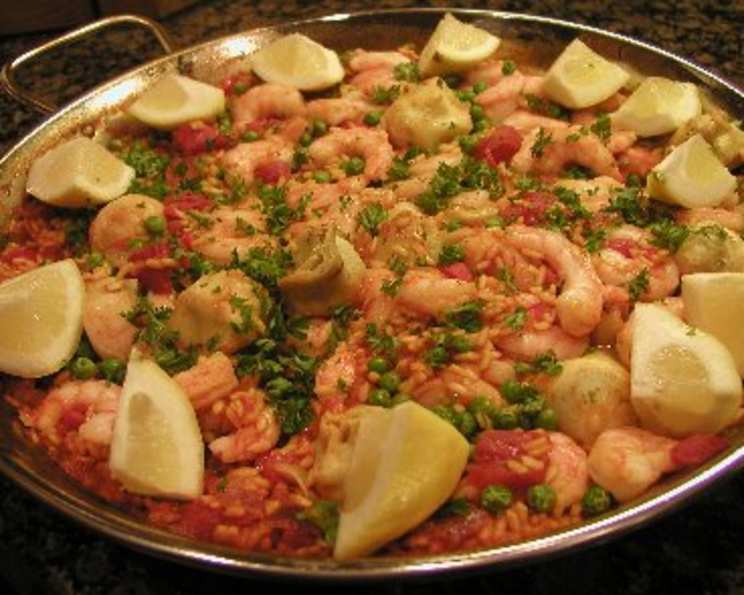
A Taste of Spain: Mastering the Art of Paella
The first time I tasted paella, I was a wide-eyed culinary student backpacking through Valencia. The aroma alone – a heady blend of saffron, seafood, and smoky chorizo – pulled me into a bustling marketplace. I watched, mesmerized, as a weathered abuela stirred a massive pan over an open flame, the steam carrying whispers of the sea and sun-drenched fields. That first bite was a revelation, a symphony of textures and flavors that transported me to the heart of Spanish cuisine, a memory I’ve been chasing in my own kitchen ever since.
Recipe Overview
- Prep Time: 30 minutes
- Cook Time: 30 minutes
- Total Time: 1 hour
- Servings: 8-10
- Dietary Type: Varies (see variations for gluten-free and seafood-only options)
Ingredients
- 170 g chorizo sausage, cut into thin slices
- 110 g pancetta, cut into small dice
- 4 garlic cloves, finely chopped
- 1 large Spanish onion, finely diced
- 1 red pepper, diced
- 1 green pepper, diced
- 1 teaspoon fresh thyme leaves
- ⅛ teaspoon dried red chili pepper flakes
- 570 ml calasparra short-grain rice (Spanish short-grain)
- 1 teaspoon paprika
- 125 ml dry white wine
- 1 ¼ liters chicken stock, heated
- ⅛ – ¼ teaspoon saffron strands
- 8 chicken thighs, boneless, each chopped in half and browned
- 10 small clams, cleaned
- 110 g frozen peas
- 4 large tomatoes, de-seeded and diced
- 125 ml olive oil
- 1 head garlic, cloves separated and peeled
- 12 large raw prawns, in shells
- 250 g squid, cleaned and chopped into bite-sized pieces
- 5 tablespoons chopped flat-leaf parsley
- Salt & freshly ground black pepper
Equipment Needed
- Paella pan or large, heavy-based saucepan (at least 14 inches in diameter)
- Large frying pan or skillet
- Cutting board
- Sharp knife
- Measuring cups and spoons
- Wooden spoon or spatula
Instructions
- Heat half of the olive oil (about 62.5ml) in the paella dish or heavy-based saucepan over medium heat.
- Add the sliced chorizo and diced pancetta to the pan. Fry until the pancetta is crisp and the chorizo has rendered some of its fat, about 5-7 minutes. Remove the chorizo and pancetta from the pan and set aside.
- In the same pan, brown the halved chicken thighs. Remove the chicken from the pan and set aside with the chorizo and pancetta.
- Alternative Sofrito Method (Optional): For a deeper, more complex flavor, you can make a sofrito. Heat 2 tablespoons of extra virgin olive oil in the paella pan over medium heat. Cook the chopped red onion, 2 tablespoons of parsley, and 3 of the chopped garlic cloves for 8 minutes, stirring occasionally, until softened. Add some pureed tomatoes (about 2 cups) and 2 teaspoons of paprika (preferably Spanish smoked paprika) and cook until all the liquid from the tomatoes has evaporated and the sofrito has the consistency of jam, about 15-20 minutes. Transfer the sofrito to a small bowl and wipe clean the paella pan. Proceed to Step 5.
- If not making a Sofrito, add the remaining garlic (minced), diced onion, and diced peppers (red and green) to the paella pan. Cook until the vegetables are softened, about 8-10 minutes, stirring occasionally.
- Add the fresh thyme leaves and dried red chili pepper flakes to the pan. Cook for another minute until fragrant.
- Stir in the calasparra rice, ensuring all the grains are nicely coated in the oil and vegetable mixture, becoming glossy. This step is crucial for toasting the rice, which helps it absorb the stock evenly and prevents it from becoming mushy.
- Add the paprika and stir well to coat the rice.
- Pour in the dry white wine. Let it bubble and reduce slightly, about 2-3 minutes, stirring constantly.
- While the wine is reducing, ensure the chicken stock is heated. Stir the saffron strands into the hot stock. This will infuse the stock with the saffron’s vibrant color and characteristic flavor.
- Pour the hot saffron-infused chicken stock into the paella pan. Add the browned chicken thighs, browned chorizo, and pancetta to the paella. Season with salt and freshly ground black pepper to taste. Bring the mixture to a simmer.
- Cook for 5-10 minutes, allowing the flavors to meld. Avoid stirring the paella after this point, as this will disrupt the development of the socarrat (the crispy crust at the bottom).
- Place the cleaned clams into the paella dish with the hinge side facing down, so that the edges open outwards. This allows them to steam open properly.
- Sprinkle in the frozen peas and diced tomatoes evenly over the paella. Continue to cook gently for another 10 minutes, or until the rice is almost cooked through and the clams have opened. Discard any clams that do not open.
- While the paella is cooking, heat the remaining olive oil in a separate pan with the separated and peeled garlic cloves.
- Add the raw prawns to the pan and fry quickly for a minute or two per side, until they turn pink and opaque. Be careful not to overcook them, as they will become rubbery.
- Add the fried prawns to the paella.
- Now, quickly sauté the cleaned and chopped squid in the same pan for just a minute or two, until cooked through.
- Add the sautéed squid to the paella. If you chose to make the sofrito, add it to the paella now, distributing it evenly.
- Scatter the chopped flat-leaf parsley generously over the paella.
- Serve the paella immediately. The socarrat (crispy rice bottom) is highly prized, so scrape it up when serving.
Expert Tips & Tricks
- The Socarrat: Achieving the perfect socarrat is key to a great paella. Avoid stirring the rice during the last 10-15 minutes of cooking. You can increase the heat slightly during the last few minutes to encourage the crust to form, but watch carefully to prevent burning. The aroma of toasted rice is a good indicator that the socarrat is forming.
- Rice Selection: Calasparra rice is ideal for paella because it absorbs liquid well and retains its shape. If you can’t find it, Bomba rice is a good substitute. Arborio rice, typically used for risotto, is not recommended as it tends to become too creamy.
- Stock is Key: Use a high-quality chicken stock for the best flavor. Homemade is always best, but a good store-bought option will work too.
- Don’t Overcrowd the Pan: If you’re making a large batch, it’s better to use two pans than to overcrowd one. Overcrowding will prevent the rice from cooking evenly.
- Resting Time: Although it’s best served immediately, letting the paella rest for 5-10 minutes after cooking allows the flavors to meld even further. Cover loosely with foil during the resting period.
Serving & Storage Suggestions
Paella is traditionally served straight from the pan, family-style. Garnish with extra parsley and lemon wedges for a bright touch. Pair it with a crisp Spanish white wine like Albariño or a light-bodied red wine like Rioja.
Leftover paella can be stored in an airtight container in the refrigerator for up to 2 days. Reheat gently in a skillet over medium heat, adding a splash of chicken stock to prevent it from drying out. Paella can also be frozen, but the texture of the rice may change slightly upon thawing. It’s best to consume frozen paella within 1-2 months.
Nutritional Information
| Nutrient | Amount per Serving | % Daily Value |
|---|---|---|
| Calories | 798.8 kcal | N/A |
| Calories from Fat | 353 g | 44% |
| Total Fat | 39.2 g | 60% |
| Saturated Fat | 9.7 g | 48% |
| Cholesterol | 190.1 mg | 63% |
| Sodium | 719.4 mg | 29% |
| Total Carbohydrate | 66.9 g | 22% |
| Dietary Fiber | 4.7 g | 18% |
| Sugars | 7.7 g | 30% |
| Protein | 39.7 g | 79% |
Note: Nutritional information is an estimate and may vary based on specific ingredients and portion sizes.
Variations & Substitutions
- Seafood Paella: For a purely seafood paella, omit the chorizo, pancetta, and chicken. Add a variety of seafood such as mussels, shrimp, scallops, and calamari. Increase the quantity of seafood to compensate for the meat.
- Vegetarian Paella: Omit the meat and seafood. Add more vegetables like artichoke hearts, asparagus, bell peppers, and mushrooms. Use vegetable stock instead of chicken stock.
- Gluten-Free Paella: Ensure the chorizo you use is gluten-free. Most other ingredients are naturally gluten-free.
- Spicy Paella: Increase the amount of dried red chili pepper flakes or add a pinch of cayenne pepper for extra heat.
- Paella with Rabbit: A traditional variation includes rabbit. Brown pieces of rabbit along with the chicken for a more rustic flavor.
FAQs (Frequently Asked Questions)
Q: What is socarrat, and why is it important?
A: Socarrat is the crispy, caramelized layer of rice that forms on the bottom of the paella pan during cooking. It’s considered a delicacy and adds a delicious, nutty flavor and textural contrast to the dish.
Q: Can I use a different type of rice if I can’t find calasparra?
A: Bomba rice is the best substitute for calasparra, as it also absorbs liquid well and maintains its shape. Avoid using long-grain rice or risotto rice, as they won’t produce the desired texture.
Q: How do I prevent the paella from becoming mushy?
A: Don’t stir the rice after adding the stock, and use the correct type of rice. Toasting the rice with the vegetables before adding the liquid also helps.
Q: Can I prepare the paella ahead of time?
A: You can prepare the sofrito and have all the ingredients chopped and ready in advance. However, the paella is best cooked fresh and served immediately for the best flavor and texture.
Q: What if my clams don’t open?
A: Discard any clams that don’t open after cooking, as they may be unsafe to eat.
Final Thoughts
Paella is more than just a recipe; it’s an experience, a celebration of flavors, and a gathering around the table. Don’t be intimidated by the seemingly long list of ingredients or the specific techniques. Embrace the process, experiment with different variations, and most importantly, have fun! I encourage you to try this recipe and bring a taste of Spain to your own kitchen. Share your creations and any feedback you have – I’d love to hear about your paella adventures! Pair it with a refreshing pitcher of sangria for the ultimate Spanish feast.